
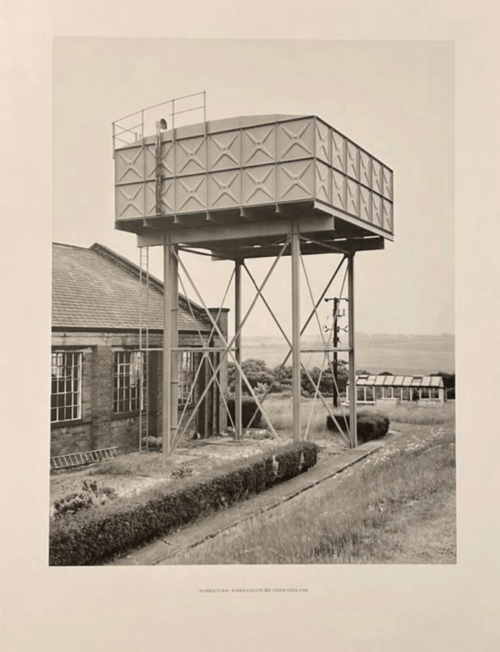
Bernd & Hilla Becher
Bernd and Hilla Becher (Germany, 1931–2007; 1934–2015) were pioneering photographers known for their typological studies of industrial architecture. Their stark black-and-white images of water towers, factories, and silos captured structural precision and uniformity. Founders of the Düsseldorf School of Photography, their work profoundly influenced generations of artists and shaped the visual language of modern photography.
© Bernd & Hilla Becher. All rights reserved.
- Recently Added
- Price (Low-High)
- Price (High-Low)
- Year (Low-High)
- Year (High-Low)
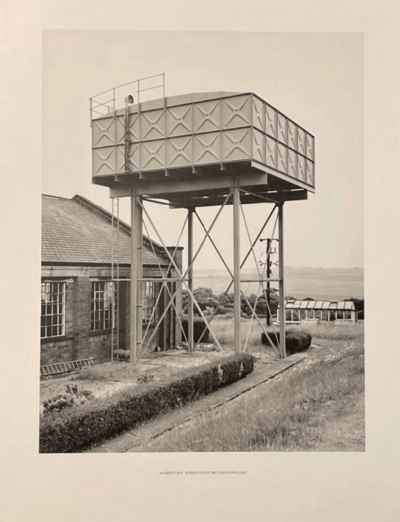
Bernd & Hilla Becher
Wasserturm Kirkhamgate, 1974
Photography
Offset Print
GBP 4,200
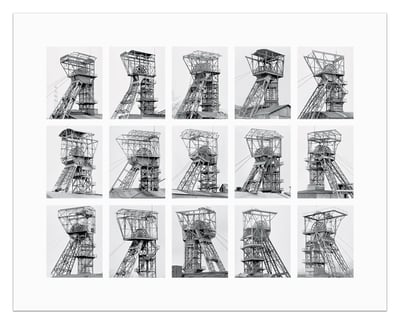
Bernd & Hilla Becher
Fördertürme, 2006
Limited Edition Print
Digital Print on paper
Currently Not Available
No sold works to show.
What is photography other than collecting?
- Bernd & Hilla Becher
- Bernd & Hilla Becher
Bernd (b. 1931, Germany, d. 2007, Germany) and Hilla Becher (b. 1934, Germany, d. 2015, Germany) were a pioneering duo in the world of conceptual art, best known for their collaborative work in photography. Meeting through a shared passion for the medium, the Bechers created a lasting legacy by documenting Germany's industrial architecture. Their work is celebrated for its methodical approach, capturing iconic structures such as water towers and coal bunkers in stark black-and-white, which highlighted the contrasts and geometric forms of these edifices. The timing of their work was crucial, as they photographed many industrial landmarks that were soon to disappear during the West German economic miracle. As members of the conceptual art movement, the Bechers’ oeuvre remains influential, with notable works like Cruel and Tender becoming legendary. Their collaborative efforts defy the norm of individual artistic recognition, instead solidifying their place in art history as a unified creative force.
Related Artists



Related Articles

Popular, News, Collecting - December 18, 2025
20 Years of Composition Gallery - A Conversation with the Founder
Celebrating 20 years of digital art excellence: Discover how Composition Gallery built global trust in online collecting through curation and integrity.Read More
Art Movements - May 5, 2022
The Dusseldorf School and the birth of modern photography
Discover the Düsseldorf School of Photography, its roots in objectivity, and its legacy in modern art. Explore works by Gursky, Höfer, and the Bechers.Read More
News, Popular, Collecting, Artists - August 12, 2026
In Minor Keys: Finding Intimacy and Identity at the 61st Venice Biennale — and in Your Collection
Explore how Koyo Kouoh’s 61st Venice Biennale vision, In Minor Keys, is shifting contemporary collecting toward quiet introspection, memory, and personal identi…Read More Artwork by Bernd & Hilla Becher
What is New Topographics?
New Topographics is a term coined in 1975 by curator William Jenkins to describe a group of photographers whose work focused on formal black-and-white images of urban and industrial landscapes. Jenkins initially described their aesthetic as banal, but the photographers themselves argued that their compositions were as significant as those of natural landscap…
Explore »

