

Günter Fruhtrunk
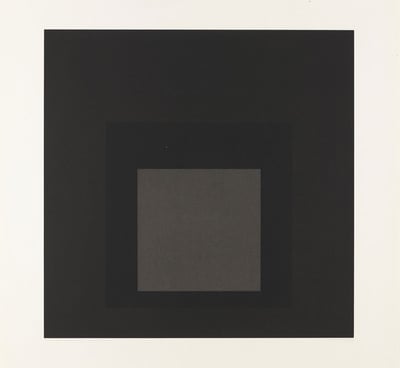
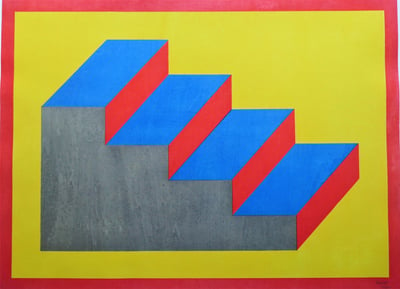
Günter Fruhtrunk (Germany, 1923–1982) was a German painter and printmaker associated with Op Art and Constructivism. His work is characterized by dynamic geometric patterns and vibrant color contrasts, exploring movement and spatial tension. Fruhtrunk's artistic style significantly influenced post-war European abstraction, and he also taught at the Munich Academy of Fine Arts.
© Günter Fruhtrunk. All rights reserved.
- Recently Added
- Price (Low-High)
- Price (High-Low)
- Year (Low-High)
- Year (High-Low)

Günter Fruhtrunk
Between Green, 1970
Limited Edition Print
Screen-print
Currently Not Available
No sold works to show.
Günter Fruhtrunk's unique and distinctive optical art is what makes him one of the most influential geometric abstract artists of the twentieth century. His outstanding and very inspiring philosophical works of art made him a part of what is known as The Concrete Art Movement, which is an art movement with a strong emphasis on abstract. Although his work is not known to many, the ones who do know of his art remain overwhelmed by his peculiar style. His paintings encompass a plethora of rare linear forms and unique visual perceptions. One of his most iconic paintings, Reihe, is a great example of his genius abstract ideas coming to life. In it he confronts the observer with key questions concerning perception and pictorial objectivity, and gives the simplest linear and colourful structures a greater meaning. Günter Fruhtrunk's work can be described as classical, yet also as a great contribution to modern day art.
Related Artists


Related Articles
News, Popular, Collecting, Artists - August 12, 2026
In Minor Keys: Finding Intimacy and Identity at the 61st Venice Biennale — and in Your Collection
Explore how Koyo Kouoh’s 61st Venice Biennale vision, In Minor Keys, is shifting contemporary collecting toward quiet introspection, memory, and personal identi…Read More
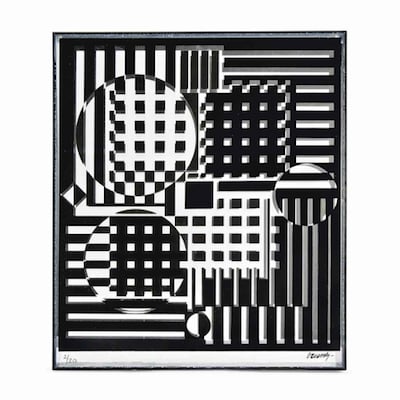 Artwork by Victor Vasarely
What is Op Art?
Op Art is a visual art style that uses optical illusions to create the impression of movement, vibrating patterns, flashing, or hidden images. The works are typically abstract, with many well-known pieces in black and white. The roots of Op Art can be traced back to earlier movements like Futurism, Constructivism, Dada, and Neo-Impressionism, particularly in…
Explore »

