

Livia Canestraro
Livia Canestraro (Rome, 1936) is a Belgian sculptor and painter known for her figurative public artworks. Working often with her husband, Stefaan Depuydt, she created sculptures that combine human warmth with civic presence. Her best-known works in Bruges reflect a late modern style rooted in public space, architecture, and accessible emotion.
© Livia Canestraro. All rights reserved.
- Recently Added
- Price (Low-High)
- Price (High-Low)
- Year (Low-High)
- Year (High-Low)
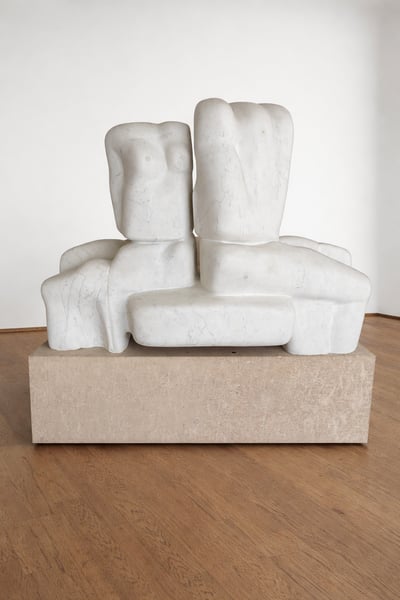
Livia Canestraro
Seated Couple, ca 1985
Sculpture / Object
Marble
EUR 17,500

Livia Canestraro
Standing Woman
Sculpture / Object
Bronze
EUR 15,000
No sold works to show.
“Sculpture must live with people — not apart from them"
Livia Canestraro (born in Rome in 1936) is a Belgian sculptor and painter whose work is rooted in the post-war European tradition of figurative sculpture, with a particular emphasis on public and architectural integration. Over the course of her career, she has developed a practice that bridges intimacy and monumentality—creating works that are both accessible in subject and deeply embedded in their urban and social context.
Working often in close collaboration with her husband, Stefaan Depuydt, Canestraro produced a body of work that reflects a shared artistic vision, where authorship becomes fluid and collective. Their sculptures are not conceived as isolated objects, but as elements in dialogue with their surroundings—whether placed in civic squares, integrated into façades, or incorporated into commemorative structures.
Her best-known works are located in the historic city of Bruges, where she contributed to the visual identity of public spaces through a series of sculptures and installations. Among these, De Verliefden (“The Lovers”) stands out as a poetic and human-centered composition, capturing a moment of quiet connection through simplified yet expressive figuration. Installed in prominent urban locations, her works invite interaction and contemplation, reinforcing the idea that sculpture can be part of everyday experience rather than confined to institutional settings.
Stylistically, Canestraro’s work aligns with a late modern figurative language—eschewing excessive abstraction in favor of clarity, balance, and emotional resonance. Her figures are often stylized but remain recognizably human, reflecting a sensitivity to proportion, gesture, and relational space. This approach situates her within a lineage of European sculptors who sought to preserve the human figure as a central subject while adapting it to contemporary contexts.
Beyond individual pieces, her contribution lies in the integration of art into the civic environment. Fountains, façade sculptures, and memorial works demonstrate her ability to work at the intersection of sculpture and architecture, enhancing public space without overwhelming it. Her practice reflects a broader 20th-century movement toward embedding art within the fabric of the city—where aesthetic, social, and spatial considerations converge.
Although less widely documented in international discourse, Canestraro’s oeuvre represents a consistent and thoughtful engagement with the role of sculpture in public life. Her work continues to resonate through its clarity of form, its humanistic tone, and its enduring presence in the urban landscape.
Working often in close collaboration with her husband, Stefaan Depuydt, Canestraro produced a body of work that reflects a shared artistic vision, where authorship becomes fluid and collective. Their sculptures are not conceived as isolated objects, but as elements in dialogue with their surroundings—whether placed in civic squares, integrated into façades, or incorporated into commemorative structures.
Her best-known works are located in the historic city of Bruges, where she contributed to the visual identity of public spaces through a series of sculptures and installations. Among these, De Verliefden (“The Lovers”) stands out as a poetic and human-centered composition, capturing a moment of quiet connection through simplified yet expressive figuration. Installed in prominent urban locations, her works invite interaction and contemplation, reinforcing the idea that sculpture can be part of everyday experience rather than confined to institutional settings.
Stylistically, Canestraro’s work aligns with a late modern figurative language—eschewing excessive abstraction in favor of clarity, balance, and emotional resonance. Her figures are often stylized but remain recognizably human, reflecting a sensitivity to proportion, gesture, and relational space. This approach situates her within a lineage of European sculptors who sought to preserve the human figure as a central subject while adapting it to contemporary contexts.
Beyond individual pieces, her contribution lies in the integration of art into the civic environment. Fountains, façade sculptures, and memorial works demonstrate her ability to work at the intersection of sculpture and architecture, enhancing public space without overwhelming it. Her practice reflects a broader 20th-century movement toward embedding art within the fabric of the city—where aesthetic, social, and spatial considerations converge.
Although less widely documented in international discourse, Canestraro’s oeuvre represents a consistent and thoughtful engagement with the role of sculpture in public life. Her work continues to resonate through its clarity of form, its humanistic tone, and its enduring presence in the urban landscape.
Related Artists


Related Articles
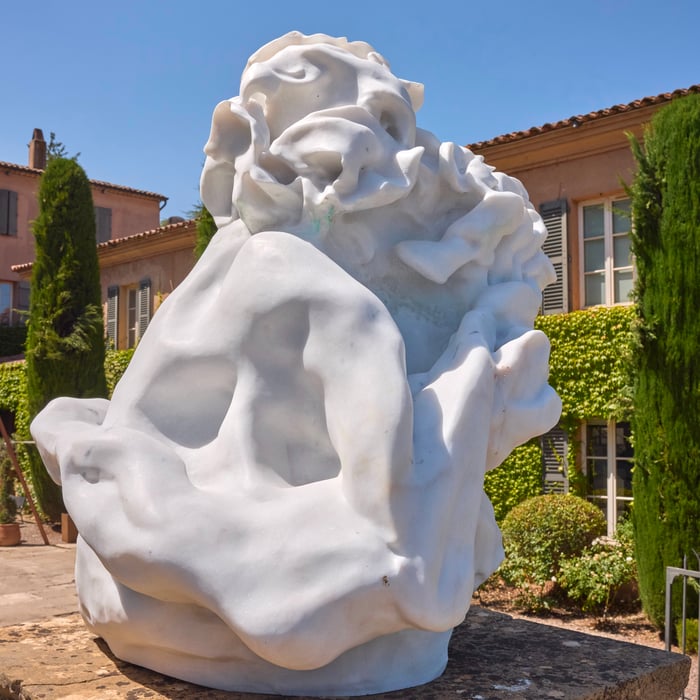
News, Popular, Collecting, Artists - August 12, 2026
In Minor Keys: Finding Intimacy and Identity at the 61st Venice Biennale — and in Your Collection
Explore how Koyo Kouoh’s 61st Venice Biennale vision, In Minor Keys, is shifting contemporary collecting toward quiet introspection, memory, and personal identi…Read More

 Artwork by Alex Katz
What is figurative art?
Sometimes known as Figurativism, figurative art refers to sculptures and paintings that are clearly or specifically derived from real objects, making them representational. The term figurative art is often used in contrast to abstract art. However, since the emergence of abstract art, figurative art has come to describe any form of modern art that has strong…
Explore »

