

Yuko Murata
Yuko Murata (Japan, 1973) is a contemporary painter recognized for her minimalist depictions of animals and landscapes. Drawing inspiration from postcards and travel brochures, her serene compositions often feature simplified forms and muted colors, evoking a sense of tranquility. Murata's work has been exhibited internationally, reflecting her unique perspective on nature and its representation.
© Yuko Murata. All rights reserved.
- Recently Added
- Price (Low-High)
- Price (High-Low)
- Year (Low-High)
- Year (High-Low)

Yuko Murata
Untitled (Winter Trees), 2012
Limited Edition Print
Mixed Media
EUR 1,000
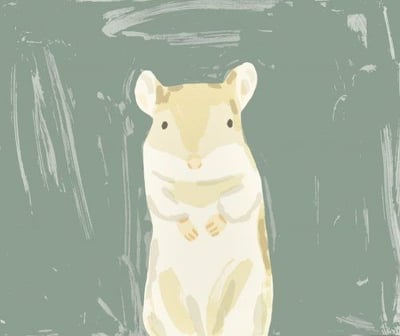
Yuko Murata
Long way , 2012
Limited Edition Print
Lithograph
EUR 1,200
No sold works to show.
Nature, with in all its various characteristics and planes ofand expressiveness, along with a limited variety of colour tones fluctuations, are the main attributes of Yuko Murata's work. Each individual painting she produces, makes a skilful use of her command of shade and light. She allows the canvas to naturally flow towards its subject matter, while maintaining a necessary balance with its elementary constituents. This juxtaposition gives Murata's works, an air of wistful mournfulness which is subtly perceptible in all her productions. She is well versed in both Western and Japanese artistic traditions and techniques, and uses her cultural heritage as a starting point, to mine for inspiration through modern media. Magazines, catalogues, booklets, advertising provide an endless background of material for her to explore and use in her paintings. Murata was born in Japan in 1972 and studied art in Tokyo. Although her stylistic approach to painting is schooled in the Western tradition, she is also deeply influenced by the 19th century classical Japanese tradition. Painters of that era were subjected to strict execution guidelines, making use of minimal resources regarding colours and conventional subject matter. There is a clear separation between Murata's life in modern Japan and the symbolism of the era which she deliberately chooses to reference in her work. However, she has clearly re-contextualised topics which once were purely ornamental and decorative in the Shinto tradition. Murata has thus created a new functional template for her paintings, which deeply reflect the loss inherent in the experience of modernity in contemporary Japan.
Related Artists


Related Articles

Artists, Art Movements - October 5, 2023
Superflat: A Modern Mirror to Traditional Japanese Art
Explore the Superflat art movement and its blend of traditional Japanese aesthetics with modern culture. Discover Murakami’s iconic works and their impact.Read More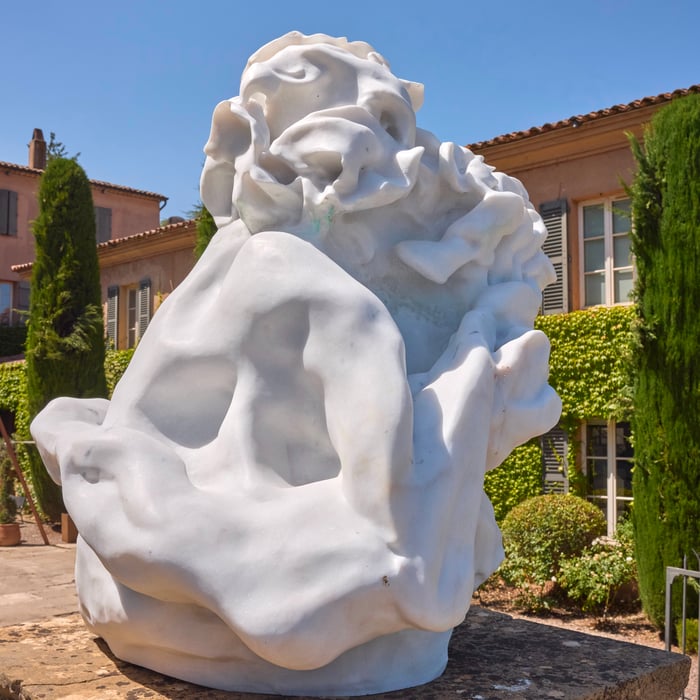
News, Popular, Collecting, Artists - August 12, 2026
In Minor Keys: Finding Intimacy and Identity at the 61st Venice Biennale — and in Your Collection
Explore how Koyo Kouoh’s 61st Venice Biennale vision, In Minor Keys, is shifting contemporary collecting toward quiet introspection, memory, and personal identi…Read More
 Artwork by Roger Raveel
What is new figuration?
Neo-Figurative Art is a collective term that refers to the revival of figurative art in America and Europe during the 1960s, following a period dominated by abstraction. Michel Ragon, a French art critic, argued that this resurgence of figuration occurred during a critical time of social and political upheaval in both regions.
Explore »

