

What is Art Informel?
- Show All
- Established
- Discoveries
- Show All
Artworks Related to Art Informel
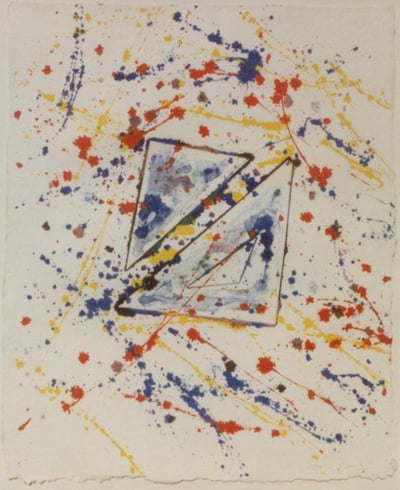
Sam Francis
In, On and Of paper, #1, 1977
Drawing / Watercolor
Mixed Media
USD 32,000 - 36,000

Eduardo Chillida
Beltza V, 1969
Limited Edition Print
Woodcut
EUR 6,250

Eduardo Chillida
Beltza IV, 1969
Limited Edition Print
Woodcut
EUR 6,250

Eduardo Chillida
Beltza III, 1969
Limited Edition Print
Woodcut
EUR 6,250

Eduardo Chillida
Beltza II, 1969
Limited Edition Print
Woodcut
EUR 6,250

Eduardo Chillida
Beltza I, 1969
Limited Edition Print
Woodcut
EUR 6,250
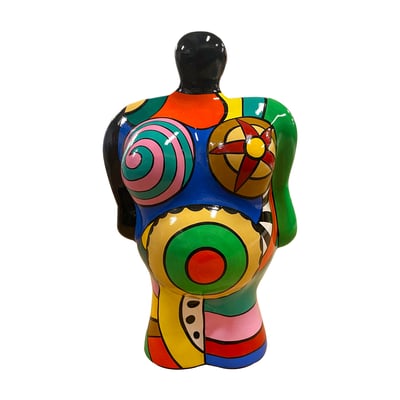
Niki De Saint Phalle
California Nana Vase, 2000
Sculpture / Object
Resin
Currently Not Available
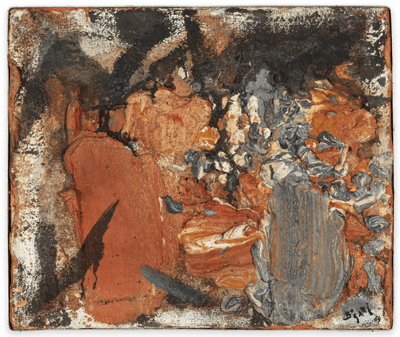
Bram Bogart
Extase, 1958 - 59
Painting
Mixed Media
Make Your Offer

Paul Jenkins
Untitled (Vibrant Currents), 1972
Limited Edition Print
Lithograph
USD 3,300

Sam Francis
Web (SFS-136), 1972
Limited Edition Print
Screen-print
USD 23,000

Karel Appel
Once I Was The Sun, 1978
Limited Edition Print
Lithograph
USD 1,100

Karel Appel
Flower with Blue Eyes, 1977
Sculpture / Object
Wood
Currently Not Available
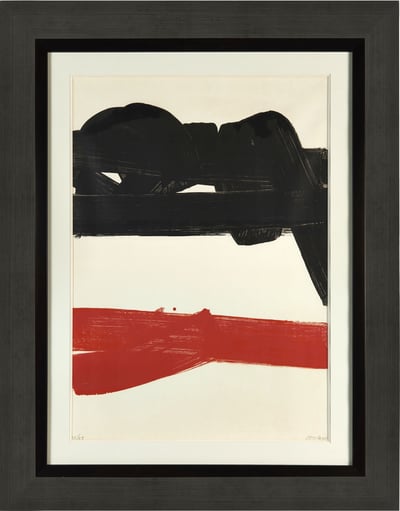
Pierre Soulages
Lithographie 27, 1969
Limited Edition Print
Lithograph
Currently Not Available

Eduardo Chillida
Untitled (tapestry), 1965
Tapestry
Tapestry
Inquire For Price
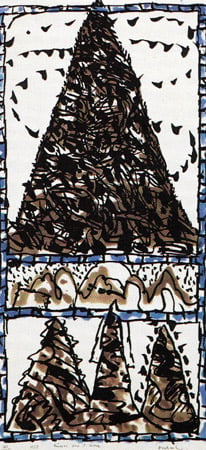
Pierre Alechinsky
Reserve pour l'hiver, 1988
Limited Edition Print
Etching
Currently Not Available

Antoni Tapies
La cama, 1975
Limited Edition Print
Etching
EUR 3,750
Related Articles

Minimalism is a style in music and visual arts characterized by pared-down designs and simplicity. It began in Western art after World War II, gaining prominence particularly in American visual arts. Minimalism draws heavily on aspects of modernism and is often viewed as a reaction against Abstract Expressionism, as well as a precursor to post-minimal art practices. Prominent minimalist artists include Agnes Martin, Donald Judd, Robert Morris, Frank Stella, and Dan Flavin.
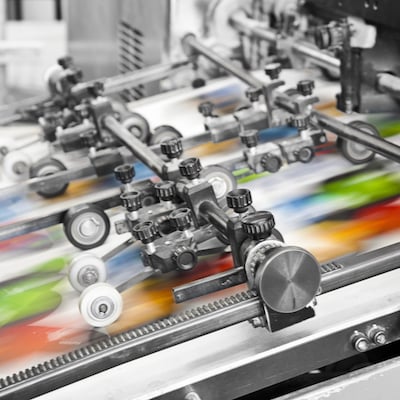
Offset lithography is a printing technique where the inked image is first transferred (offset) from a plate to a rubber blanket and then to the printing surface. This method combines the lithographic process, which relies on the repulsion of water and oil, to keep non-printing areas ink-free by attracting a water-based film. Offset lithography was originally developed to reduce costs in reproducing artwork and is widely used for high-volume printing due to its efficiency and ability to produce sharp, consistent images.
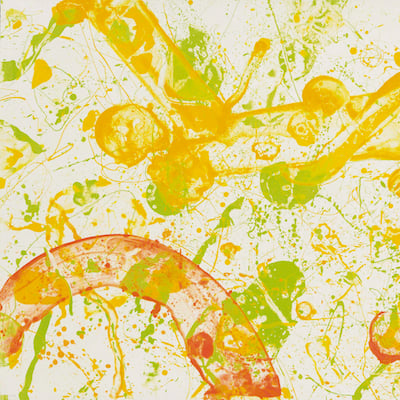
Tachisme is a French abstract painting style that gained popularity between 1940 and 1950, often seen as the European counterpart to Abstract Expressionism. However, there are stylistic differences between the two. Tachisme, which emerged from Art Informel, rejected geometric abstraction in favor of more intuitive and spontaneous expression. It was a reaction against the structured forms of Cubism and is closely related to Informalism. Tachisme emphasizes gestural brushwork, irregular forms, and a focus on the process of painting itself.
Can't find your Answer?
Thank you! Your question has been sent — we'll get back to you shortly.
