
What is Etching and Aquatint?
- Show All
- Established
- Discoveries
- Show All
Artworks Related to Etching and Aquatint
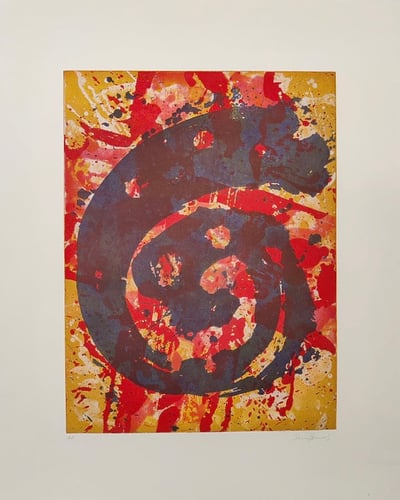
Sam Francis
Mehrfarbige Spirale, 1970
Limited Edition Print
Etching and Aquatint
USD 5,250

Joan Miró
Untitled from Tracé sur l'Eau, 1963
Limited Edition Print
Etching and Aquatint
USD 5,250

Marc Chagall
Le Peintre, from Songes (cf. C. books 112), 1981
Limited Edition Print
Etching and Aquatint
USD 6,000

Pablo Picasso
Untitled from Le Cocu Magnifique, 1966
Limited Edition Print
Etching and Aquatint
USD 9,350

Brice Marden
Tiles, 1979
Limited Edition Print
Etching and Aquatint
USD 5,370

Joan Miró
One plate, from Série III, 1952-53
Limited Edition Print
Etching and Aquatint
USD 4,690

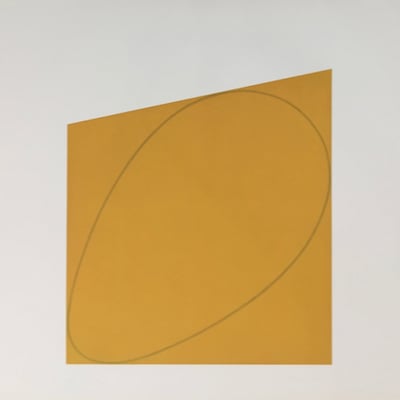
Robert Mangold
Untitled II, 2007
Limited Edition Print
Etching and Aquatint
USD 6,000

Roy Lichtenstein
Illustration for 'Une Fenêtre ouverte sur Chicago' (Corlett 271), 1992
Limited Edition Print
Etching and Aquatint
USD 13,250

Marc Chagall
Autoportrait, 1968
Limited Edition Print
Etching and Aquatint
Inquire For Price

Joan Miró
Le Marteau sans maître: one plate, 1976
Limited Edition Print
Etching and Aquatint
USD 4,950

Joan Miró
Plate III from Espriu-Miró, 1975
Limited Edition Print
Etching and Aquatint
USD 8,350

Francis Bacon
Seated Figure, 1983
Limited Edition Print
Etching and Aquatint
Currently Not Available
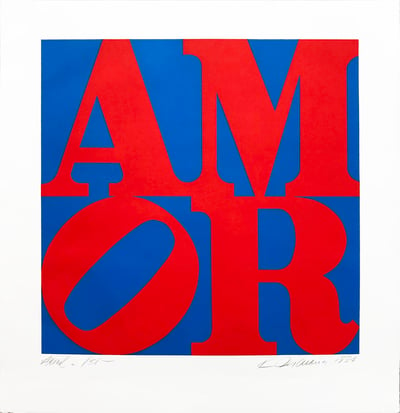
Robert Indiana
AMOR, 1994
Limited Edition Print
Etching and Aquatint
USD 21,000
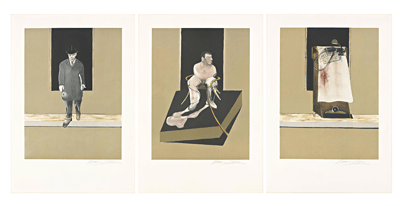
Francis Bacon
Tryptych, 1986/1987
Limited Edition Print
Etching and Aquatint
Inquire For Price
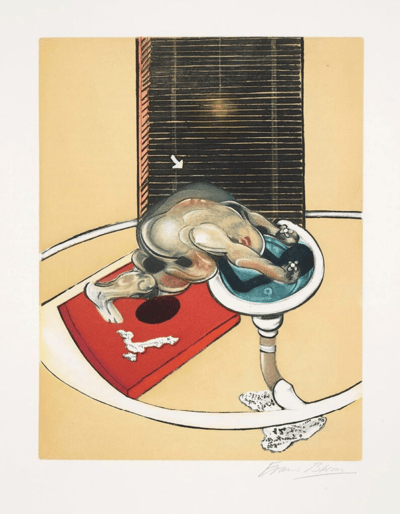
Francis Bacon
L’Homme au Lavabo Figure at a washbasin, 1978
Limited Edition Print
Etching and Aquatint
GBP 19,000 - 23,000

Roy Lichtenstein
Illustration for 'De Denver au Montana, Depart 27 Mai 1972' (I), 1992
Limited Edition Print
Etching and Aquatint
USD 12,500
Related Articles
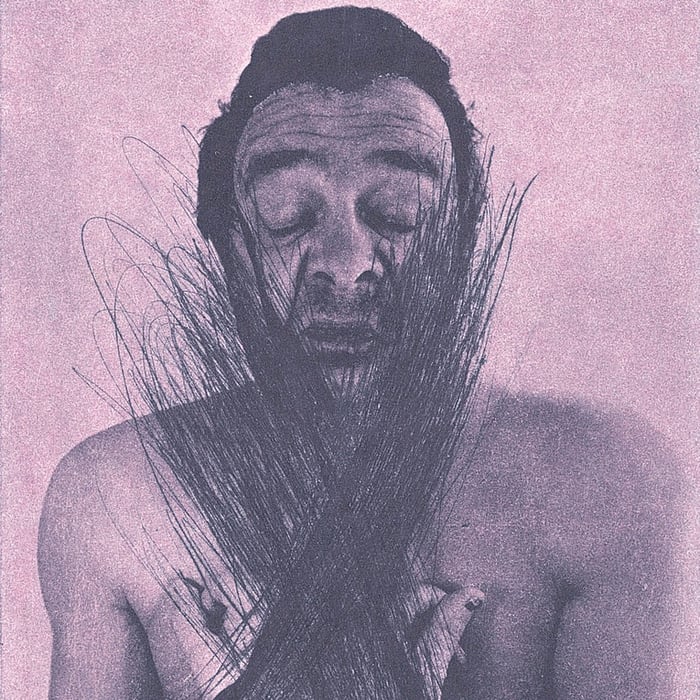


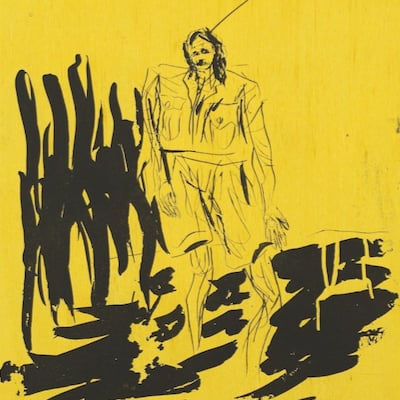
Neue Wilden is the term German artists used for Neo-Expressionism. In the 1970s and 80s, expressive painting re-emerged in Germany, with artists embracing intense colors and broad brushstrokes. The movement grew in opposition to minimal and conceptual art, favoring a return to raw, emotional expression through bold and dynamic painting techniques.
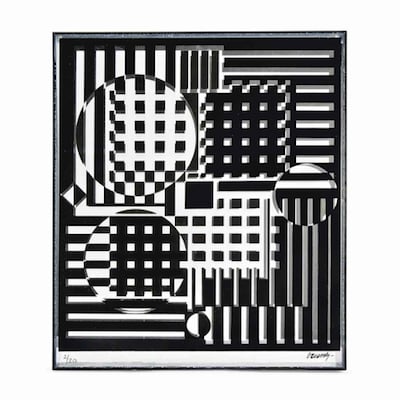
Op Art is a visual art style that uses optical illusions to create the impression of movement, vibrating patterns, flashing, or hidden images. The works are typically abstract, with many well-known pieces in black and white. The roots of Op Art can be traced back to earlier movements like Futurism, Constructivism, Dada, and Neo-Impressionism, particularly in their use of color effects and graphic design.

Systems Art refers to a group of artists who, during the late 1960s and early 1970s, used the frameworks of conceptualism and minimalism to create art that was responsive to its environment. Rejecting traditional art themes, they embraced aesthetic systems and experimented with diverse media. Systems Art often connected with contemporary political movements of the time, emphasizing the interrelationship between the artwork, its context, and the broader social and political environment.
Can't find your Answer?
Thank you! Your question has been sent — we'll get back to you shortly.
