
What is figurative art?
- Show All
- Established
- Discoveries
- Show All
Artworks Related to Figurative art

Alex Katz
Julia and Alexandra, 1983
Limited Edition Print
Screen-print
USD 16,750
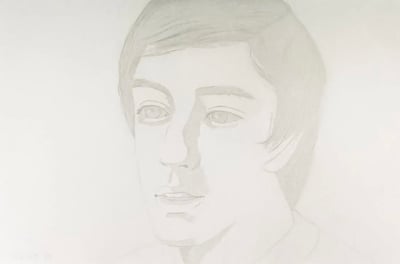
Alex Katz
Vincent with Open Mouth, 1974
Limited Edition Print
Etching and Aquatint
Inquire For Price

Katherine Bernhardt
Scotch Magic Tape, 2021
Limited Edition Print
Monotype
Currently Not Available

Karel Appel
About a Cat, 1979
Limited Edition Print
Lithograph
USD 750
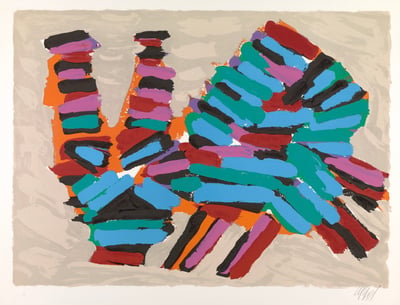
Karel Appel
Frightened Cat, 1979
Limited Edition Print
Lithograph
USD 750
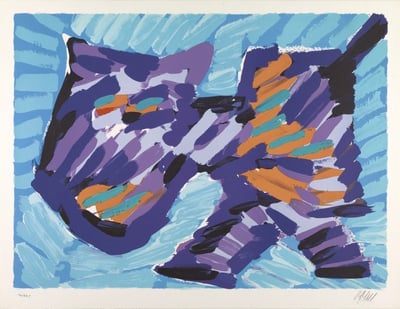
Karel Appel
Walking Cat, 1979
Limited Edition Print
Lithograph
USD 750
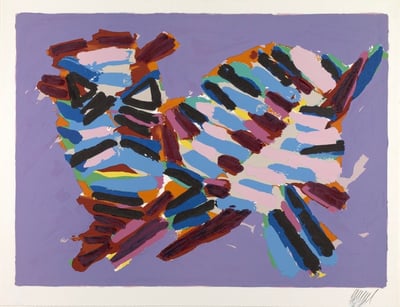
Karel Appel
Innocent Cat, 1979
Limited Edition Print
Lithograph
USD 750
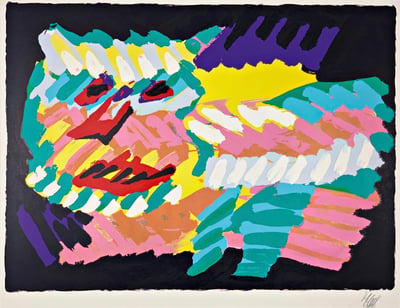
Karel Appel
Pink Cat, 1979
Limited Edition Print
Lithograph
USD 750

Keith Haring
Portrait of Joseph Beuys, 1986
Limited Edition Print
Screen-print
USD 10,850
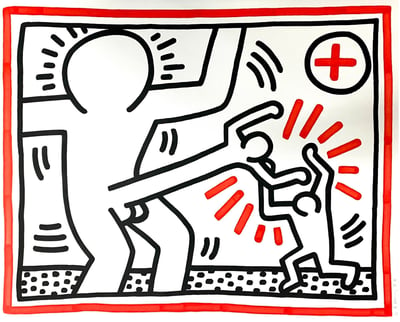
Keith Haring
Untitled (Cockfight), 1985
Limited Edition Print
Lithograph
USD 42,900

Claire Tabouret
The Swimmer, 2019
Limited Edition Print
Mixed Media
Currently Not Available

Keith Haring
International Youth Year, 1985
Limited Edition Print
Lithograph
USD 14,300
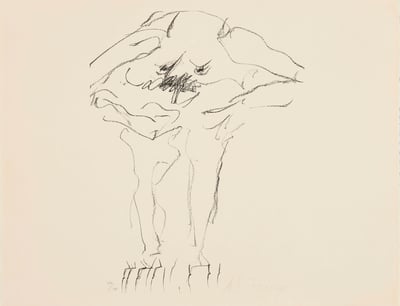
Willem de Kooning
Clam Digger, 1966
Limited Edition Print
Lithograph
USD 3,950

David Spiller
You Are My Sunshine, 2021
Limited Edition Print
Silkscreen
EUR 1,400

David Spiller
Angels Bright Watch Over You Tonight; Stay Close To Me, 2020
Limited Edition Print
Silkscreen
EUR 2,750

Katherine Bernhardt
Sea Turtles, 2015
Limited Edition Print
Screen-print
USD 15,000
Related Articles



Patina is the distinctive greenish surface that bronze develops over time due to exposure to air and humidity. Artists can also apply chemicals to bronze to artificially create patina. Alternatively, bronze can be polished to reveal its natural rich gold color. Patina is not exclusive to bronze; it can also occur on other metals like copper and even on wood and stone, enhancing the material's character over time.

Pop Art is an art movement that began in Britain in 1955 and in the late 1950s in the U.S. It challenged traditional fine arts by incorporating imagery from popular culture, such as news, advertising, and comic books. Pop Art often isolates and recontextualizes materials, combining them with unrelated elements. The movement is more about the attitudes and ideas that inspired it than the specific art itself. Pop Art is seen as a reaction against the dominant ideas of Abstract Expressionism, bringing everyday consumer culture into the realm of fine art.

New Topographics is a term coined in 1975 by curator William Jenkins to describe a group of photographers whose work focused on formal black-and-white images of urban and industrial landscapes. Jenkins initially described their aesthetic as banal, but the photographers themselves argued that their compositions were as significant as those of natural landscapes, emphasizing the beauty in everyday, man-made environments.
Can't find your Answer?
Thank you! Your question has been sent — we'll get back to you shortly.
