

What is lowbrow?
- Show All
- Established
- Discoveries
- Show All
Artworks Related to Lowbrow
Takashi Murakami
Private Listing
Painting

Takashi Murakami
Kai Kai Kiki: Lots of Fun, 2009
Limited Edition Print
Screen-print
USD 14,500

Takashi Murakami
Homage to Francis Bacon (Study of Isabel Rawsthorne), 2011
Limited Edition Print
Screen-print
USD 17,800

Takashi Murakami
Flower Ball (Lots of Colors), 2013
Limited Edition Print
Lithograph
USD 4,250
Tony Oursler
Private Listing
Drawing / Watercolor

Takashi Murakami
Flower Ball (3-D) Autumn 2004, 2013
Limited Edition Print
Offset Print
USD 3,800
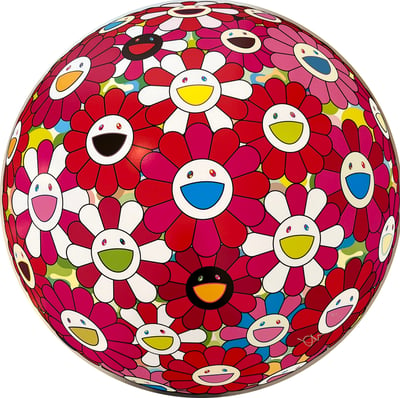
Takashi Murakami
Flowerball (3D) - Papyrus, 2013
Limited Edition Print
Offset Print
USD 4,250

Takashi Murakami
My Arms & Legs Rot off and through my blood rushes forth, the tranquility of my heart shall be prized above, 2007
Limited Edition Print
Offset Print
USD 3,200

Takashi Murakami
New Day Self Portrait, 2011
Limited Edition Print
Silkscreen
USD 8,450
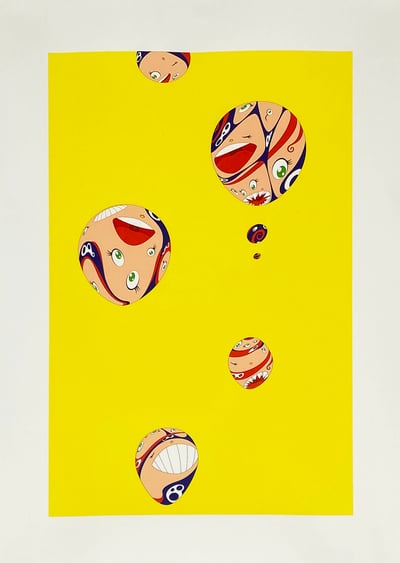
Takashi Murakami
Puka Puka
Limited Edition Print
Screen-print
USD 11,900

Takashi Murakami
And Then x 727 (ULTRA MARINE GUNJO), 2013
Limited Edition Print
Lithograph
Currently Not Available

Takashi Murakami
Comprehending the 51st Dimension, 2014
Limited Edition Print
Offset Print
USD 4,450

Takashi Murakami
Nirvana, 2001
Limited Edition Print
Offset Print
USD 6,750

Takashi Murakami
Flowers on the Island Closest to Heaven, 2018
Limited Edition Print
Screen-print
USD 7,950

Takashi Murakami
Red Demon Blue Demon with 48 Arhats, 2013
Limited Edition Print
Offset Print
USD 5,500

Takashi Murakami
That Sounds Good, I Hope You Can Do That, 2019
Limited Edition Print
Screen-print
USD 14,250
Related Articles
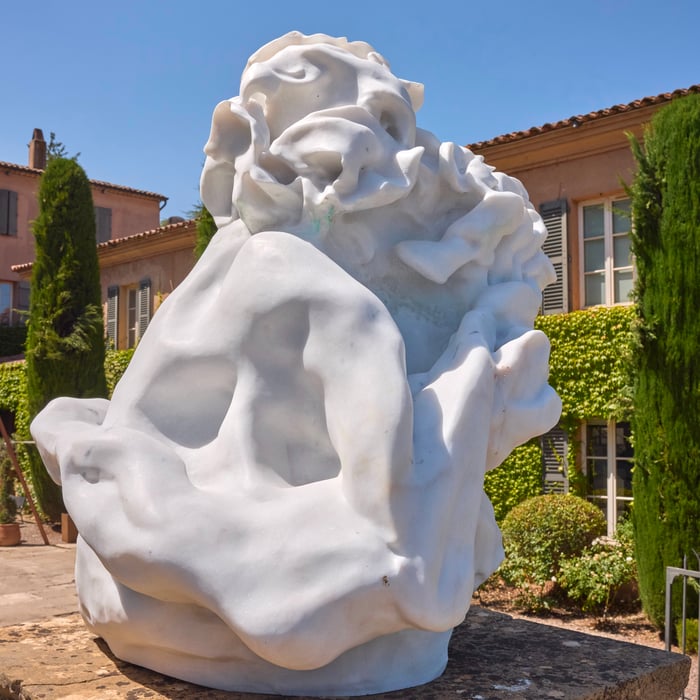
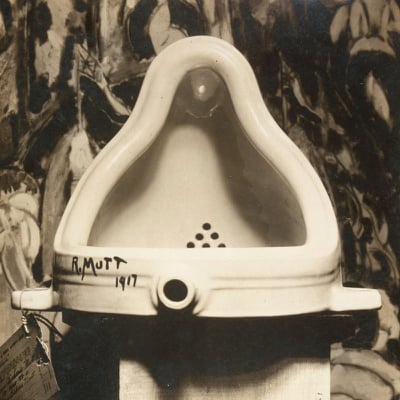
A found object is a term used to describe a man-made or natural object, or a fragment of one, that an artist discovers or purchases and keeps for inspiration or as a work of art. The artist may also modify the object or incorporate it into a collage or assemblage, transforming it into a new piece of art.

This Italian art movement includes artists from Italy, Belgium, and France who are known for creating public installations using recyclable plastic to craft massive animal sculptures. The artwork explores the rupture between the synthetic and natural worlds, with the plastic construction symbolizing the synthetic, and the animal forms representing the natural world.

De Stijl, meaning The Style, was a group of Dutch artists who created abstract art based on strict adherence to vertical and horizontal geometry. The group was founded by Piet Mondrian and Theo van Doesburg in 1917. Mondrian eventually left De Stijl when Van Doesburg began incorporating diagonal geometry into his work, which Mondrian felt deviated from the group's principles.
Can't find your Answer?
Thank you! Your question has been sent — we'll get back to you shortly.
