

What is pen and ink?
Pen and ink is a traditional drawing technique that involves using a dip pen with India ink on paper. The fine tip of the dip pen is ideal for creating varied lines and detailed shading. Some artists prefer using a fountain pen with an ink reservoir for greater convenience.
Show All
- Show All
- Established
- Discoveries
Show All
- Show All
Artworks Related to Pen and ink

Damien Hirst
Untitled - Scorpion, 2003
Drawing / Watercolor
Pen and ink
Inquire For Price
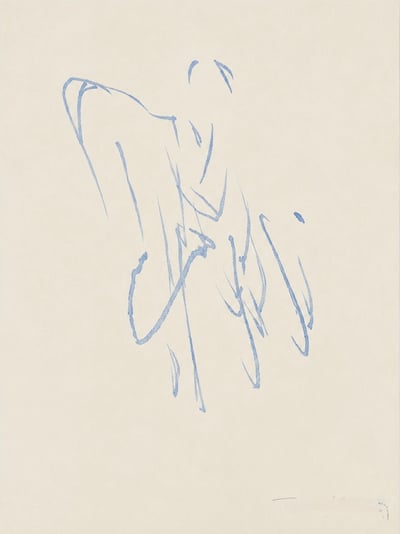
Jean Tinguely
Meta – Matic N9, 1960
Drawing / Watercolor
Pen and ink
EUR 500
Andy Warhol
Private Listing
Drawing / Watercolor

Tom Wesselmann
Study For Sunset Nude With Choker, 2004
Drawing / Watercolor
Pen and ink
Inquire For Price
Andy Warhol
Private Listing
Drawing / Watercolor

Fernando Botero
Profile de Jeune Homme, 1992
Drawing / Watercolor
Pen and ink
USD 17,900

Dadamaino
Il movimento delle cose, 1994
Drawing / Watercolor
Pen and ink
EUR 8,350
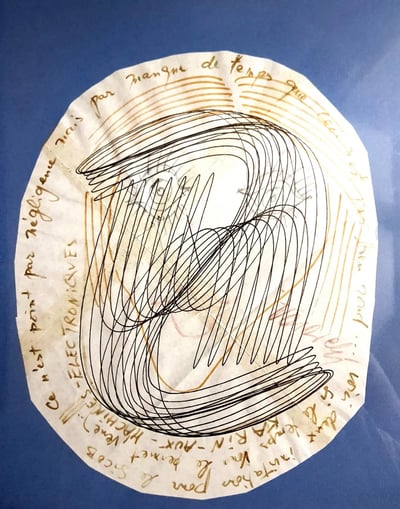
Victor Vasarely
Face, 1970s
Drawing / Watercolor
Pen and ink
EUR 3,650

Yaacov Agam
Sketch #1b
Drawing / Watercolor
Pen and ink
USD 1,280

Yaacov Agam
Sketch #1
Drawing / Watercolor
Pen and ink
USD 1,280
Related Articles

A triptych is an artwork divided into three sections or panels, often hinged together, allowing it to be displayed open or folded shut. It is a type of polyptych, a term for multi-panel artworks. Typically, the central panel is the largest, flanked by two smaller panels, although some triptychs have panels of equal size. Triptychs have been historically significant in religious art but are also used in contemporary works.

Brutalism is an architectural style from the 1950s and 60s characterized by the use of raw concrete to create block-like forms. This style was often applied in public housing and civic buildings, featuring massive geometric concrete facades.

Etching and aquatint are printmaking techniques. In aquatint, the printing plate is etched with a pattern of tiny pits and cracks to create a wide range of tonal gradations. This technique allows artists to replicate the broad, flat tones found in watercolor paintings and ink washes.
Can't find your Answer?
Thank you! Your question has been sent — we'll get back to you shortly.
