

What is Superflat?
Artworks Related to Superflat

Takashi Murakami
August Joy Silkscreen (Orange Blue Flowers), 2019
Limited Edition Print
Silkscreen
USD 3,000

Yoshitomo Nara
Days (2014-18), 2018
Limited Edition Print
Pigment print
GBP 9,950
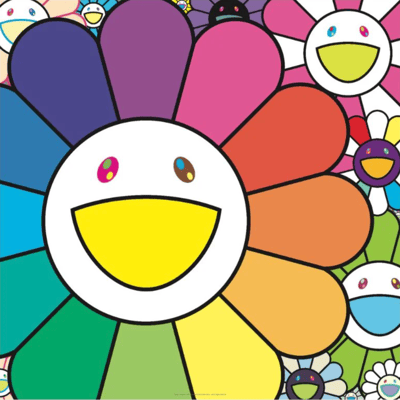
Takashi Murakami
Poppin' Flowers, 2021
Limited Edition Print
Offset Print
GBP 1,750

Takashi Murakami
Korin and Warhol, 2021
Limited Edition Print
Offset Print
GBP 1,900
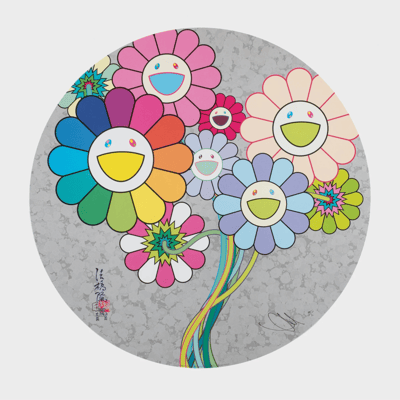
Takashi Murakami
Re: Flowers for Algernon, 2024
Limited Edition Print
Offset Print
GBP 1,950
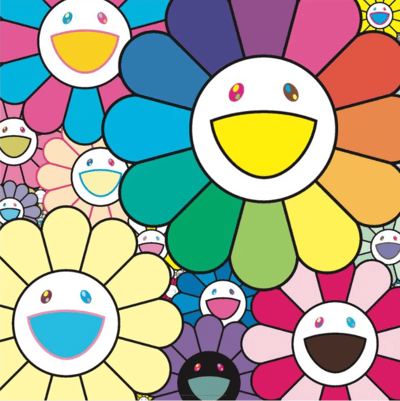
Takashi Murakami
Lots of Flowers, 2024
Limited Edition Print
Offset Print
GBP 1,800
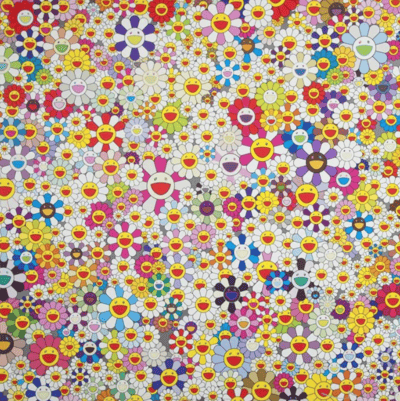
Takashi Murakami
Open Your Hands Wide, Embrace Happiness!, 2010
Limited Edition Print
Offset Print
GBP 3,000

Takashi Murakami
If I Could Reach That Field Of Flowers, I Would Die Happy, 2010
Limited Edition Print
Offset Print
GBP 3,000
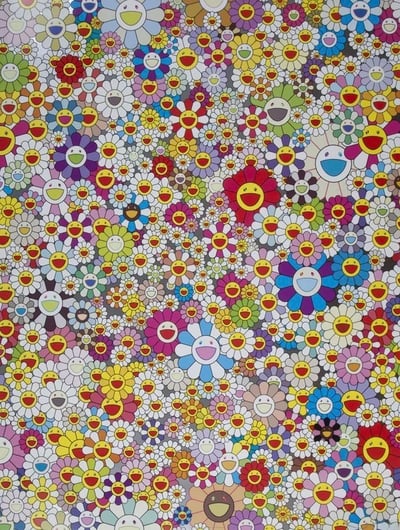
Takashi Murakami
Poporoke Forest, 2011
Limited Edition Print
Offset Print
GBP 4,750

Takashi Murakami
BLACKPINK Pandakashi (Pink), 2023
Limited Edition Print
Mixed Media
GBP 2,390

Takashi Murakami
Vapor Trail, 2004
Limited Edition Print
Offset Print
GBP 5,400

Takashi Murakami
Multiverse, Flowers, 2023
Limited Edition Print
Offset Print
EUR 5,400

Takashi Murakami
Charge into the Center of Consciousness, 2023
Limited Edition Print
Offset Print
EUR 5,400

Yoshitomo Nara
Marching on a Buttefbur Leaf, 2019
Limited Edition Print
Offset Print
EUR 1,650

Takashi Murakami
Kaikai and Kiki, 2018
Sculpture / Object
Mixed Media
EUR 4,800
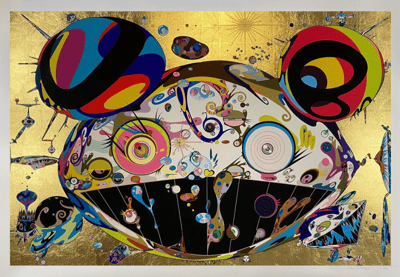
Takashi Murakami
Tan Tan Bo, 2016
Limited Edition Print
Mixed Media
EUR 29,250
Related Articles


Plaster is a mixture of heat-treated powdered gypsum combined with water to create a workable material. It can be used to make solid sculptures, cast in molds, carved, modeled, or attached to other materials. Artists have used plaster for both working models and finished artworks for centuries due to its versatility.

Matter painting is a technique that involves blending thick impasto paints with materials like cement, mud, sand, or shells. The term first emerged in the 1950s to describe the works of Belgian and Dutch painters who explored the physical properties of painting materials and the different ways paint could be manipulated. This approach emphasizes texture and the tactile qualities of the surface, creating a sculptural effect on the canvas.
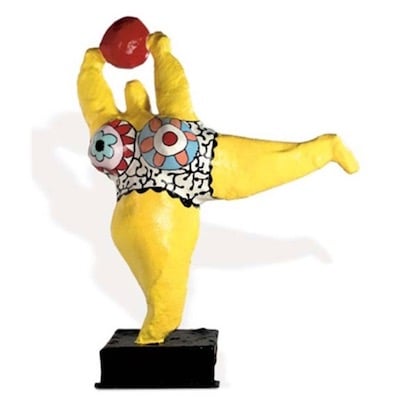
Papier-mâché is a composite material made from pieces of paper or pulp, reinforced with textiles and bound with adhesives like starch, wallpaper paste, or glue. There are two main methods to create papier-mâché: one involves layering strips of paper soaked in adhesive, while the other uses a pulp made by boiling or soaking paper and then adding glue. Though each method has a different process, both yield similar results.
Can't find your Answer?
Thank you! Your question has been sent — we'll get back to you shortly.
