

What is Superflat?
Artworks Related to Superflat
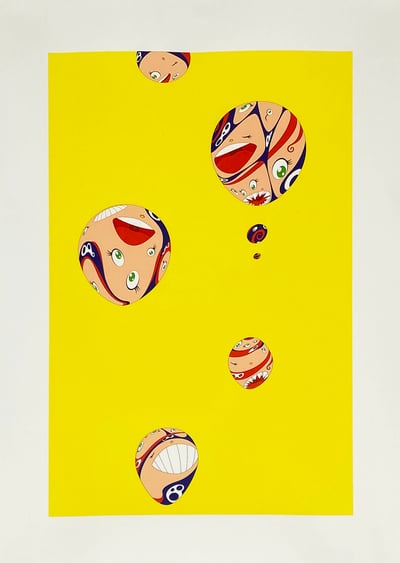
Takashi Murakami
Puka Puka
Limited Edition Print
Screen-print
USD 11,900

Takashi Murakami
And Then x 727 (ULTRA MARINE GUNJO), 2013
Limited Edition Print
Lithograph
Currently Not Available

Takashi Murakami
Comprehending the 51st Dimension, 2014
Limited Edition Print
Offset Print
USD 4,450

Takashi Murakami
Nirvana, 2001
Limited Edition Print
Offset Print
USD 6,750

Takashi Murakami
Flowers on the Island Closest to Heaven, 2018
Limited Edition Print
Screen-print
USD 7,950

Takashi Murakami
Red Demon Blue Demon with 48 Arhats, 2013
Limited Edition Print
Offset Print
USD 5,500

Takashi Murakami
That Sounds Good, I Hope You Can Do That, 2019
Limited Edition Print
Screen-print
USD 14,250

Takashi Murakami
And Then x 6 (Vermillion: The Superflat Method), 2013
Limited Edition Print
Lithograph
Currently Not Available
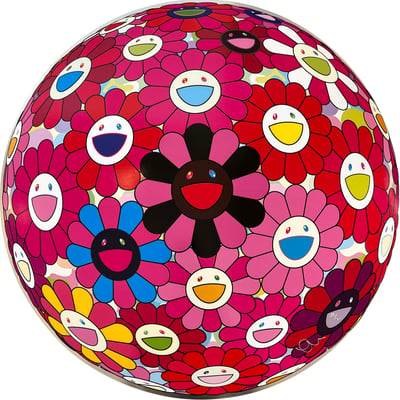
Takashi Murakami
There Is Nothing Eternal in this World. That Is Why You Are Beautiful., 2013
Limited Edition Print
Offset Print
USD 4,450

Takashi Murakami
And Then x 727 (Vermillion: SHU), 2013
Limited Edition Print
Lithograph
USD 2,950
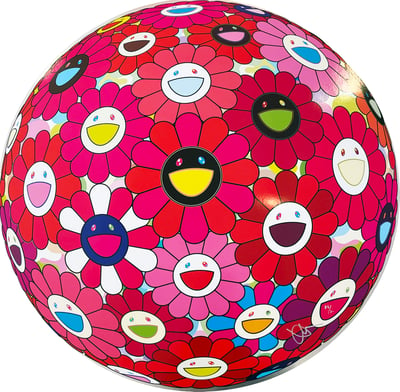
Takashi Murakami
Letters to Picasso, 2014
Limited Edition Print
Offset Print
USD 4,450
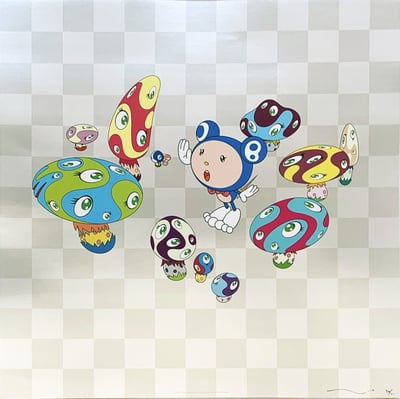
Takashi Murakami
!N CHA!, 1999
Limited Edition Print
Lithograph
USD 2,950

Takashi Murakami
Cherry Blossoms in Bloom, 2020
Limited Edition Print
Screen-print
USD 9,950

Takashi Murakami
Buddha - Road to Illumination
Limited Edition Print
Offset Print
USD 3,500

Takashi Murakami
As the Interdimensional Waves Run Through Me, I can distinguish Between the Voices of Angel and Devil, 2012
Limited Edition Print
Lithograph
USD 3,750

Takashi Murakami
Hey! You! Do you Feel What I Feel?, 2014
Limited Edition Print
Lithograph
USD 3,750
Related Articles


Cubism is an art movement that aimed to depict multiple perspectives of objects or figures within a single picture. Artists Georges Braque and Pablo Picasso pioneered this style around 1907. The name Cubism emerged from their use of geometric shapes and outlines that often resembled cubes, breaking objects down into abstracted forms.

Site-Specific Art is a form of artwork created to exist in a particular location, with the artist considering the site as an integral part of the creative process. Robert Irwin was a key figure in promoting this art form in California. Site-Specific Art emerged as a reaction against modernist objects, which were often portable, commodified, and confined to museum spaces. In contrast, Site-Specific Art is inherently tied to its location, challenging the traditional notions of art as a transportable and marketable commodity.

Linocut is a printmaking technique similar to woodcut, where a sheet of linoleum is used as the relief surface. The design is carved into the linoleum using a V-shaped gouge or chisel, creating raised areas that form a mirror image of the final print. Ink is applied to the raised areas with a roller, and the linoleum sheet is then pressed onto fabric or paper. The printing can be done by hand or with a press.
Can't find your Answer?
Thank you! Your question has been sent — we'll get back to you shortly.
