
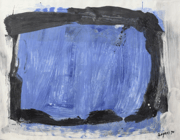
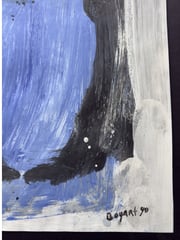
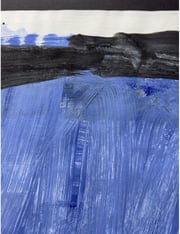

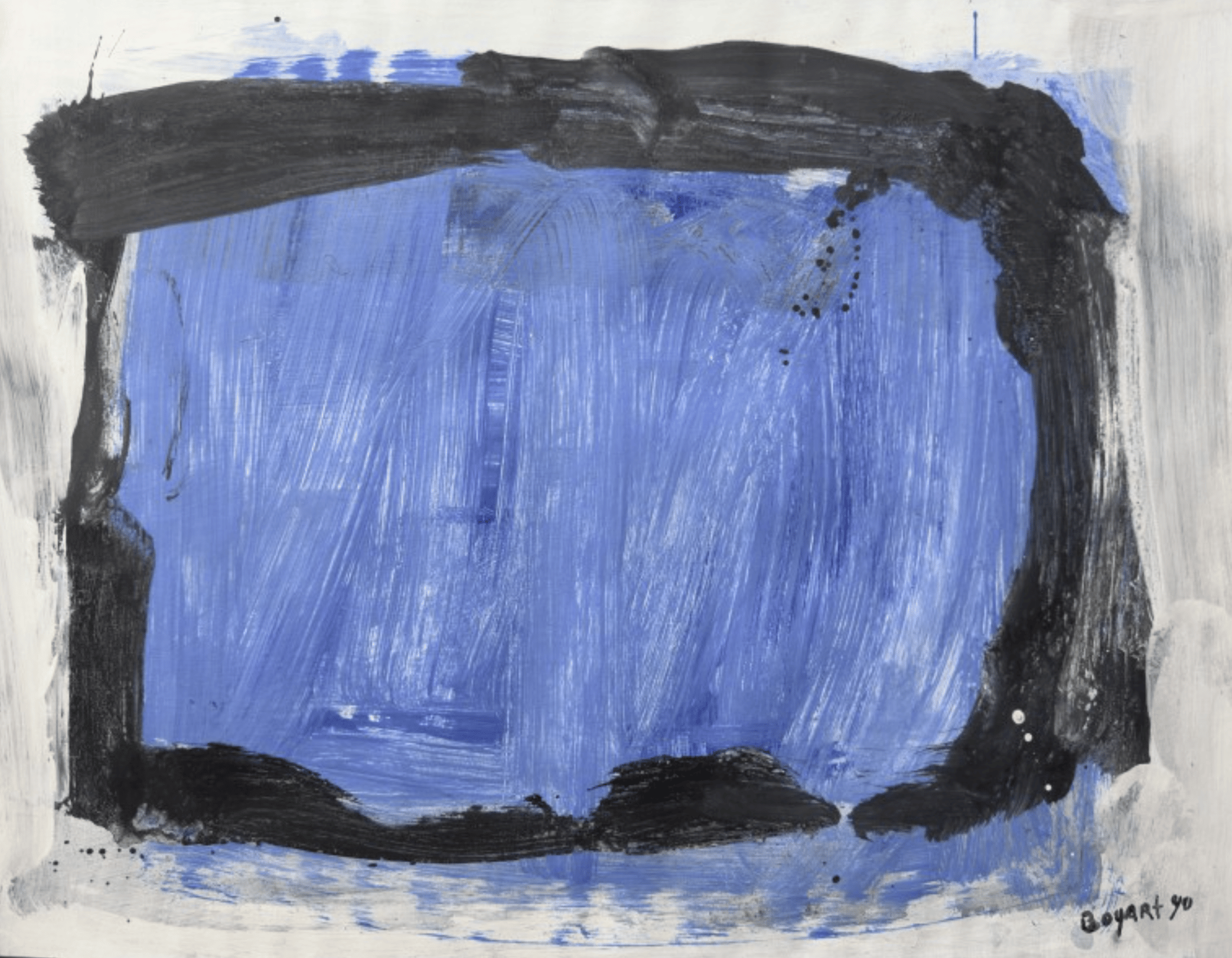
Gouache on paper. Signed and dated 1990 by Bram Bogart.
This densely layered giclée from 2020 presents one of Damien Hirst's exuberant floral compositions, in which thick impasto-effect passages of pink, blue, yellow, white, red, green, and black converge to suggest flower forms through sheer chromatic accumulation. The heavily textured surface — reproduced with remarkable fidelity from the original painting — transforms botanical subject matter into a celebration of pigment itself. The joyful palette and vigorous application recall both Impressionist garden paintings and the gestural abandon of Abstract Expressionism, positioning Hirst's practice within a long lineage of artists for whom flowers serve as a vehicle for pure painterly pleasure.
Artwork Copyright © Bram BogartBram Bogart (Belgium, 1921–2012) was an influential expressionist painter known for his bold impasto technique, creating textured, almost sculptural canvases. Associated with the CoBrA movement, his works often featured vibrant colors and abstract forms, emphasizing materiality and physical presence in art.
Artwork Copyright © Bram BogartComposition abstraite, 1990
Form
Medium
Size
- Inches
- Centimeters
Edition
Price
- USD
- EUR
- GBP
- CHF
- Authenticity Guaranteed
- Insured Shipping
- Online Since 2005
●Inventory 17655
●Signed
●Comes with gallery invoice and certificate
●Sell Us a Similar Artwork. Learn more.
Gouache on paper. Signed and dated 1990 by Bram Bogart.
This densely layered giclée from 2020 presents one of Damien Hirst's exuberant floral compositions, in which thick impasto-effect passages of pink, blue, yellow, white, red, green, and black converge to suggest flower forms through sheer chromatic accumulation. The heavily textured surface — reproduced with remarkable fidelity from the original painting — transforms botanical subject matter into a celebration of pigment itself. The joyful palette and vigorous application recall both Impressionist garden paintings and the gestural abandon of Abstract Expressionism, positioning Hirst's practice within a long lineage of artists for whom flowers serve as a vehicle for pure painterly pleasure.
Artwork Copyright © Bram BogartBram Bogart (Belgium, 1921–2012) was an influential expressionist painter known for his bold impasto technique, creating textured, almost sculptural canvases. Associated with the CoBrA movement, his works often featured vibrant colors and abstract forms, emphasizing materiality and physical presence in art.
Artwork Copyright © Bram Bogart- Recently Added
- Price (Low-High)
- Price (High-Low)
- Year (Low-High)
- Year (High-Low)
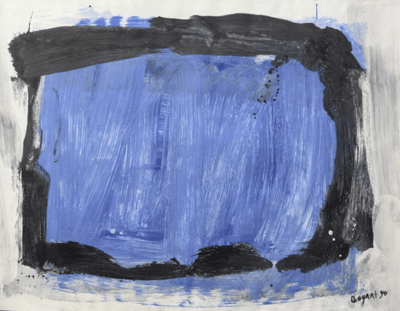
Bram Bogart
Composition abstraite, 1990
Drawing / Watercolor
Gouache
EUR 5,850

Bram Bogart
Composition no. 7, 1992
Painting
Mixed Media
EUR 8,500 - 12,000
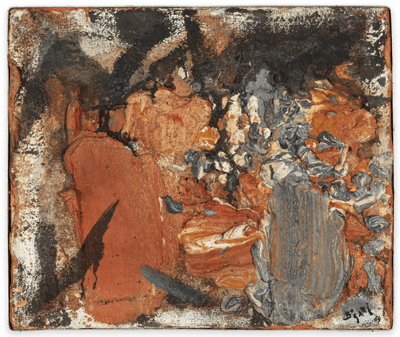
Bram Bogart
Extase, 1958 - 59
Painting
Mixed Media
Make Your Offer
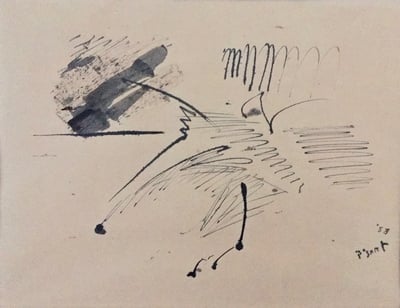
Bram Bogart
Untitled - informal drawing, 1958
Drawing / Watercolor
East Indian ink
EUR 1,900
Related Artists
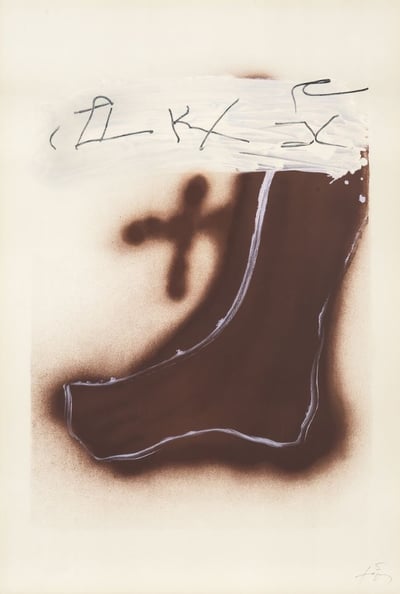

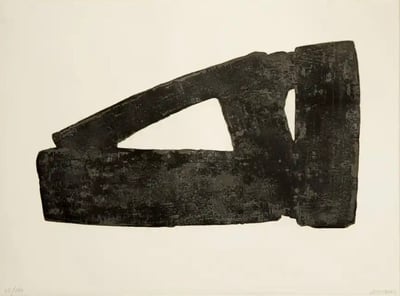
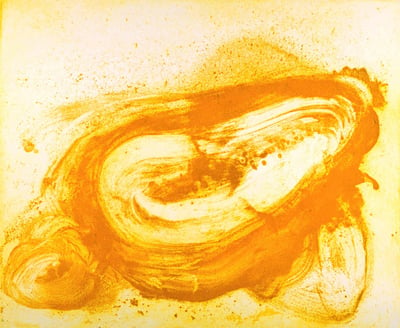

Artwork by Helen Frankenthaler
What is abstract expressionism?
Abstract Expressionism is an art movement that emerged in the United States during the 1940s and 1950s. Characterized by large, abstract canvases, the movement emphasized spontaneous, expressive brushwork and the use of color and form to convey emotion rather than represent reality. Artists like Jackson Pollock, Mark Rothko, and Willem de Kooning are key figures in this movement. Abstract Expressionism marked a shift in the art world, making New York City a center of the international art scene.

Bram Bogart
Composition abstraite, 1990
50 x 63 cm


