

Dry-print on cardboard.
Studio Lexington by Cy Twombly, created in 2008, is a dry-print on cardboard capturing the interior of his studio with a ghostly, atmospheric quality. Presented in muted tones, the photograph features blurred outlines of chairs, canvases, and a desk, evoking a quiet, almost sacred space of creation. Twombly, known primarily for his abstract painting, used photography in his later years to document personal and artistic environments. This work, part of an edition of 50, reflects his fascination with memory, impermanence, and the poetic resonance of space. The soft focus and diffused light lend the image a dreamlike, introspective character.
Artwork Copyright © Cy TwomblyCy Twombly (USA, 1928–2011) was a celebrated painter and sculptor known for his abstract, calligraphic style. His works combined gestural marks, poetic references, and layered textures. Twombly’s monumental paintings and sculptures often explored themes of history, mythology, and memory, leaving a profound impact on 20th-century art.
Artwork Copyright © Cy TwomblyStudio Lexington, 2008
Form
Medium
Size
- Inches
- Centimeters
Edition
Price
- USD
- EUR
- GBP
- CHF
- Authenticity Guaranteed
- Insured Shipping
- Online Since 2005
●Inventory 16275
●Signed
●Comes with gallery invoice and certificate
●Sell Us a Similar Artwork. Learn more.
Dry-print on cardboard.
Studio Lexington by Cy Twombly, created in 2008, is a dry-print on cardboard capturing the interior of his studio with a ghostly, atmospheric quality. Presented in muted tones, the photograph features blurred outlines of chairs, canvases, and a desk, evoking a quiet, almost sacred space of creation. Twombly, known primarily for his abstract painting, used photography in his later years to document personal and artistic environments. This work, part of an edition of 50, reflects his fascination with memory, impermanence, and the poetic resonance of space. The soft focus and diffused light lend the image a dreamlike, introspective character.
Artwork Copyright © Cy TwomblyCy Twombly (USA, 1928–2011) was a celebrated painter and sculptor known for his abstract, calligraphic style. His works combined gestural marks, poetic references, and layered textures. Twombly’s monumental paintings and sculptures often explored themes of history, mythology, and memory, leaving a profound impact on 20th-century art.
Artwork Copyright © Cy Twombly- Recently Added
- Price (Low-High)
- Price (High-Low)
- Year (Low-High)
- Year (High-Low)
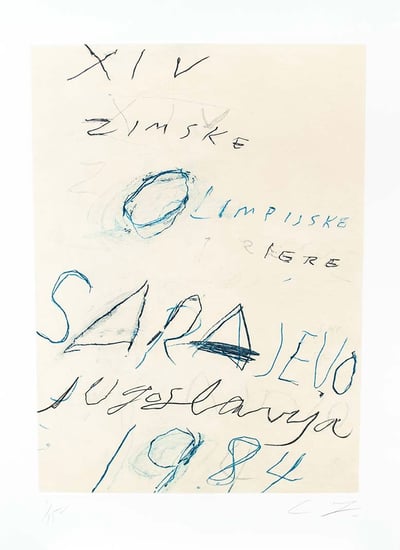
Cy Twombly
Sarajevo, 1984
Limited Edition Print
Mixed Media
Inquire For Price

Cy Twombly
Studio Lexington, 2008
Limited Edition Print
Drypoint
EUR 4,800
Related Artists


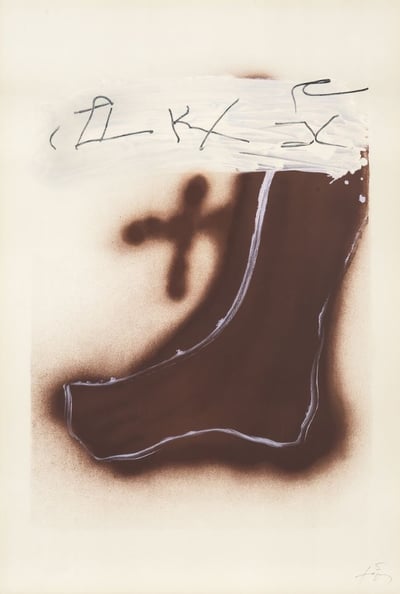


Artwork by Helen Frankenthaler
What is lyrical abstraction ?
Lyrical abstraction is a descriptive term characterizing a type of abstract painting closely related to Abstract Expressionism, in use from the 1940s to the present. The term can also describe two distinct but related trends in post-World War II modernist painting. This art movement originated in Paris, France, after the war, emphasizing personal expression, spontaneity, and the emotional use of color and form.

Cy Twombly
Studio Lexington, 2008
43.1 x 27.9 cm


