

Offset colour lithograph, signed and dated by the artist.
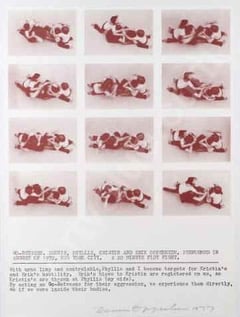
Go Between by Dennis Oppenheim is a thought-provoking offset color lithograph from 1977, featuring a sequence of photographs and text that examines themes of connection, physicality, and human interaction. The artwork presents twelve small, monochromatic images showing pairs of figures engaged in a close, intertwined movement, almost as if wrestling or engaged in an intimate, physical dialogue. Below the images, Oppenheim includes a text that reflects on the physical and psychological experiences of proximity and touch, exploring the boundary between individual identities and shared experiences. Signed and dated by the artist, this piece, measuring 74 cm by 56 cm, serves as a commentary on human relationships and the complexity of interpersonal space, characteristic of Oppenheim's conceptual approach in the 1970s.
Artwork Copyright © Dennis OppenheimDennis Oppenheim (USA, 1938–2011) was a conceptual artist and sculptor known for his groundbreaking work in land art, performance, and public installations. Blending humor and social commentary, his projects ranged from ephemeral earthworks to monumental sculptures. Oppenheim’s innovative approach challenged the boundaries of contemporary art.
Artwork Copyright © Dennis OppenheimGo Beteween, 1977
Form
Medium
Size
- Inches
- Centimeters
Price
- USD
- EUR
- GBP
- CHF
- Authenticity Guaranteed
- Insured Shipping
- Online Since 2005
●Inventory 4959
●Signed
●Comes with gallery invoice and certificate
●Sell Us a Similar Artwork. Learn more.
Offset colour lithograph, signed and dated by the artist.
Go Between by Dennis Oppenheim is a thought-provoking offset color lithograph from 1977, featuring a sequence of photographs and text that examines themes of connection, physicality, and human interaction. The artwork presents twelve small, monochromatic images showing pairs of figures engaged in a close, intertwined movement, almost as if wrestling or engaged in an intimate, physical dialogue. Below the images, Oppenheim includes a text that reflects on the physical and psychological experiences of proximity and touch, exploring the boundary between individual identities and shared experiences. Signed and dated by the artist, this piece, measuring 74 cm by 56 cm, serves as a commentary on human relationships and the complexity of interpersonal space, characteristic of Oppenheim's conceptual approach in the 1970s.
Artwork Copyright © Dennis OppenheimDennis Oppenheim (USA, 1938–2011) was a conceptual artist and sculptor known for his groundbreaking work in land art, performance, and public installations. Blending humor and social commentary, his projects ranged from ephemeral earthworks to monumental sculptures. Oppenheim’s innovative approach challenged the boundaries of contemporary art.
Artwork Copyright © Dennis Oppenheim- Recently Added
- Price (Low-High)
- Price (High-Low)
- Year (Low-High)
- Year (High-Low)
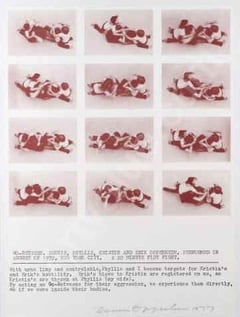
Dennis Oppenheim
Go Beteween, 1977
Limited Edition Print
Lithograph
EUR 940
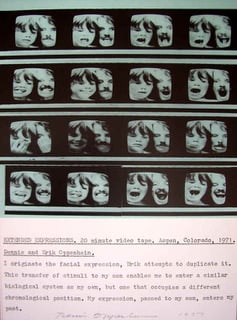
Dennis Oppenheim
Extended Expressions, 1976
Limited Edition Print
Lithograph
EUR 940
Related Artists


Image © Robert Lukeman / Unsplash
What is land art?
Also referred to as Earth Art, Earthworks, or Environmental Art, Land Art is a sculptural movement that involves creating artworks that integrate conceptual or physical elements of the earth or landscape into the finished piece. These works often interact directly with the environment, using natural materials and settings to explore themes related to nature, place, and time
Dennis Oppenheim
Go Beteween, 1977
74 x 56 cm


