

Extroflexione on aluminum
- Hand signed (inscribed) and numbered
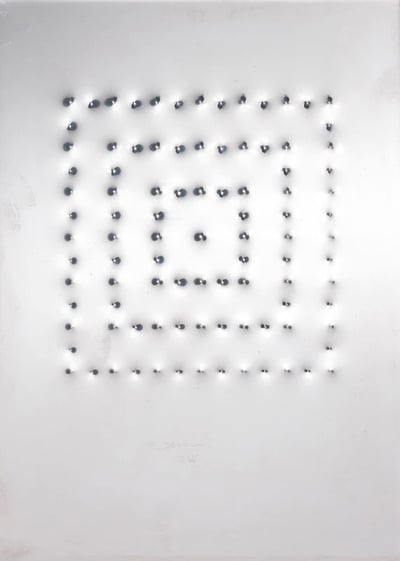
Enrico Castellani’s Estroflesso (2008) exemplifies his pioneering approach to spatial art. This work, created using extroflexion on aluminum, features a rhythmic grid of raised and indented points forming a spiraling square pattern. The interplay of light and shadow across the metallic surface enhances the three-dimensionality of the composition, evoking a sense of depth and movement. Castellani’s technique transforms the traditionally flat canvas into a dynamic object that interacts with its environment, reflecting his focus on breaking boundaries between painting and sculpture. Measuring 31 x 23.5 cm, this piece is a refined example of Castellani’s ability to merge minimalism with tactile complexity.
Artwork Copyright © Enrico CastellaniEnrico Castellani (Italy, 1930–2017) was a pivotal figure in post-war Italian art, known for his monochromatic canvases shaped by nails and tension. A founding member of the ZERO movement, he explored light, shadow, and dimensionality through minimalist techniques. Castellani’s innovative work redefined painting, earning him international acclaim and a Golden Lion at the Venice Biennale.
Artwork Copyright © Enrico CastellaniEstroflesssso, 2008
Form
Medium
Size
- Inches
- Centimeters
Edition
Price
Available works →
- Authenticity Guaranteed
- Insured Shipping
- Online Since 2005
●
●Inventory 11267
●Inscribed signature
●Comes with gallery invoice and certificate
●Sell Us a Similar Artwork. Learn more.
Extroflexione on aluminum
- Hand signed (inscribed) and numbered
Enrico Castellani’s Estroflesso (2008) exemplifies his pioneering approach to spatial art. This work, created using extroflexion on aluminum, features a rhythmic grid of raised and indented points forming a spiraling square pattern. The interplay of light and shadow across the metallic surface enhances the three-dimensionality of the composition, evoking a sense of depth and movement. Castellani’s technique transforms the traditionally flat canvas into a dynamic object that interacts with its environment, reflecting his focus on breaking boundaries between painting and sculpture. Measuring 31 x 23.5 cm, this piece is a refined example of Castellani’s ability to merge minimalism with tactile complexity.
Artwork Copyright © Enrico CastellaniEnrico Castellani (Italy, 1930–2017) was a pivotal figure in post-war Italian art, known for his monochromatic canvases shaped by nails and tension. A founding member of the ZERO movement, he explored light, shadow, and dimensionality through minimalist techniques. Castellani’s innovative work redefined painting, earning him international acclaim and a Golden Lion at the Venice Biennale.
Artwork Copyright © Enrico Castellani- Recently Added
- Price (Low-High)
- Price (High-Low)
- Year (Low-High)
- Year (High-Low)

Enrico Castellani
Superficie (Vanilla/Gold), 1968
Limited Edition Print
Plastic
EUR 4,200
Enrico Castellani
Estroflesssso, 2008
Sculpture / Object
Metal
Currently Not Available
Enrico Castellani
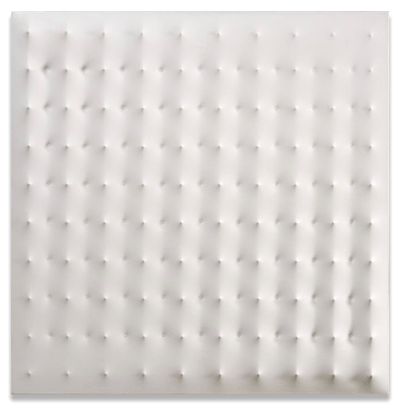
Superficie Bianca, 1968
Limited Edition Print
Plastic
Currently Not Available
Available works by Enrico Castellani
See all →Enrico Castellani
Superficie (Vanilla/Gold), 1968
Limited Edition Print
Plastic
EUR 4,200
Related Artists

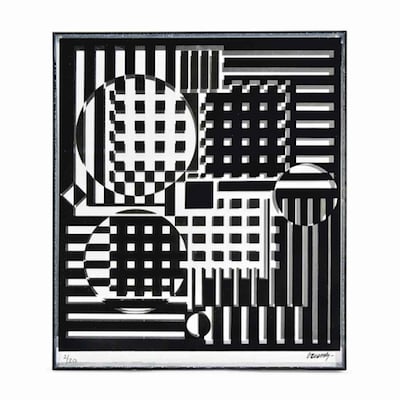
Artwork by Victor Vasarely
What is Op Art?
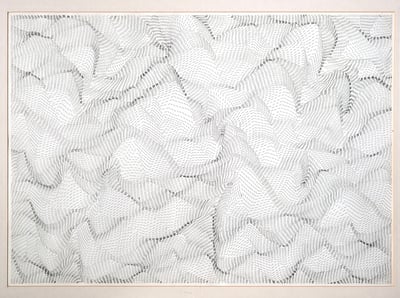
Op Art is a visual art style that uses optical illusions to create the impression of movement, vibrating patterns, flashing, or hidden images. The works are typically abstract, with many well-known pieces in black and white. The roots of Op Art can be traced back to earlier movements like Futurism, Constructivism, Dada, and Neo-Impressionism, particularly in their use of color effects and graphic design.


Enrico Castellani
Estroflesssso, 2008
31 x 23.5 cm


