
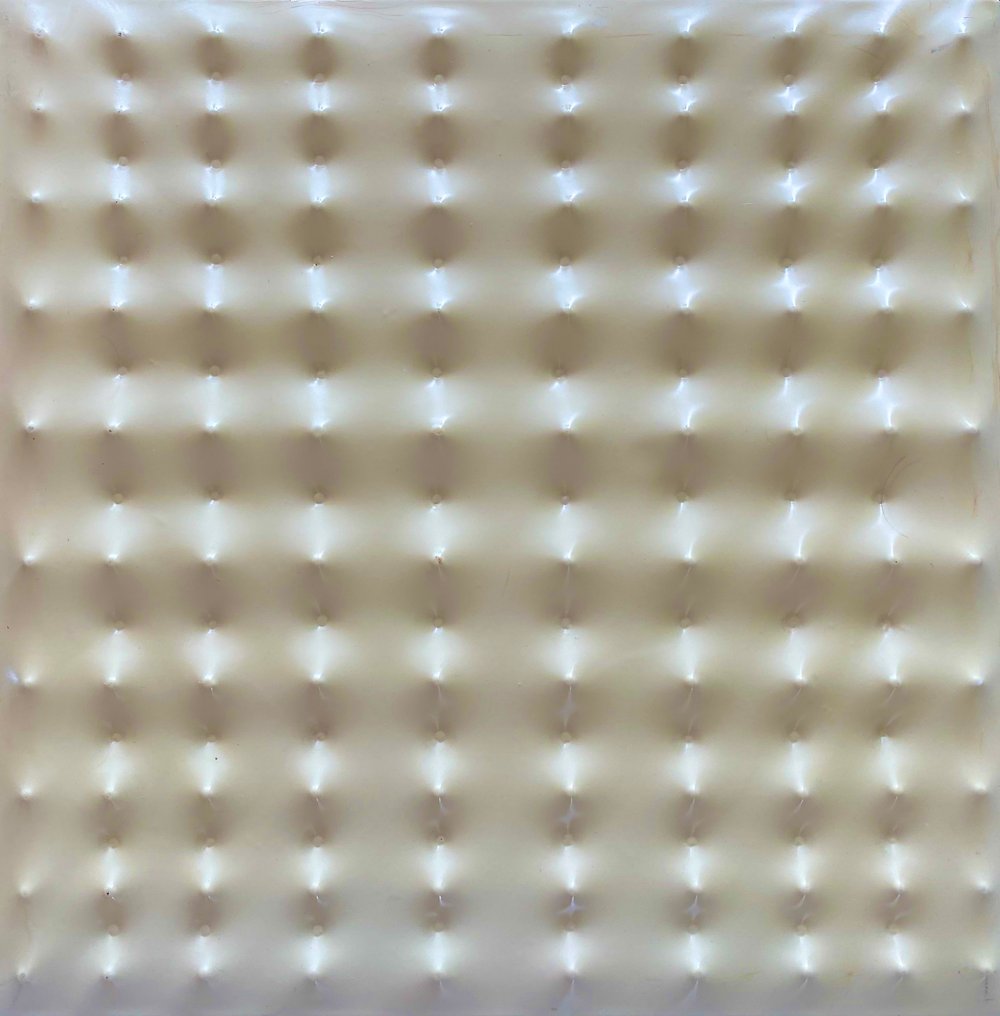
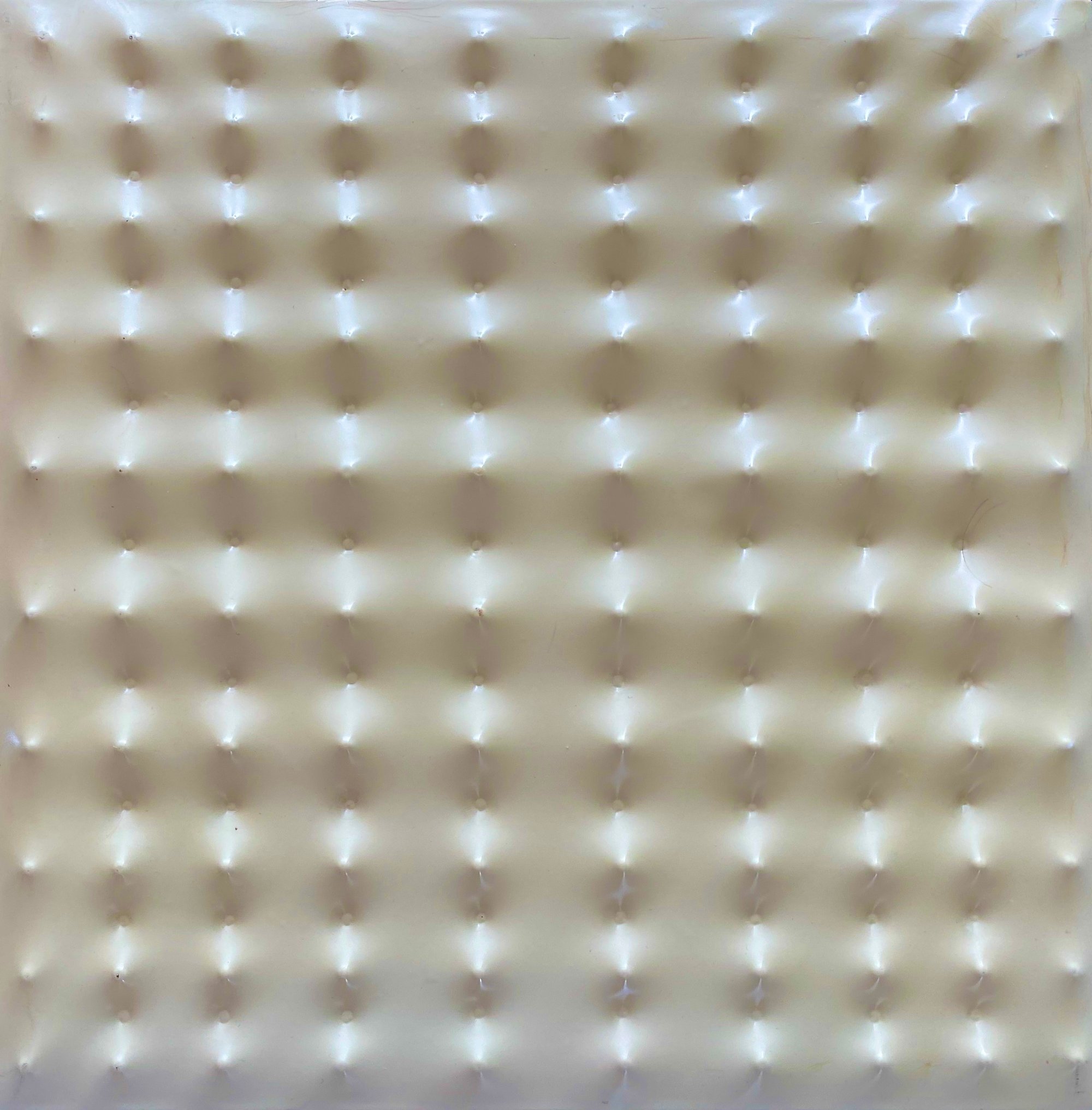
// Superficie (Vanilla/Gold) by Enrico Castellani, created in 1968, is a limited edition plastic relief print measuring 30 x 30 cm. Castellani, a pioneer of the Zero movement, explores the interaction between light, shadow, and form in this work. The piece features a grid of raised points that create a rhythmic pattern across the surface, catching and dispersing light to generate a dynamic play of highlights and shadows. The subtle vanilla and gold hues add a delicate elegance to the work, enhancing its sculptural quality. Castellani’s minimalist approach emphasizes the tactile and optical experience, inviting viewers to engage with the texture and depth of the artwork in an almost meditative manner.
Artwork Copyright © Enrico CastellaniEnrico Castellani (Italy, 1930–2017) was a pivotal figure in post-war Italian art, known for his monochromatic canvases shaped by nails and tension. A founding member of the ZERO movement, he explored light, shadow, and dimensionality through minimalist techniques. Castellani’s innovative work redefined painting, earning him international acclaim and a Golden Lion at the Venice Biennale.
Artwork Copyright © Enrico CastellaniSuperficie (Vanilla/Gold), 1968
Form
Medium
Size
- Inches
- Centimeters
Edition
Price
- USD
- EUR
- GBP
- CHF
- Authenticity Guaranteed
- Insured Shipping
- Online Since 2005
●Inventory 11266
●Not signed, as published
●Comes with gallery invoice and certificate
●Sell Us a Similar Artwork. Learn more.
// Superficie (Vanilla/Gold) by Enrico Castellani, created in 1968, is a limited edition plastic relief print measuring 30 x 30 cm. Castellani, a pioneer of the Zero movement, explores the interaction between light, shadow, and form in this work. The piece features a grid of raised points that create a rhythmic pattern across the surface, catching and dispersing light to generate a dynamic play of highlights and shadows. The subtle vanilla and gold hues add a delicate elegance to the work, enhancing its sculptural quality. Castellani’s minimalist approach emphasizes the tactile and optical experience, inviting viewers to engage with the texture and depth of the artwork in an almost meditative manner.
Artwork Copyright © Enrico CastellaniEnrico Castellani (Italy, 1930–2017) was a pivotal figure in post-war Italian art, known for his monochromatic canvases shaped by nails and tension. A founding member of the ZERO movement, he explored light, shadow, and dimensionality through minimalist techniques. Castellani’s innovative work redefined painting, earning him international acclaim and a Golden Lion at the Venice Biennale.
Artwork Copyright © Enrico Castellani- Recently Added
- Price (Low-High)
- Price (High-Low)
- Year (Low-High)
- Year (High-Low)

Enrico Castellani
Superficie (Vanilla/Gold), 1968
Limited Edition Print
Plastic
EUR 4,200
Enrico Castellani
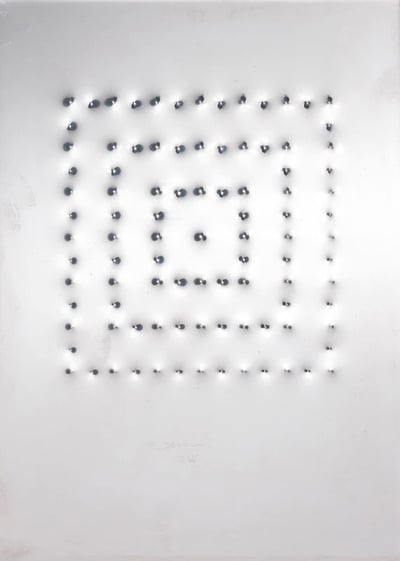
Estroflesssso, 2008
Sculpture / Object
Metal
Currently Not Available
Enrico Castellani
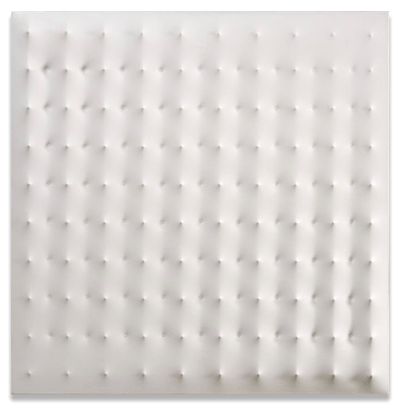
Superficie Bianca, 1968
Limited Edition Print
Plastic
Currently Not Available
Related Artists

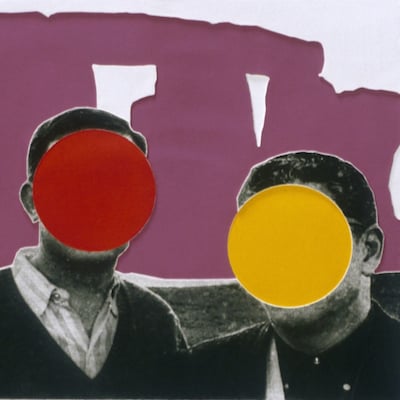
Artwork by John Baldessari
What is conceptual art?
Sometimes referred to as Conceptualism, this is an art form where the idea(s) or concept(s) behind the work take precedence over material concerns and traditional aesthetics. Many conceptual artworks can be created by anyone simply by following written instructions. The concept or idea is the most essential aspect of the artwork.
Enrico Castellani
Superficie (Vanilla/Gold), 1968
30 x 30 cm


