

// Manifesto 2017 by Gabriele De Santis, a lithograph from 2017, features a bold yellow background with a list of artists' names in red capital letters arranged in a column on the left side. To the right of each name, various symbols—ranging from squares to lines and circles—are aligned, creating a coded or symbolic system that invites interpretation. This arrangement evokes the style of a modernist poster, combining elements of typography and minimalism. The work could be seen as a tribute or commentary on contemporary art and the collective identity of artists. De Santis's use of symbols rather than images emphasizes the abstraction and conceptual nature of the piece.
Artwork Copyright © Gabriele de SantisGabriele De Santis (Italy, 1983) is a conceptual artist whose work spans painting, sculpture, and installation. He explores the intersection of classical art and contemporary culture, often incorporating elements like emojis, skateboards, and marble. De Santis's art challenges traditional hierarchies, blending historical references with modern symbols to comment on digital communication and societal norms.
Artwork Copyright © Gabriele de SantisManifesto 2017, 2017
Form
Medium
Size
- Inches
- Centimeters
Edition
Price
- USD
- EUR
- GBP
- CHF
- Authenticity Guaranteed
- Insured Shipping
- Online Since 2005
●Inventory 7775
●Signed
●Comes with gallery invoice and certificate
●Any questions?
// Manifesto 2017 by Gabriele De Santis, a lithograph from 2017, features a bold yellow background with a list of artists' names in red capital letters arranged in a column on the left side. To the right of each name, various symbols—ranging from squares to lines and circles—are aligned, creating a coded or symbolic system that invites interpretation. This arrangement evokes the style of a modernist poster, combining elements of typography and minimalism. The work could be seen as a tribute or commentary on contemporary art and the collective identity of artists. De Santis's use of symbols rather than images emphasizes the abstraction and conceptual nature of the piece.
Artwork Copyright © Gabriele de SantisGabriele De Santis (Italy, 1983) is a conceptual artist whose work spans painting, sculpture, and installation. He explores the intersection of classical art and contemporary culture, often incorporating elements like emojis, skateboards, and marble. De Santis's art challenges traditional hierarchies, blending historical references with modern symbols to comment on digital communication and societal norms.
Artwork Copyright © Gabriele de Santis- Recently Added
- Price (Low-High)
- Price (High-Low)
- Year (Low-High)
- Year (High-Low)

Gabriele de Santis
Manifesto 2017, 2017
Limited Edition Print
Lithograph
EUR 2,000
Related Artists
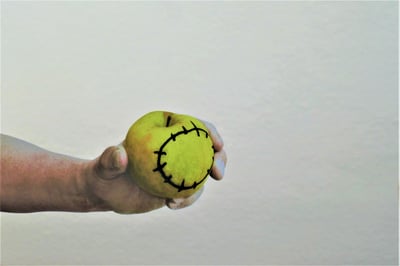
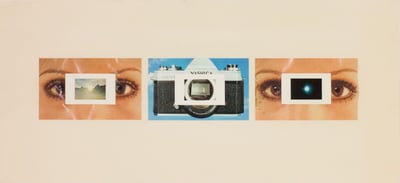

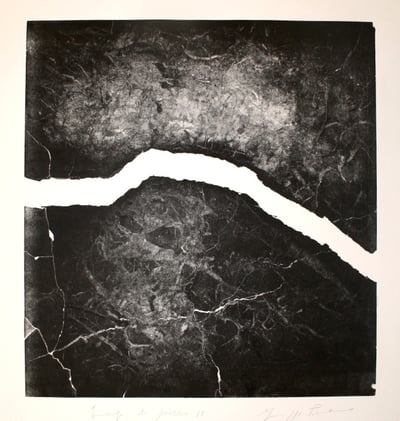

Artwork by Laure Prouvost
What is Lettrism?
Lettrism is an art form that uses letters, words, and symbols to create artwork. The movement was established in Paris in the 1940s and later gained popularity in the 1950s in America. Lettrisme is the French spelling of the movement's name, derived from the French word for letter.

Gabriele de Santis
Manifesto 2017, 2017
100 x 70 cm


