
Michelangelo Pistoletto
Michelangelo Pistoletto (Italy, 1933) is a key figure in Arte Povera and conceptual art. Renowned for his 'Mirror Paintings,' which incorporate reflective surfaces to engage viewers directly, he explores themes of identity, society, and time. Pistoletto's works, including the 'Third Paradise' project, have influenced generations of contemporary artists worldwide.
© Michelangelo Pistoletto. All rights reserved.
- Recently Added
- Price (Low-High)
- Price (High-Low)
- Year (Low-High)
- Year (High-Low)
Michelangelo Pistoletto
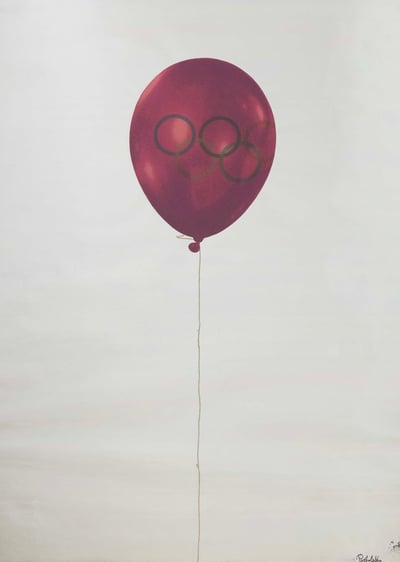
Balloon, 1983
Limited Edition Print
Silkscreen
Inquire For Price

Michelangelo Pistoletto
Alter Ego, 1984
Limited Edition Print
Screen-print
EUR 1,050

Michelangelo Pistoletto
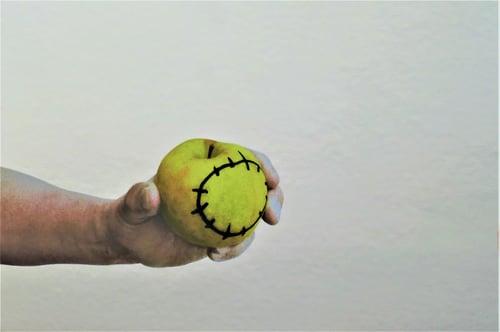
La mela reintegrata, 2014
Limited Edition Print
Screen-print
EUR 4,850

Michelangelo Pistoletto
Amare, 2006
Limited Edition Print
Mixed Media
Currently Not Available
Art is the primary expression of human creativity.
- Michelangelo Pistoletto
- Michelangelo Pistoletto
Michelangelo Pistoletto is an Italian painter and art theorist. Moreover, he is also recognized as an action and object artist as well as acknowledged as one of the key figures behind the Italian Arte Povera movement. This avant-garde, modern art movement took major cities throughout Italy by storm (including Rome, Genoa, Venice, Turin, Milan, Bologna, and Naples) from 1967-1972. The artists involved were taking a radical stance and questioning the values of established institutions of culture, government, and industry. Michelangelo Pistoletto’s work mainly deals with the subject matter of reflection and the unification of art as well as everyday life and materials. He is seeking a Gesamtkunstwerk, which is a term associated with a total, ideal, or universal work of art. Pistoletto's style and use of mediums have evolved over the course of his career. During his early years, he worked under his father as an art restorer from 1947 to 1958. Moreover, Michelangelo Pistoletto also made many self-portraits and other figurative works during the 1950s. He went on to display his work at the Biennale di San Marino in 1959. Then, during the next year, he had his first one-man show at the Galleria Galatea. In the early '60s, Michelangelo Pistoletto continued to express himself via self-portraits and other related works. For these works, he used monochrome, metallic backgrounds. From there, the artist combined photography with paint via collage techniques on reflective backgrounds. Eventually, his techniques progressed over to printing photorealistic scenes on steel plates polished to a high finish. He achieved this medium via using the screen-printing method, which made the viewer nearly meld into the artwork. By the mid-1960s, the artist came to the attention of an international audience, thanks to gallery owner Ileana Sonnabend. Michelangelo Pistoletto's mirror paintings are some of his best-known artworks. He currently uses these forms of expression via his artwork and employs human size mirrors. Using these mirrors as basic material, the artist either prints photographic images or paints figures on them. While the artist has experienced significant international success including several exhibitions within the U.K. and U.S., the painter continues to live and work close to his roots in Biella as well as Turin, Italy. (Artist website)
Related Artists

Related Articles
Artists - November 11, 2024
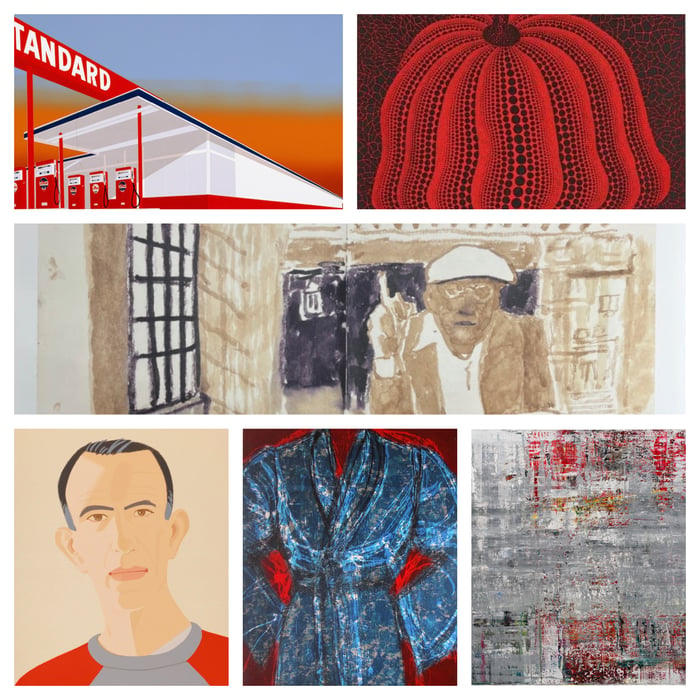
25 Living Icons: A Generation of Artists Defying Time
Celebrate 25 living legends redefining art! From Kusama to Hockney, explore their enduring creativity and groundbreaking contributions to modern art.Read More
News, Popular, Collecting, Artists - August 12, 2026
In Minor Keys: Finding Intimacy and Identity at the 61st Venice Biennale — and in Your Collection
Explore how Koyo Kouoh’s 61st Venice Biennale vision, In Minor Keys, is shifting contemporary collecting toward quiet introspection, memory, and personal identi…Read More
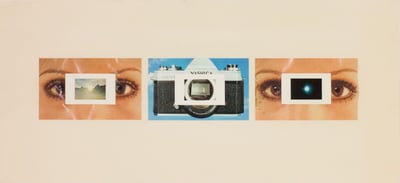
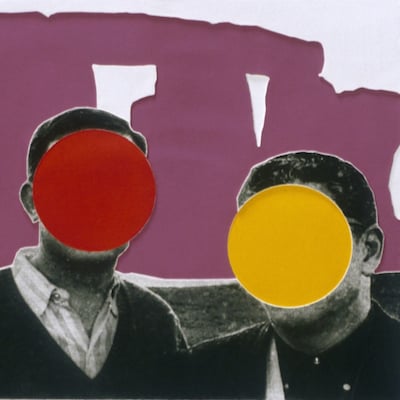 Artwork by John Baldessari
What is conceptual art?
Sometimes referred to as Conceptualism, this is an art form where the idea(s) or concept(s) behind the work take precedence over material concerns and traditional aesthetics. Many conceptual artworks can be created by anyone simply by following written instructions. The concept or idea is the most essential aspect of the artwork.
Explore »

