
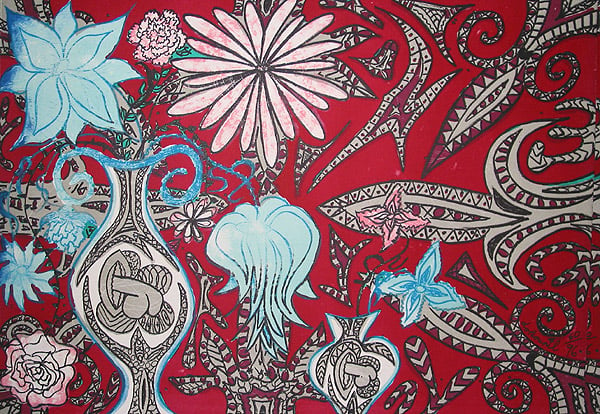
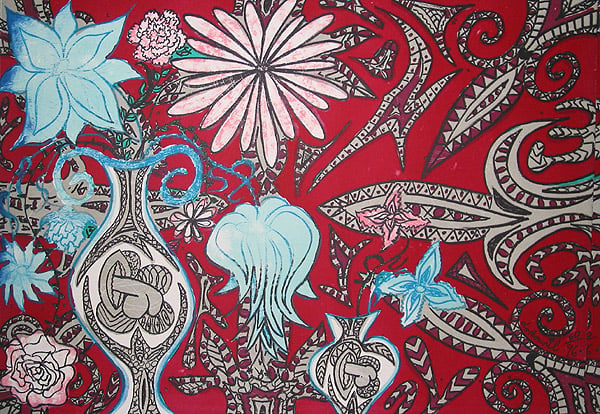
// Georg Jiri Dokoupil’s Untitled (Red) is a vibrant lithograph that immerses the viewer in a lively interplay of floral motifs and decorative patterns. Against a striking red background, intricately designed vases and flowers in shades of blue, pink, and white create a sense of both elegance and whimsy. The detailed patterns within the vases and floral elements, marked by fine linework and stylized ornamentation, evoke a sense of cultural fusion and ornamental opulence. Dokoupil’s use of contrasting colors and detailed decorative elements draws the eye across the composition, creating a visual rhythm that celebrates both organic and geometric forms. The lithograph measures 53 x 76 cm, showcasing Dokoupil’s flair for combining vivid color with intricate design.
Artwork Copyright © Georg Jiri DokoupilGeorg Jiri Dokoupil (Czech Republic/Germany, 1954) is a versatile contemporary artist and a founding member of the Mülheimer Freiheit group. Known for his experimental approach, he employs unconventional techniques, such as using soot or soap bubbles to create dynamic, abstract compositions. Dokoupil’s eclectic style defies categorization, continually pushing artistic boundaries.
Artwork Copyright © Georg Jiri DokoupilUntitled (red)
Form
Medium
Size
- Inches
- Centimeters
Edition
Price
- USD
- EUR
- GBP
- CHF
- Authenticity Guaranteed
- Insured Shipping
- Online Since 2005
●Inventory 10254
●Signed
●Comes with gallery invoice and certificate
●Sell Us a Similar Artwork. Learn more.
// Georg Jiri Dokoupil’s Untitled (Red) is a vibrant lithograph that immerses the viewer in a lively interplay of floral motifs and decorative patterns. Against a striking red background, intricately designed vases and flowers in shades of blue, pink, and white create a sense of both elegance and whimsy. The detailed patterns within the vases and floral elements, marked by fine linework and stylized ornamentation, evoke a sense of cultural fusion and ornamental opulence. Dokoupil’s use of contrasting colors and detailed decorative elements draws the eye across the composition, creating a visual rhythm that celebrates both organic and geometric forms. The lithograph measures 53 x 76 cm, showcasing Dokoupil’s flair for combining vivid color with intricate design.
Artwork Copyright © Georg Jiri DokoupilGeorg Jiri Dokoupil (Czech Republic/Germany, 1954) is a versatile contemporary artist and a founding member of the Mülheimer Freiheit group. Known for his experimental approach, he employs unconventional techniques, such as using soot or soap bubbles to create dynamic, abstract compositions. Dokoupil’s eclectic style defies categorization, continually pushing artistic boundaries.
Artwork Copyright © Georg Jiri Dokoupil- Recently Added
- Price (Low-High)
- Price (High-Low)
- Year (Low-High)
- Year (High-Low)

Georg Jiri Dokoupil
Untitled, 1989
Painting
Acrylic on canvas
EUR 17,500 - 20,000

Georg Jiri Dokoupil
Untitled (red)
Limited Edition Print
Lithograph
EUR 750
Georg Jiri Dokoupil
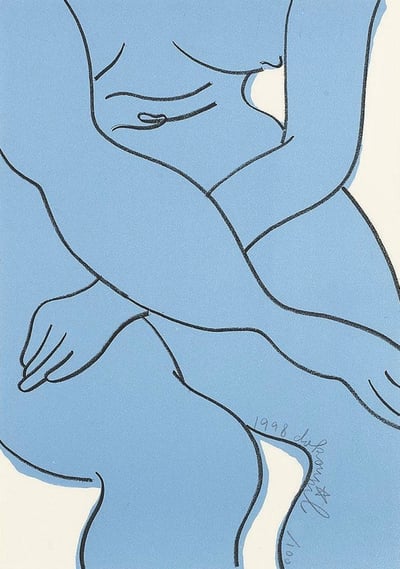
Blue Nude, 1998
Limited Edition Print
Lithograph
Currently Not Available

Georg Jiri Dokoupil
Goldblau, 2018
Limited Edition Print
Carborundum
Currently Not Available
Related Artists


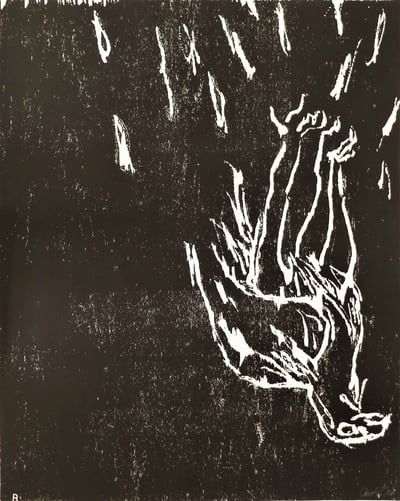

Artwork by Georg Baselitz
Who are the Neue Wilden?
Neue Wilden is the term German artists used for Neo-Expressionism. In the 1970s and 80s, expressive painting re-emerged in Germany, with artists embracing intense colors and broad brushstrokes. The movement grew in opposition to minimal and conceptual art, favoring a return to raw, emotional expression through bold and dynamic painting techniques.
Georg Jiri Dokoupil
Untitled (red)
53 x 76 cm


