Blanket printed in colours.
- Produced by Kit Grover Retail Culture.
- Published by the National Galleries of Scotland, Edinburgh.
- Not signed
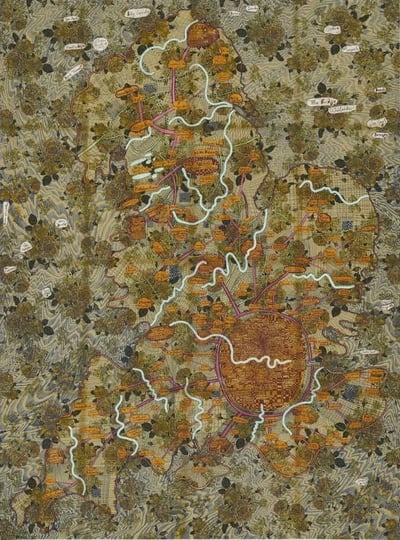
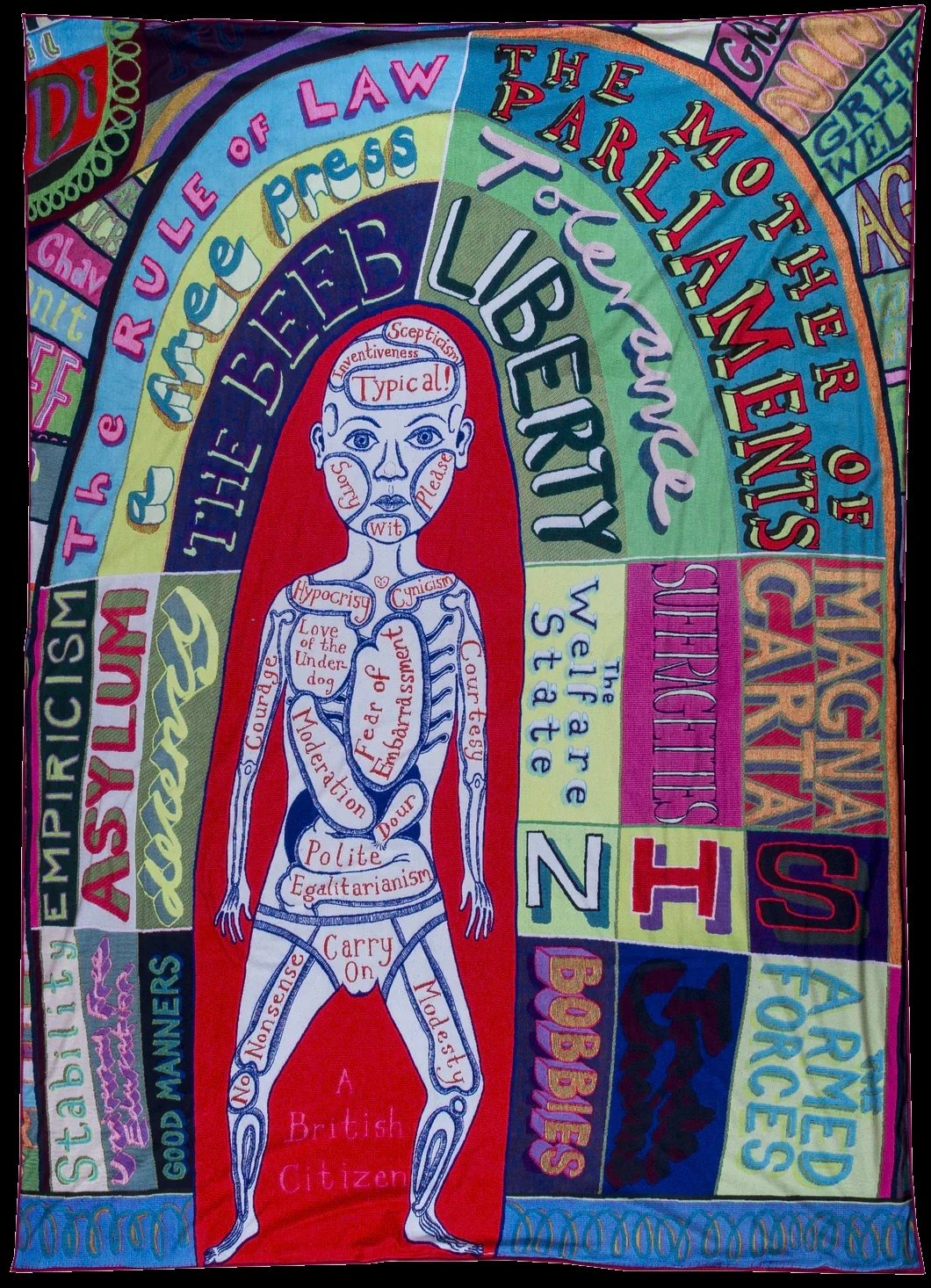
This colorful tapestry by Grayson Perry, titled Comfort Blanket, is a vibrant exploration of British identity and cultural symbols. The central figure, labeled as a Typical Brit, stands amidst a swirling tapestry of text and imagery that references key aspects of British life, such as the NHS, Magna Carta, liberty, and the welfare state. Surrounding this figure are words and phrases associated with British values like Rule of Law, Tolerance, and The Free Press, interspersed with cultural references like The Beeb and Bobbies. The tapestry combines Perry’s characteristic wit with a sense of nostalgia and critique, reflecting both pride in British institutions and a questioning of national identity. The dense visual layout and bold, contrasting colors make the work visually striking and intellectually engaging.
Grayson Perry (UK, 1960) is a celebrated contemporary artist and Turner Prize winner known for his provocative ceramics, tapestries, and multimedia works. Often exploring themes of identity, gender, and societal norms, Perry uses humor and craftsmanship to challenge perceptions. His alter ego, Claire, features prominently in his artistic narrative.
Tapestry Tapestry is a heavy, handwoven textile featuring intricate designs or images woven directly into the fabric. Created by skilled weavers using materials like wool, linen, cotton, silk, and sometimes silver and gold threads, tapestries have historically served as art pieces, decorations, insulation, and symbols of authority.
Blanket printed in colours.
- Produced by Kit Grover Retail Culture.
- Published by the National Galleries of Scotland, Edinburgh.
- Not signed
This colorful tapestry by Grayson Perry, titled Comfort Blanket, is a vibrant exploration of British identity and cultural symbols. The central figure, labeled as a Typical Brit, stands amidst a swirling tapestry of text and imagery that references key aspects of British life, such as the NHS, Magna Carta, liberty, and the welfare state. Surrounding this figure are words and phrases associated with British values like Rule of Law, Tolerance, and The Free Press, interspersed with cultural references like The Beeb and Bobbies. The tapestry combines Perry’s characteristic wit with a sense of nostalgia and critique, reflecting both pride in British institutions and a questioning of national identity. The dense visual layout and bold, contrasting colors make the work visually striking and intellectually engaging.
Grayson Perry (UK, 1960) is a celebrated contemporary artist and Turner Prize winner known for his provocative ceramics, tapestries, and multimedia works. Often exploring themes of identity, gender, and societal norms, Perry uses humor and craftsmanship to challenge perceptions. His alter ego, Claire, features prominently in his artistic narrative.
Art is not some fun add-on to life.
- Grayson Perry
Renowned for his unorthodox expression, Grayson Perry is an artist whose most notable works include printed tapestries and ceramic vases that explore both historical and contemporary themes, as well as featuring autobiographical references to his own life, and that of his transvestite alter-ego, Claire. Among Perry’s most acclaimed works is Aspects of Myself, a ceramic vessel featuring several different figures, some altogether innocent, and others - such as a bound and gagged woman - more sinister; Perry has confirmed that these figures depict various different aspects of his own personality. In creating his ceramic works, Perry refers to the ceramic traditions of folk art and Greek pottery while using the traditional coiling method to create the final shape, he then fires in a kiln several times in order to transfer the image and finish with a lustre glaze.
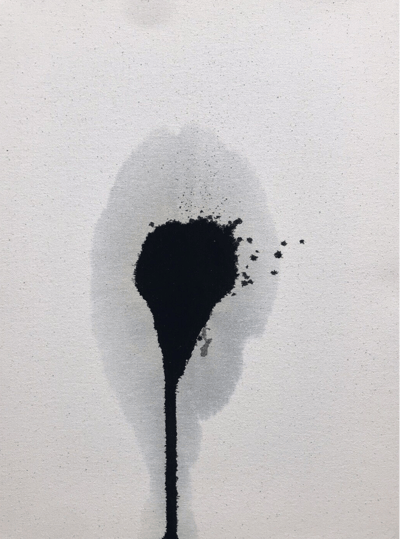
Action Painting is a style of painting where the physical act of creating art—such as gestural brushstrokes, splashing or dripping paint, or moving and dancing while applying paint—is considered essential to the artwork itself. This approach emphasizes the artist's movement and spontaneity as integral to the creative process.