

Lithograph and etching.
Guillermo Kuitca’s Cuarta pared (Fourth Wall, 1997) is a lithograph and etching that reflects the artist’s enduring interest in architecture, theatrical space, and psychological mapping. The composition is constructed from carefully ordered brick-like units interrupted by sweeping white bands that curve across the image. These voids create a dynamic tension between structure and absence, suggesting pathways, stage sets, horizons, or architectural plans. The title refers to the “fourth wall” of the theater—the invisible boundary between performers and audience—introducing themes of perception, separation, and imagined space. Kuitca’s work often occupies the territory between abstraction and representation, transforming familiar spatial systems into evocative metaphors for memory, displacement, and human experience. Here, the rigorous geometric framework is balanced by fluid interruptions that invite multiple readings.
Artwork Copyright © Guillermo KuitcaGuillermo Kuitca (Argentina, 1961) is a prominent contemporary artist known for his abstract, map-inspired paintings and theatrical set designs. His works often blend cartography, architecture, and memory, exploring themes of displacement and human experience. Kuitca's art has gained international acclaim for its poetic and conceptual depth.
Artwork Copyright © Guillermo KuitcaCuarta pared, 1997
Form
Medium
Size
- Inches
- Centimeters
Edition
Price
- USD
- EUR
- GBP
- CHF
- Authenticity Guaranteed
- Insured Shipping
- Online Since 2005
●Inventory 17546
●Signed
●Comes with gallery invoice and certificate
●Any questions?
Lithograph and etching.
Guillermo Kuitca’s Cuarta pared (Fourth Wall, 1997) is a lithograph and etching that reflects the artist’s enduring interest in architecture, theatrical space, and psychological mapping. The composition is constructed from carefully ordered brick-like units interrupted by sweeping white bands that curve across the image. These voids create a dynamic tension between structure and absence, suggesting pathways, stage sets, horizons, or architectural plans. The title refers to the “fourth wall” of the theater—the invisible boundary between performers and audience—introducing themes of perception, separation, and imagined space. Kuitca’s work often occupies the territory between abstraction and representation, transforming familiar spatial systems into evocative metaphors for memory, displacement, and human experience. Here, the rigorous geometric framework is balanced by fluid interruptions that invite multiple readings.
Artwork Copyright © Guillermo KuitcaGuillermo Kuitca (Argentina, 1961) is a prominent contemporary artist known for his abstract, map-inspired paintings and theatrical set designs. His works often blend cartography, architecture, and memory, exploring themes of displacement and human experience. Kuitca's art has gained international acclaim for its poetic and conceptual depth.
Artwork Copyright © Guillermo Kuitca- Recently Added
- Price (Low-High)
- Price (High-Low)
- Year (Low-High)
- Year (High-Low)
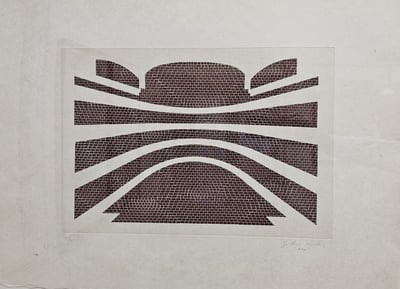
Guillermo Kuitca
Cuarta pared, 1997
Limited Edition Print
Mixed Media
EUR 2,000

Guillermo Kuitca
Sin título-2, 1997
Limited Edition Print
Mixed Media
EUR 2,000
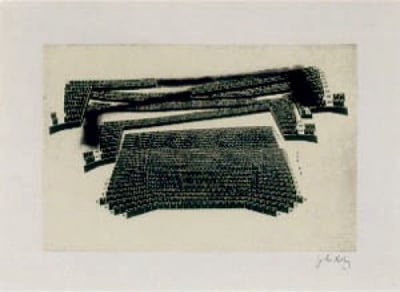
Guillermo Kuitca
Sin título-1, 1997
Limited Edition Print
Mixed Media
Currently Not Available
Related Artists
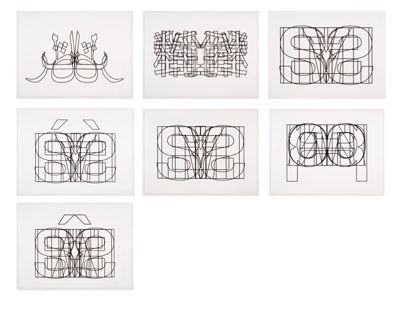
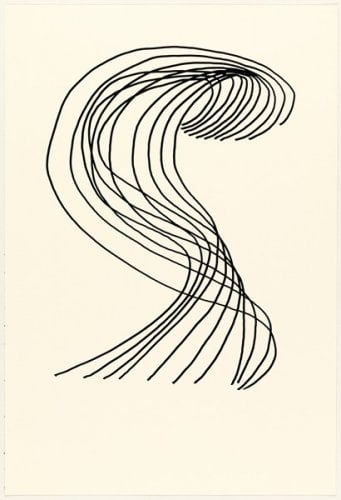

Artwork by Carlos Cruz-Diez
What is Latin American art?
Latin American Art is a style which takes inspiration from its culture, society, politics, native traditions, religions and landscape. Op-Art and Kinetic Art figure prominently in Latin artworks. Colors in Latin American compositions are often bold. Latin American artists work in all media and movements.

Guillermo Kuitca
Cuarta pared, 1997
56 x 76 cm


