

Lithograph and etching
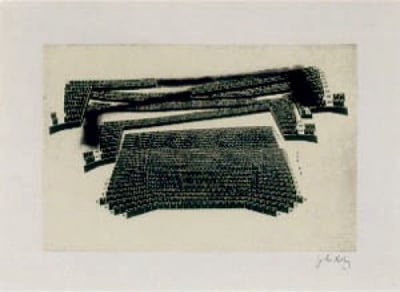
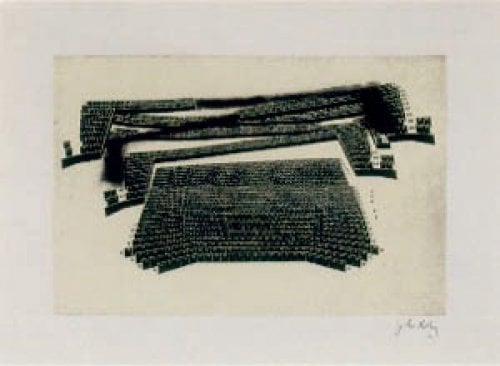
Sin título-1 by Guillermo Kuitca is a limited edition mixed-media print from 1997, created using lithograph and etching techniques in an edition of 35. The artwork features a dark, distorted architectural structure that resembles a theater or stadium seating viewed from above. The rows of seats appear layered and warped, creating a fragmented, almost collapsing perspective. This piece is characteristic of Kuitca's exploration of spatial displacement and the deconstruction of organized spaces. The unsettling structure evokes themes of isolation within communal spaces, highlighting how places designed for gatherings can also convey solitude and alienation. Kuitca’s work often brings a haunting quality to architectural forms, transforming familiar structures into abstract reflections on human experiences within space.
Artwork Copyright © Guillermo KuitcaGuillermo Kuitca (Argentina, 1961) is a prominent contemporary artist known for his abstract, map-inspired paintings and theatrical set designs. His works often blend cartography, architecture, and memory, exploring themes of displacement and human experience. Kuitca's art has gained international acclaim for its poetic and conceptual depth.
Artwork Copyright © Guillermo KuitcaSin título-1, 1997
Form
Medium
Size
- Inches
- Centimeters
Edition
Price
Available works →
- Authenticity Guaranteed
- Insured Shipping
- Online Since 2005
●
●Inventory 3008
●Signed
●Comes with gallery invoice and certificate
●Sell Us a Similar Artwork. Learn more.
Lithograph and etching
Sin título-1 by Guillermo Kuitca is a limited edition mixed-media print from 1997, created using lithograph and etching techniques in an edition of 35. The artwork features a dark, distorted architectural structure that resembles a theater or stadium seating viewed from above. The rows of seats appear layered and warped, creating a fragmented, almost collapsing perspective. This piece is characteristic of Kuitca's exploration of spatial displacement and the deconstruction of organized spaces. The unsettling structure evokes themes of isolation within communal spaces, highlighting how places designed for gatherings can also convey solitude and alienation. Kuitca’s work often brings a haunting quality to architectural forms, transforming familiar structures into abstract reflections on human experiences within space.
Artwork Copyright © Guillermo KuitcaGuillermo Kuitca (Argentina, 1961) is a prominent contemporary artist known for his abstract, map-inspired paintings and theatrical set designs. His works often blend cartography, architecture, and memory, exploring themes of displacement and human experience. Kuitca's art has gained international acclaim for its poetic and conceptual depth.
Artwork Copyright © Guillermo Kuitca- Recently Added
- Price (Low-High)
- Price (High-Low)
- Year (Low-High)
- Year (High-Low)
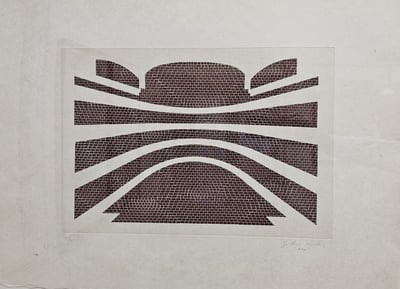
Guillermo Kuitca
Cuarta pared, 1997
Limited Edition Print
Mixed Media
EUR 2,000

Guillermo Kuitca
Sin título-2, 1997
Limited Edition Print
Mixed Media
EUR 2,000
Guillermo Kuitca
Sin título-1, 1997
Limited Edition Print
Mixed Media
Currently Not Available
Available works by Guillermo Kuitca
See all →Guillermo Kuitca
Cuarta pared, 1997
Limited Edition Print
Mixed Media
EUR 2,000
Guillermo Kuitca
Sin título-2, 1997
Limited Edition Print
Mixed Media
EUR 2,000
Related Artists

Artwork by Carlos Cruz-Diez
What is Latin American art?
Latin American Art is a style which takes inspiration from its culture, society, politics, native traditions, religions and landscape. Op-Art and Kinetic Art figure prominently in Latin artworks. Colors in Latin American compositions are often bold. Latin American artists work in all media and movements.
Guillermo Kuitca
Sin título-1, 1997
56 x 76 cm


