

Lithograph and etching
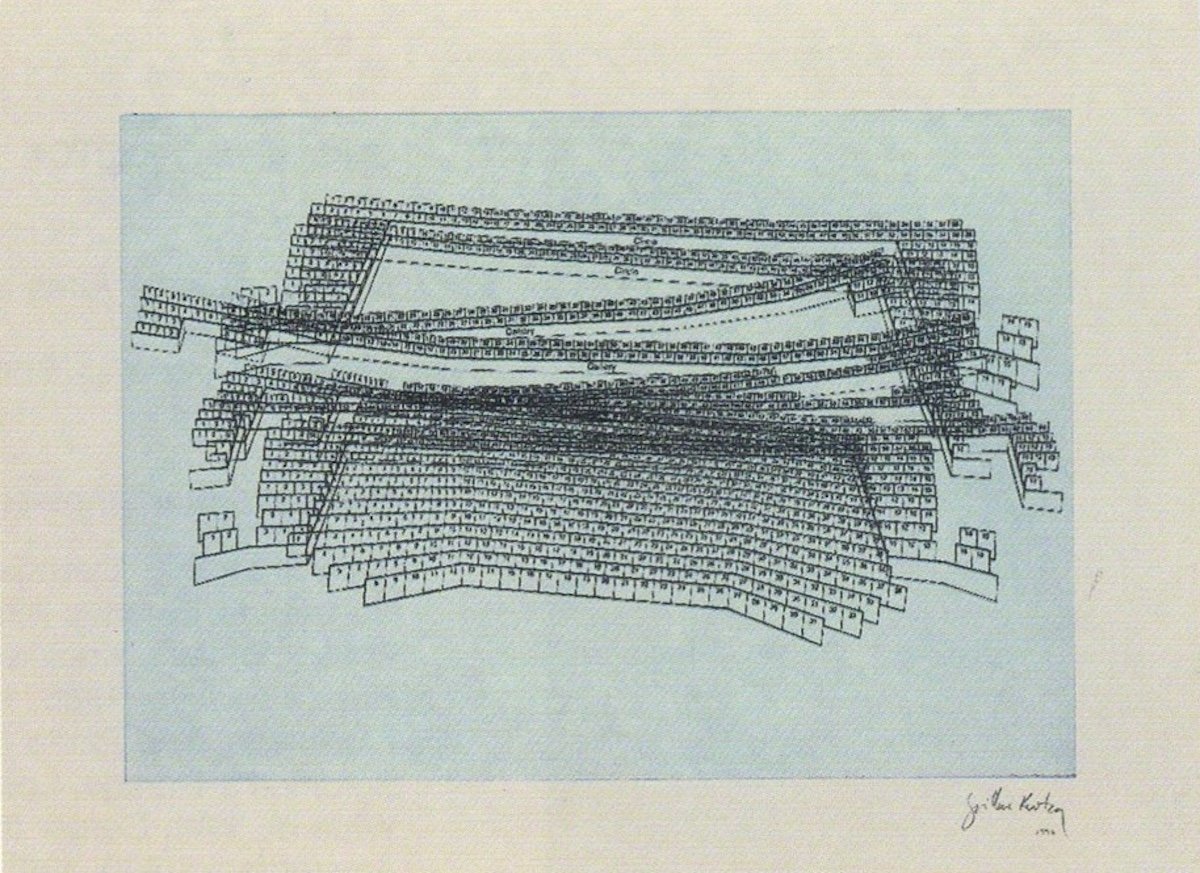
Sin título-2 by Guillermo Kuitca is a limited edition mixed-media print from 1997, created with lithograph and etching techniques in an edition of 35. The artwork depicts a distorted, layered architectural structure reminiscent of seating arrangements or theater seating, drawn in overlapping and warped lines. This intricate, almost surreal structure suggests themes of fragmentation, dislocation, and the rearrangement of spaces often present in Kuitca's work. The piece invites viewers to interpret the structure’s ambiguous form, evoking the transient nature of places where people gather, yet remain isolated in their own spaces. Kuitca’s focus on space and architecture transforms everyday structures into complex, almost labyrinthine abstractions.
Artwork Copyright © Guillermo KuitcaGuillermo Kuitca (Argentina, 1961) is a prominent contemporary artist known for his abstract, map-inspired paintings and theatrical set designs. His works often blend cartography, architecture, and memory, exploring themes of displacement and human experience. Kuitca's art has gained international acclaim for its poetic and conceptual depth.
Artwork Copyright © Guillermo KuitcaSin título-2, 1997
Form
Medium
Size
- Inches
- Centimeters
Edition
Price
- USD
- EUR
- GBP
- CHF
- Authenticity Guaranteed
- Insured Shipping
- Online Since 2005
●Inventory 3009
●Signed
●Comes with gallery invoice and certificate
●Any questions?
Lithograph and etching
Sin título-2 by Guillermo Kuitca is a limited edition mixed-media print from 1997, created with lithograph and etching techniques in an edition of 35. The artwork depicts a distorted, layered architectural structure reminiscent of seating arrangements or theater seating, drawn in overlapping and warped lines. This intricate, almost surreal structure suggests themes of fragmentation, dislocation, and the rearrangement of spaces often present in Kuitca's work. The piece invites viewers to interpret the structure’s ambiguous form, evoking the transient nature of places where people gather, yet remain isolated in their own spaces. Kuitca’s focus on space and architecture transforms everyday structures into complex, almost labyrinthine abstractions.
Artwork Copyright © Guillermo KuitcaGuillermo Kuitca (Argentina, 1961) is a prominent contemporary artist known for his abstract, map-inspired paintings and theatrical set designs. His works often blend cartography, architecture, and memory, exploring themes of displacement and human experience. Kuitca's art has gained international acclaim for its poetic and conceptual depth.
Artwork Copyright © Guillermo Kuitca- Recently Added
- Price (Low-High)
- Price (High-Low)
- Year (Low-High)
- Year (High-Low)
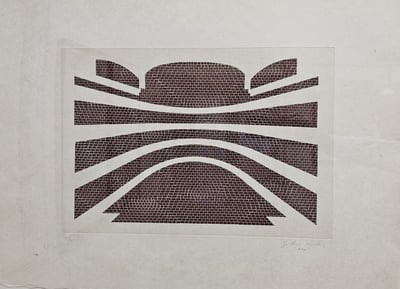
Guillermo Kuitca
Cuarta pared, 1997
Limited Edition Print
Mixed Media
EUR 2,000

Guillermo Kuitca
Sin título-2, 1997
Limited Edition Print
Mixed Media
EUR 2,000
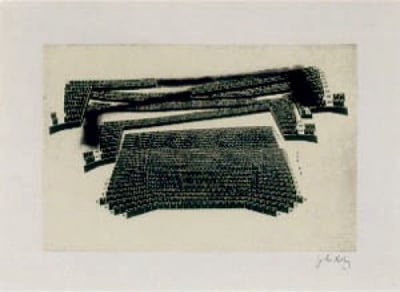
Guillermo Kuitca
Sin título-1, 1997
Limited Edition Print
Mixed Media
Currently Not Available
Related Artists

Artwork by Carlos Cruz-Diez
What is Latin American art?
Latin American Art is a style which takes inspiration from its culture, society, politics, native traditions, religions and landscape. Op-Art and Kinetic Art figure prominently in Latin artworks. Colors in Latin American compositions are often bold. Latin American artists work in all media and movements.
Guillermo Kuitca
Sin título-2, 1997
56 x 76 cm


