


Double necklace in silver-plated brass, with imitation pearls and Swarovski crystals. Photograph of Jane Seymour (at Tussaud’s) included. Hand-signed and numbered on a glossy leaflet. The necklace of Henry VIII's third wife closes a circle of art-historical references: from the original to a motif in a painting by Hans Holbein the Elder, to the replica at Madame Tussaud's, photographed in black and white by Sugimoto and again to the wearable piece of jewelry in restrained white and silver tones as a reference to Sugimoto's delicate photography.
This exquisite multiple by Hiroshi Sugimoto interweaves history, photography, and decorative art into a single wearable object. The double necklace in silver-plated brass, adorned with imitation pearls and Swarovski crystals, references the Tudor queen Jane Seymour as depicted in Hans Holbein’s iconic portrait and later immortalised in wax at Madame Tussaud’s — a subject of Sugimoto’s celebrated photographic series. Restrained in palette and elegant in form, the piece closes a circle of art-historical allusions, transforming courtly adornment into a meditation on reproduction, authenticity, and the passage of images through time. Hand-signed and numbered.
Artwork Copyright © Hiroshi SugimotoHiroshi Sugimoto (Japan, 1948) is a celebrated photographer and multidisciplinary artist, renowned for his black-and-white series that explore time, memory, and perception. Iconic works include 'Seascapes,' capturing serene horizons, and 'Theaters,' long exposures of illuminated screens. His art bridges conceptual and minimalist traditions, with pieces held in top museums worldwide.
Artwork Copyright © Hiroshi SugimotoNecklace of Jane Seymour, 2000
Form
Medium
Size
- Inches
- Centimeters
Edition
Price
- USD
- EUR
- GBP
- CHF
- Authenticity Guaranteed
- Insured Shipping
- Online Since 2005
●Inventory 17348
●Signed
●Comes with gallery invoice and certificate
●Sell Us a Similar Artwork. Learn more.
Double necklace in silver-plated brass, with imitation pearls and Swarovski crystals. Photograph of Jane Seymour (at Tussaud’s) included. Hand-signed and numbered on a glossy leaflet. The necklace of Henry VIII's third wife closes a circle of art-historical references: from the original to a motif in a painting by Hans Holbein the Elder, to the replica at Madame Tussaud's, photographed in black and white by Sugimoto and again to the wearable piece of jewelry in restrained white and silver tones as a reference to Sugimoto's delicate photography.
This exquisite multiple by Hiroshi Sugimoto interweaves history, photography, and decorative art into a single wearable object. The double necklace in silver-plated brass, adorned with imitation pearls and Swarovski crystals, references the Tudor queen Jane Seymour as depicted in Hans Holbein’s iconic portrait and later immortalised in wax at Madame Tussaud’s — a subject of Sugimoto’s celebrated photographic series. Restrained in palette and elegant in form, the piece closes a circle of art-historical allusions, transforming courtly adornment into a meditation on reproduction, authenticity, and the passage of images through time. Hand-signed and numbered.
Artwork Copyright © Hiroshi SugimotoHiroshi Sugimoto (Japan, 1948) is a celebrated photographer and multidisciplinary artist, renowned for his black-and-white series that explore time, memory, and perception. Iconic works include 'Seascapes,' capturing serene horizons, and 'Theaters,' long exposures of illuminated screens. His art bridges conceptual and minimalist traditions, with pieces held in top museums worldwide.
Artwork Copyright © Hiroshi Sugimoto- Recently Added
- Price (Low-High)
- Price (High-Low)
- Year (Low-High)
- Year (High-Low)
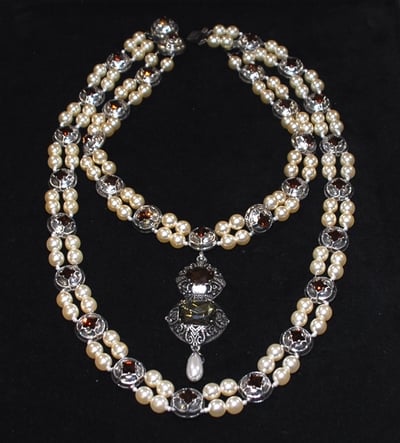
Hiroshi Sugimoto
Necklace of Jane Seymour, 2000
Sculpture / Object
Mixed Media
EUR 1,100

Hiroshi Sugimoto
Mechanical Form 0046, Material Testing Machine, 2005
Photography
Gelatin Silver Print
EUR 12,250
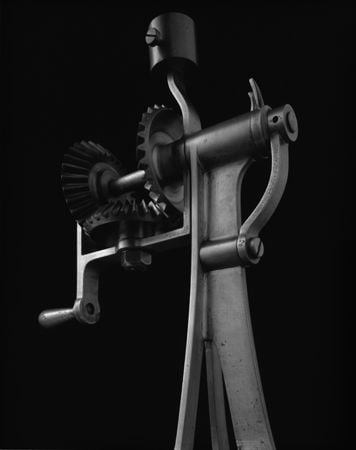
Hiroshi Sugimoto
Differential bevel gear, 2004
Photography
Gelatin Silver Print
EUR 21,400
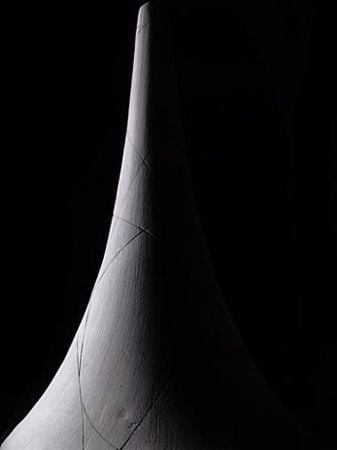
Hiroshi Sugimoto
Surface of revolution with constant negative curvature, 2004
Photography
Gelatin Silver Print
EUR 21,400
Related Artists

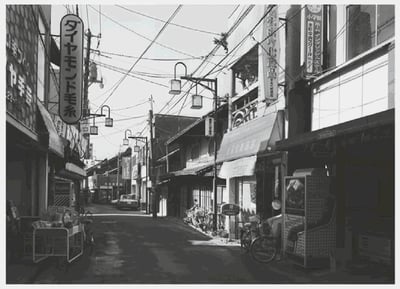


Artwork by John Baldessari
What is conceptual art?
Sometimes referred to as Conceptualism, this is an art form where the idea(s) or concept(s) behind the work take precedence over material concerns and traditional aesthetics. Many conceptual artworks can be created by anyone simply by following written instructions. The concept or idea is the most essential aspect of the artwork.



