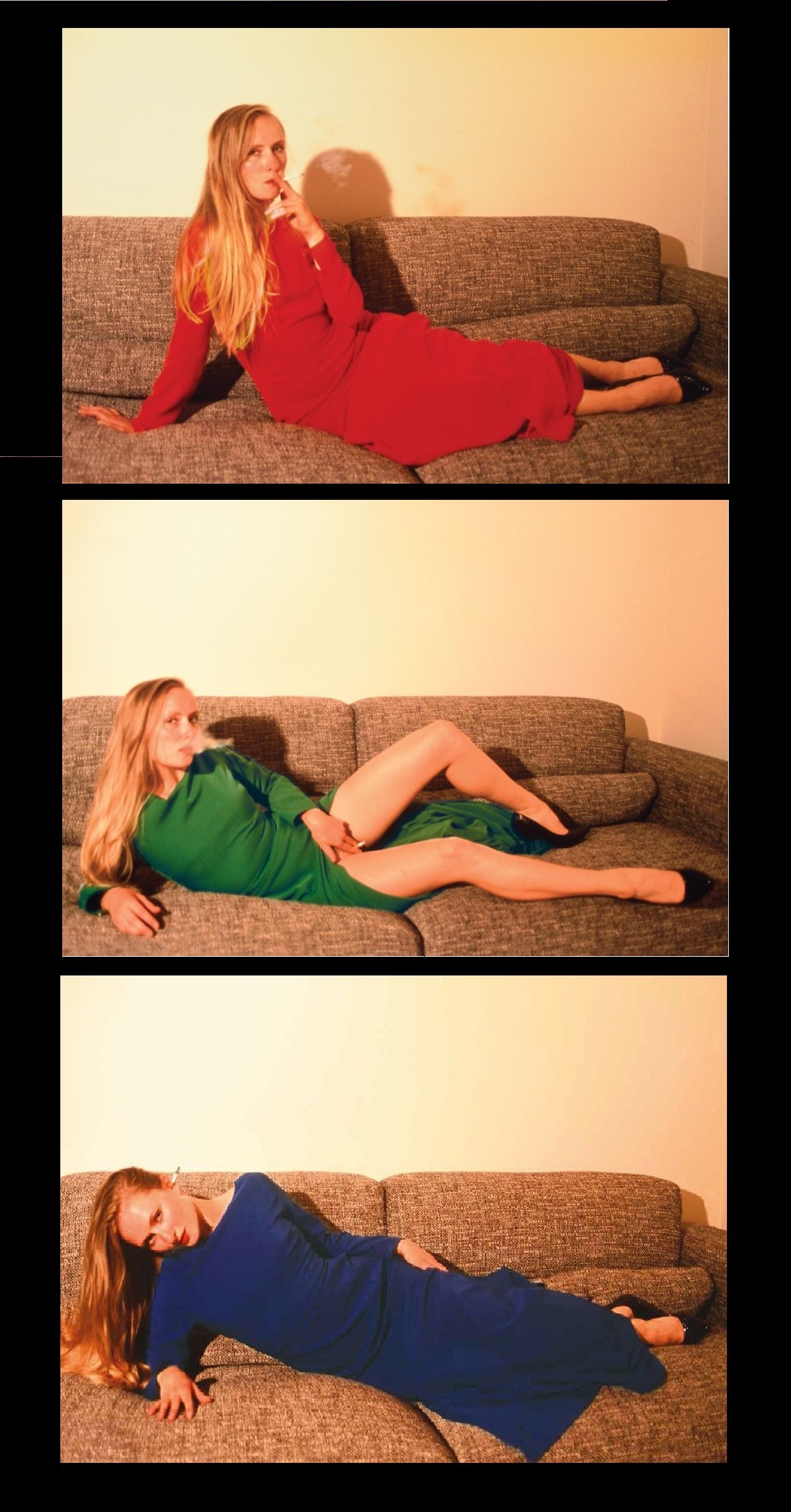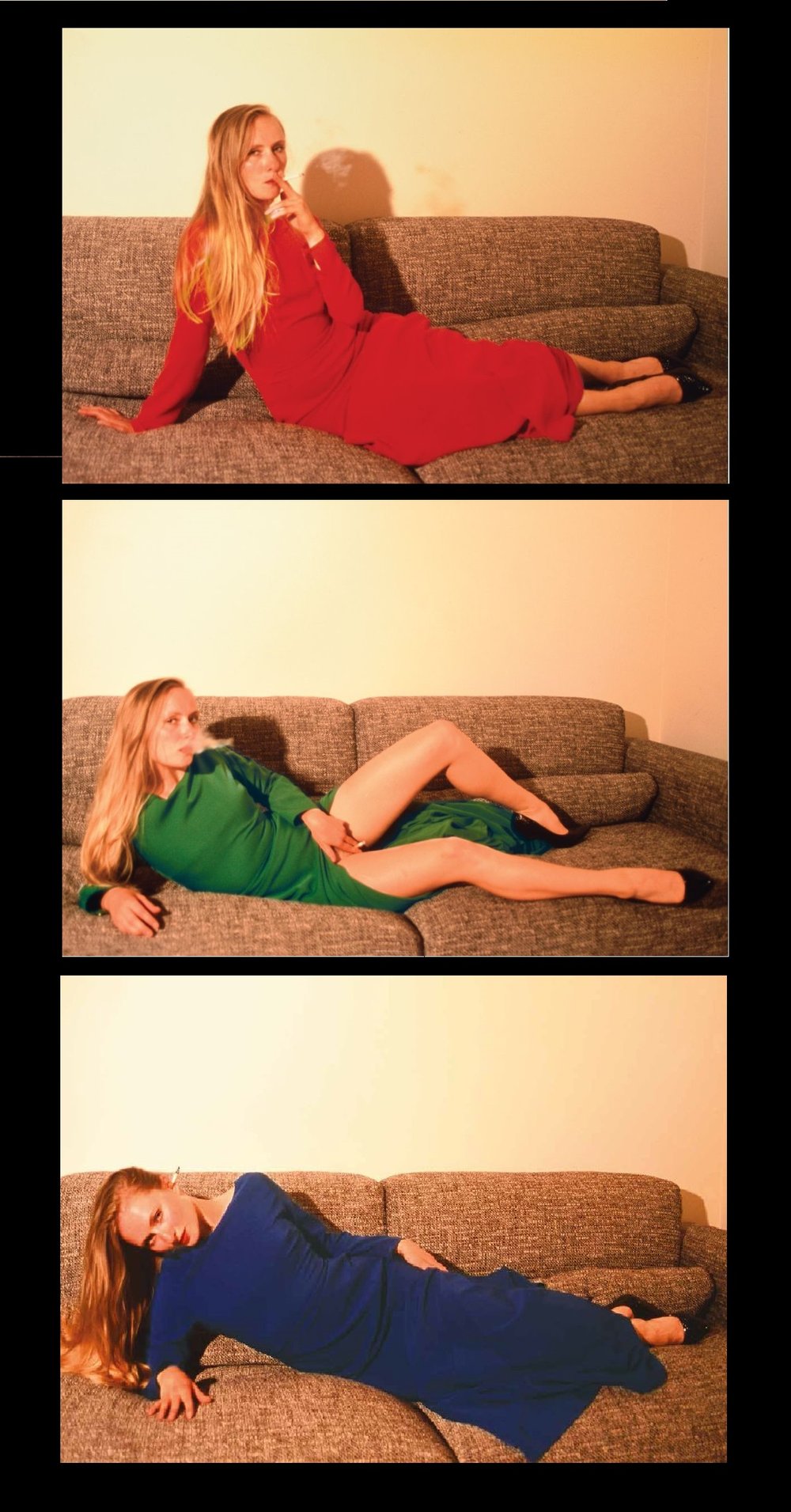
Analogue photos by Jan Fabre - Composed of 3 photographs printed on 1mm aluminum.
Jan Fabre’s Smoking Stella (2020) is a photographic triptych that explores themes of introspection, identity, and sensuality. Composed of three analogue photographs printed on aluminum, the piece features a woman reclining on a couch in three different colored outfits—red, green, and blue. Each image captures her in a subtly different pose, adding layers of narrative and emotional depth as her expressions and body language shift across the frames. The contrasting colors of her clothing against the neutral gray sofa emphasize her presence, creating a sense of quiet intensity. Fabre's work often delves into the human psyche and corporeal experience, and here he uses color, composition, and gesture to invite the viewer into a contemplative moment of stillness and personal reflection. This limited edition work is part of a series that encapsulates Fabre’s distinct approach to visual storytelling and his attention to psychological nuances.
Jan Fabre (Belgium, 1958) is a multidisciplinary artist blending theater, sculpture, and performance. Known for his provocative works, he often incorporates unconventional materials like beetle wings and blood, exploring themes of transformation, mortality, and the human body.
Mixed MediaMixed media refers to artwork that incorporates more than one medium within a single piece. Unlike multimedia art, which combines distinct forms of visual art and often includes elements like sound, video, or digital media, mixed media focuses on combining traditional art materials, such as paint, ink, and collage. Mixed media art allows artists to achieve a wide range of effects and textures by layering and blending different materials.
Analogue photos by Jan Fabre - Composed of 3 photographs printed on 1mm aluminum.
Jan Fabre’s Smoking Stella (2020) is a photographic triptych that explores themes of introspection, identity, and sensuality. Composed of three analogue photographs printed on aluminum, the piece features a woman reclining on a couch in three different colored outfits—red, green, and blue. Each image captures her in a subtly different pose, adding layers of narrative and emotional depth as her expressions and body language shift across the frames. The contrasting colors of her clothing against the neutral gray sofa emphasize her presence, creating a sense of quiet intensity. Fabre's work often delves into the human psyche and corporeal experience, and here he uses color, composition, and gesture to invite the viewer into a contemplative moment of stillness and personal reflection. This limited edition work is part of a series that encapsulates Fabre’s distinct approach to visual storytelling and his attention to psychological nuances.
Jan Fabre (Belgium, 1958) is a multidisciplinary artist blending theater, sculpture, and performance. Known for his provocative works, he often incorporates unconventional materials like beetle wings and blood, exploring themes of transformation, mortality, and the human body.
I have a space for myself. No one comes in. No press, no curators, no gallerists.
- Jan Fabre
Renowned for his Bic ball-point pen drawings and ornate sculptures, Jan Fabre is a multi-faceted artist with works spanning across such mediums as sculpture, stage design and choreography. Heaven of Delight is perhaps one of his most notable works – for this piece, Fabre assembled around 1.4 million Jewel Beetle shells in various patterns to adorn the ceiling of Palais Royal in Brussels; Fabre has stated that he has always been fascinated by Jewel Beetles, admiring them for their ‘beauty, memory and ability to process information’. Fabre uses a wide range of unorthodox materials including blood, tears, bones and taxidermied animals; his works attempt to explore the relationships between science and art, and often challenge ‘impossible’ feats – The Man Who Measures the Clouds is just one among many works that deals with the notion of the impossible. (Artist website)
Shock Art is an art movement that uses disturbing images, scents, or sounds to provoke a strong, often shocked, reaction from viewers. It is often regarded as a form of social commentary, with critics and supporters debating whether its impact is positive or negative. Shock Art frequently employs taboo, obscene, or outrageous elements to challenge societal norms and provoke critical thought.