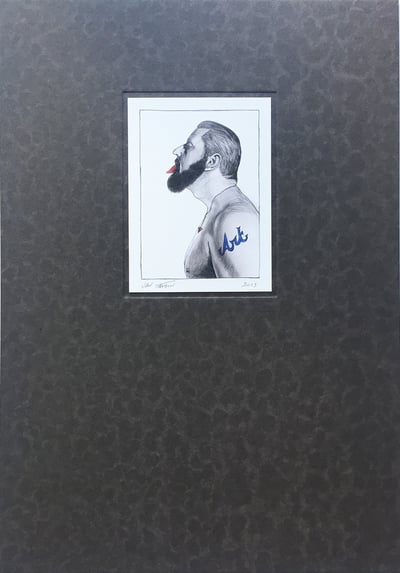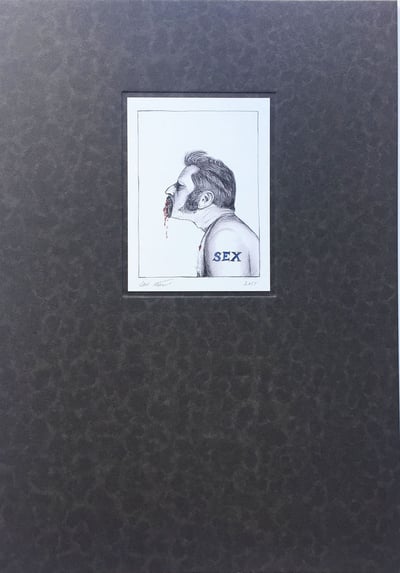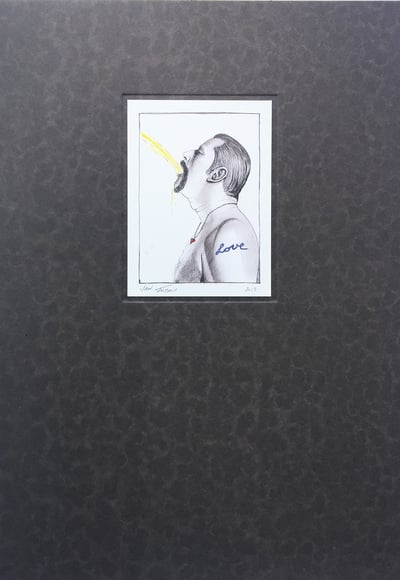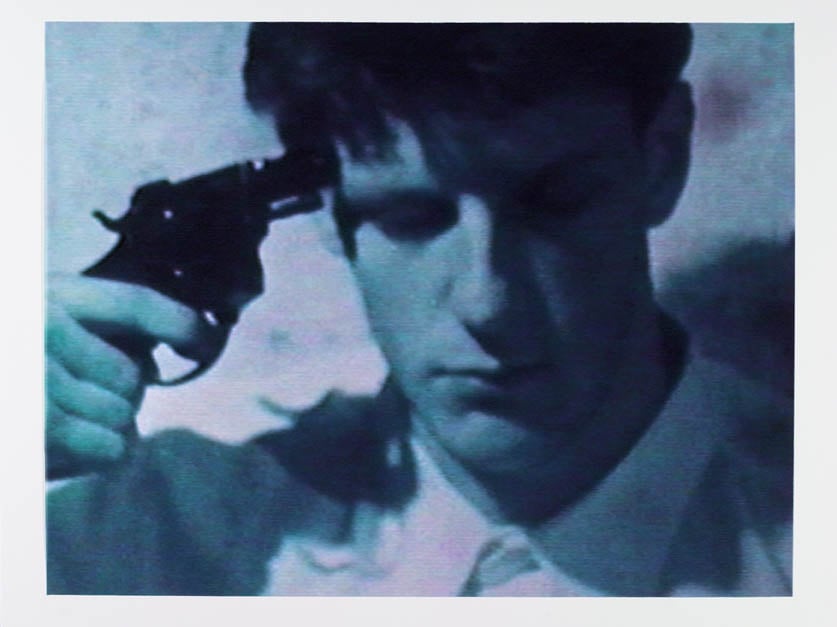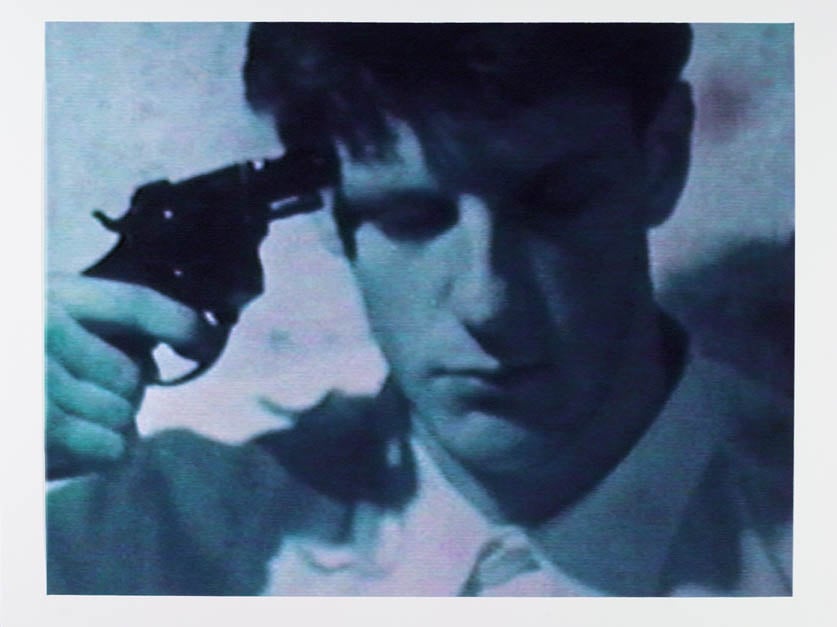
Zelfmoord? (2004) by Jan Fabre is a powerful lithograph that probes themes of mortality, existential angst, and the fragility of human psyche. This limited edition print, created using inkjet on rayon mounted on cardboard, depicts a young man pressing a gun to his temple, a bold and unsettling image. Fabre’s choice of subdued, almost monochromatic tones intensifies the somber atmosphere, evoking a contemplative mood around themes of despair and self-reflection. Known for challenging the viewer, Fabre often delves into taboo topics, prompting audiences to confront uncomfortable emotions. The artwork is a stark exploration of human vulnerability and existential questions that are rarely discussed openly.
Jan Fabre (Belgium, 1958) is a multidisciplinary artist blending theater, sculpture, and performance. Known for his provocative works, he often incorporates unconventional materials like beetle wings and blood, exploring themes of transformation, mortality, and the human body.
PrintLithography is a printing method based on the principle that water and oil do not mix. It can be used to print artwork or text onto paper or other suitable materials. Traditionally, an image was drawn with wax, fat, or oil onto a lithographic limestone surface or plate. Today, metal plates and other surfaces are also used in lithographic printing.
Zelfmoord? (2004) by Jan Fabre is a powerful lithograph that probes themes of mortality, existential angst, and the fragility of human psyche. This limited edition print, created using inkjet on rayon mounted on cardboard, depicts a young man pressing a gun to his temple, a bold and unsettling image. Fabre’s choice of subdued, almost monochromatic tones intensifies the somber atmosphere, evoking a contemplative mood around themes of despair and self-reflection. Known for challenging the viewer, Fabre often delves into taboo topics, prompting audiences to confront uncomfortable emotions. The artwork is a stark exploration of human vulnerability and existential questions that are rarely discussed openly.
Jan Fabre (Belgium, 1958) is a multidisciplinary artist blending theater, sculpture, and performance. Known for his provocative works, he often incorporates unconventional materials like beetle wings and blood, exploring themes of transformation, mortality, and the human body.
I have a space for myself. No one comes in. No press, no curators, no gallerists.
- Jan Fabre
Renowned for his Bic ball-point pen drawings and ornate sculptures, Jan Fabre is a multi-faceted artist with works spanning across such mediums as sculpture, stage design and choreography. Heaven of Delight is perhaps one of his most notable works – for this piece, Fabre assembled around 1.4 million Jewel Beetle shells in various patterns to adorn the ceiling of Palais Royal in Brussels; Fabre has stated that he has always been fascinated by Jewel Beetles, admiring them for their ‘beauty, memory and ability to process information’. Fabre uses a wide range of unorthodox materials including blood, tears, bones and taxidermied animals; his works attempt to explore the relationships between science and art, and often challenge ‘impossible’ feats – The Man Who Measures the Clouds is just one among many works that deals with the notion of the impossible. (Artist website)
Shock Art is an art movement that uses disturbing images, scents, or sounds to provoke a strong, often shocked, reaction from viewers. It is often regarded as a form of social commentary, with critics and supporters debating whether its impact is positive or negative. Shock Art frequently employs taboo, obscene, or outrageous elements to challenge societal norms and provoke critical thought.