Pile of pure New Zealand 3ply wool, ca 10% acrylic yarn and artificial silk
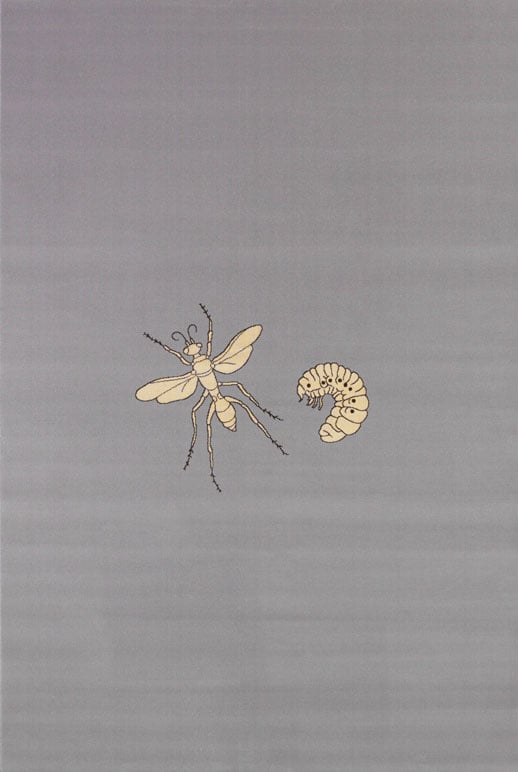
Fly by Jan Fabre, created in 2002, is a minimalist tapestry featuring a single, detailed depiction of a fly and its larva set against a soft, muted gray background. This simple composition, with just two central elements, brings focus to the intricate details of the insect’s anatomy and its life cycle. The fly’s wings, legs, and segmented body are rendered with precision, as is the curled form of the larva beside it. Made from pure New Zealand wool blended with acrylic yarn and artificial silk, the tapestry’s refined texture adds depth to the otherwise stark background. Fabre’s work often explores themes of nature, life, and transformation, and in this piece, he draws attention to an often-overlooked subject with elegance and restraint.
Jan Fabre (Belgium, 1958) is a multidisciplinary artist blending theater, sculpture, and performance. Known for his provocative works, he often incorporates unconventional materials like beetle wings and blood, exploring themes of transformation, mortality, and the human body.
Tapestry Tapestry is a heavy, handwoven textile featuring intricate designs or images woven directly into the fabric. Created by skilled weavers using materials like wool, linen, cotton, silk, and sometimes silver and gold threads, tapestries have historically served as art pieces, decorations, insulation, and symbols of authority.
Pile of pure New Zealand 3ply wool, ca 10% acrylic yarn and artificial silk
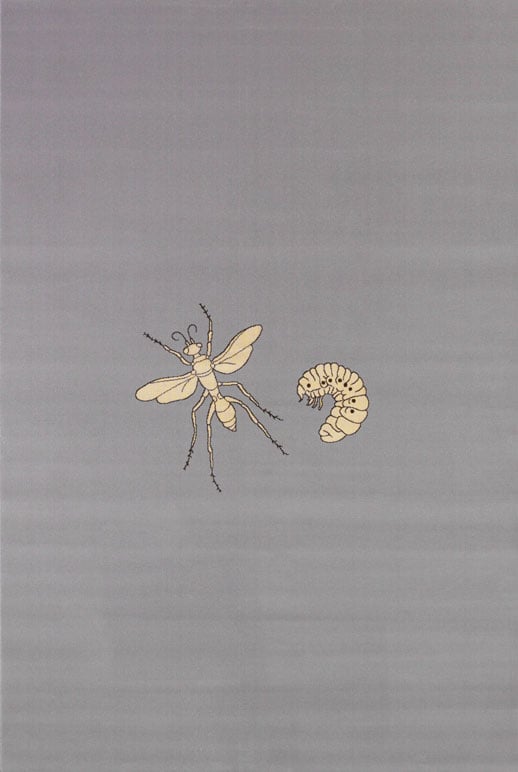
Fly by Jan Fabre, created in 2002, is a minimalist tapestry featuring a single, detailed depiction of a fly and its larva set against a soft, muted gray background. This simple composition, with just two central elements, brings focus to the intricate details of the insect’s anatomy and its life cycle. The fly’s wings, legs, and segmented body are rendered with precision, as is the curled form of the larva beside it. Made from pure New Zealand wool blended with acrylic yarn and artificial silk, the tapestry’s refined texture adds depth to the otherwise stark background. Fabre’s work often explores themes of nature, life, and transformation, and in this piece, he draws attention to an often-overlooked subject with elegance and restraint.
Jan Fabre (Belgium, 1958) is a multidisciplinary artist blending theater, sculpture, and performance. Known for his provocative works, he often incorporates unconventional materials like beetle wings and blood, exploring themes of transformation, mortality, and the human body.
I have a space for myself. No one comes in. No press, no curators, no gallerists.
- Jan Fabre
Renowned for his Bic ball-point pen drawings and ornate sculptures, Jan Fabre is a multi-faceted artist with works spanning across such mediums as sculpture, stage design and choreography. Heaven of Delight is perhaps one of his most notable works – for this piece, Fabre assembled around 1.4 million Jewel Beetle shells in various patterns to adorn the ceiling of Palais Royal in Brussels; Fabre has stated that he has always been fascinated by Jewel Beetles, admiring them for their ‘beauty, memory and ability to process information’. Fabre uses a wide range of unorthodox materials including blood, tears, bones and taxidermied animals; his works attempt to explore the relationships between science and art, and often challenge ‘impossible’ feats – The Man Who Measures the Clouds is just one among many works that deals with the notion of the impossible. (Artist website)
Sometimes referred to as Conceptualism, this is an art form where the idea(s) or concept(s) behind the work take precedence over material concerns and traditional aesthetics. Many conceptual artworks can be created by anyone simply by following written instructions. The concept or idea is the most essential aspect of the artwork.