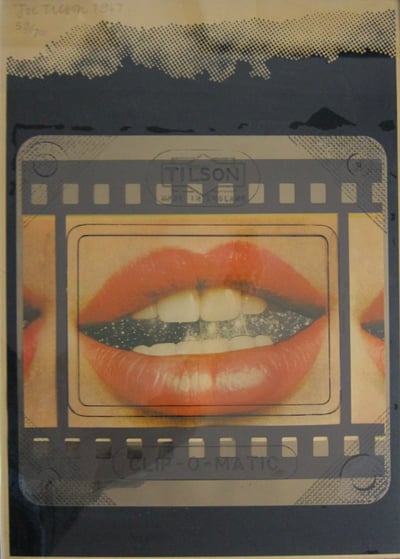
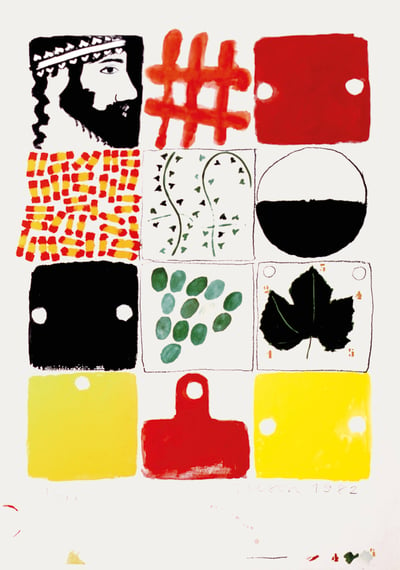
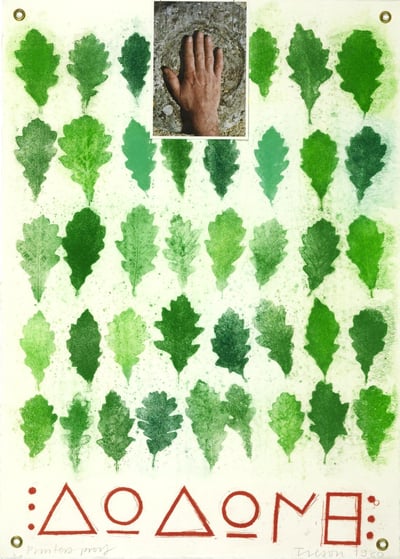
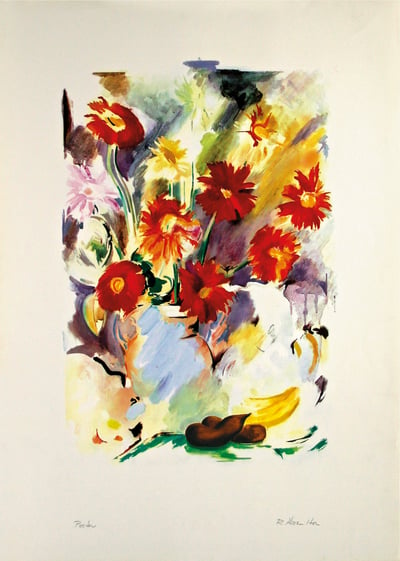
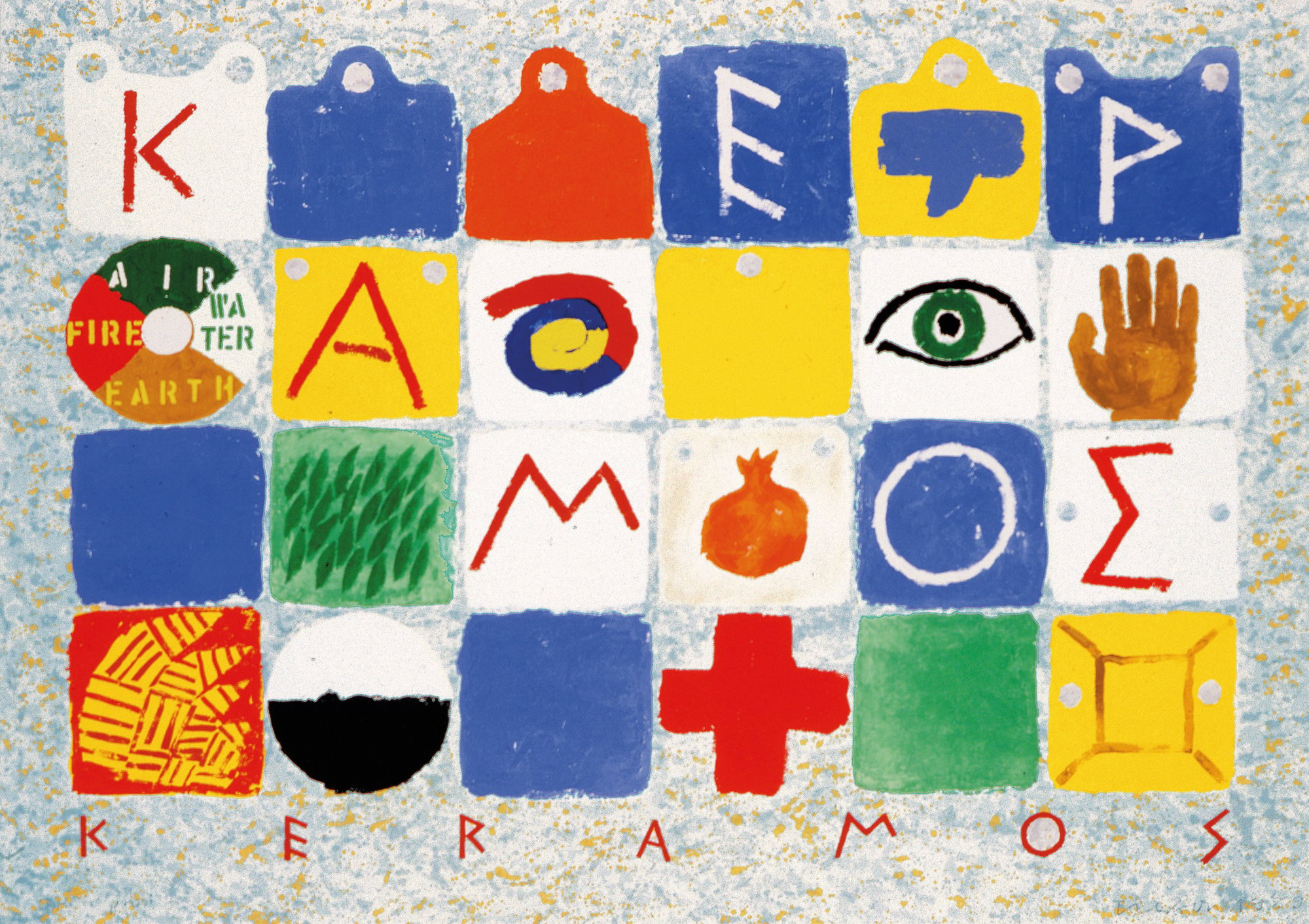
Keramos by Joe Tilson, created in 1989, is a vibrant silkscreen print that combines symbolism and abstraction. The composition features a grid of colorful squares, each containing distinct symbols and motifs, such as an eye, a hand, a spiral, and various geometric forms, referencing ancient Greek ceramics and iconography. The use of bright primary colors—red, blue, yellow, and green—creates a lively and engaging visual experience. The text KERAMOS appears prominently, reinforcing the connection to the craft of ceramics. Tilson’s work invites viewers to explore the intersections of ancient traditions and modern aesthetics, blending cultural references with contemporary graphic design.
Joe Tilson (United Kingdom, 1928–2023) was a British artist and a leading figure in the Pop Art movement of the 1960s. His work encompassed paintings, prints, and constructions, often incorporating vibrant colors and popular culture imagery. Tilson's art is held in public collections including the Tate Gallery, London; MoMA, New York; and the Stedelijk Museum, Amsterdam.
Silkscreen Silkscreen is a printmaking method that uses a screen made of silk or other mesh fabric. The screen is treated with a substance that blocks ink in certain areas, allowing ink to pass through only in the desired sections. Each color in the print requires a separate screen.
Keramos by Joe Tilson, created in 1989, is a vibrant silkscreen print that combines symbolism and abstraction. The composition features a grid of colorful squares, each containing distinct symbols and motifs, such as an eye, a hand, a spiral, and various geometric forms, referencing ancient Greek ceramics and iconography. The use of bright primary colors—red, blue, yellow, and green—creates a lively and engaging visual experience. The text KERAMOS appears prominently, reinforcing the connection to the craft of ceramics. Tilson’s work invites viewers to explore the intersections of ancient traditions and modern aesthetics, blending cultural references with contemporary graphic design.
Joe Tilson (United Kingdom, 1928–2023) was a British artist and a leading figure in the Pop Art movement of the 1960s. His work encompassed paintings, prints, and constructions, often incorporating vibrant colors and popular culture imagery. Tilson's art is held in public collections including the Tate Gallery, London; MoMA, New York; and the Stedelijk Museum, Amsterdam.
I think it's a mistake for painters or poets to get too involved in politics, any more than it makes sense for them to get swept up in being fashionable.
- Joe Tilson
One of the leading artists of the 1960’s British Pop Art movement, Joe Tilson has drawn from his own experience as a carpenter to create wooden reliefs and constructions, alongside prints and paintings. His earliest work was print-making; Tilson would craft unique prints on which he would paint directly, adding a handmade quality - he would often blur the lines between two and three-dimensional space, as evident in his Bela Lugosi Journal piece. Later in his career, Tilson began to widen his range of materials to include rope, straw and stone, all of which he used as a means to escape the constraints of time and culture by making use of pre-classical motifs for which he is now widely recognised. (Artist website)
Kitsch is a term used to describe cheap, commercial, sentimental, or vulgar art and objects commonly associated with popular culture. The word is borrowed from German, where it originally means trash. Since the 1920s, kitsch has been used to denote the opposite of high art, often implying that the work lacks sophistication or artistic merit.