

Flying Devil, 1976
Form
Medium
Size
- Inches
- Centimeters
Edition
Price
- Authenticity Guaranteed
- Insured Shipping
- Online Since 2005

Karel Appel
Untitled (Colorful Figure), 1998
Drawing / Watercolor
Pastel
EUR 7,500

Karel Appel
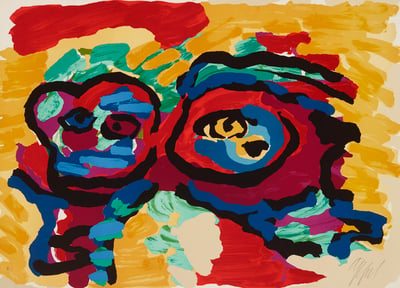
A Group of 3 Screenprints, 1975 / 1978
Limited Edition Print
Screen-print
USD 2,810
Karel Appel
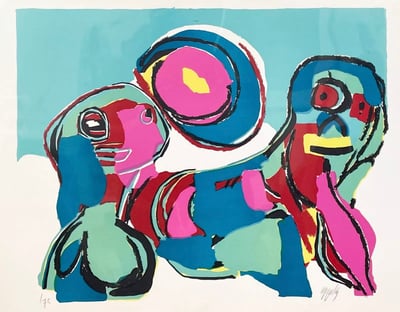
Two Figures, c. 1980
Limited Edition Print
Lithograph
USD 1,000
Karel Appel
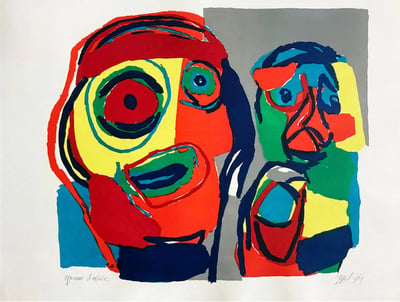
Composition , 1969
Limited Edition Print
Lithograph
USD 950
Karel Appel
Serie Personages, 1969
Limited Edition Print
Lithograph
USD 780

Karel Appel
Cats, 1979
Limited Edition Print
Lithograph
Inquire For Price

Karel Appel
Il Pagliacci, 1984
Limited Edition Print
Lithograph
USD 2,150

Karel Appel
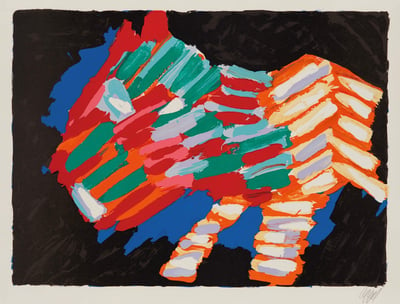
Fighting Cat, 1979
Limited Edition Print
Lithograph
USD 750
Karel Appel
Cat in the Night, 1979
Limited Edition Print
Lithograph
USD 750

Karel Appel
Luminous Cat, 1979
Limited Edition Print
Lithograph
USD 750

Karel Appel
Resting Cat, 1979
Limited Edition Print
Lithograph
USD 750

Karel Appel
Devil Cat, 1979
Limited Edition Print
Lithograph
USD 750

Karel Appel
Sad Cat, 1979
Limited Edition Print
Lithograph
USD 750

Karel Appel
Stalking Cat, 1979
Limited Edition Print
Lithograph
USD 750

Karel Appel
Blue Cat, 1979
Limited Edition Print
Lithograph
USD 750
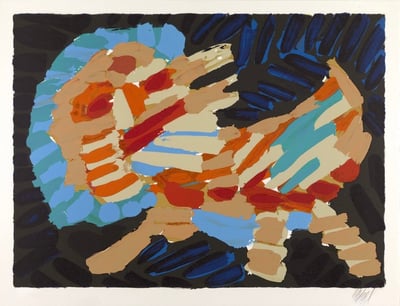
Karel Appel
Smiling Cat, 1979
Limited Edition Print
Lithograph
USD 750

Karel Appel
Green Cat, 1979
Limited Edition Print
Lithograph
USD 750

Karel Appel
House Cat, 1979
Limited Edition Print
Lithograph
USD 750

Karel Appel
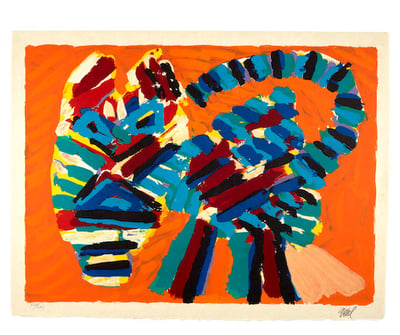
Nesting Bird, 1978
Limited Edition Print
Lithograph
USD 990
Karel Appel
Sunshine Cat, 1979
Limited Edition Print
Lithograph
USD 750

Karel Appel
Sound, 1979
Limited Edition Print
Mixed Media
USD 1,400

Karel Appel
Face, 1979
Limited Edition Print
Mixed Media
USD 1,400

Karel Appel
Lying in Red, 1979
Limited Edition Print
Mixed Media
USD 1,400

Karel Appel
Deux Personnages, 1978
Limited Edition Print
Mixed Media
USD 1,570
Karel Appel
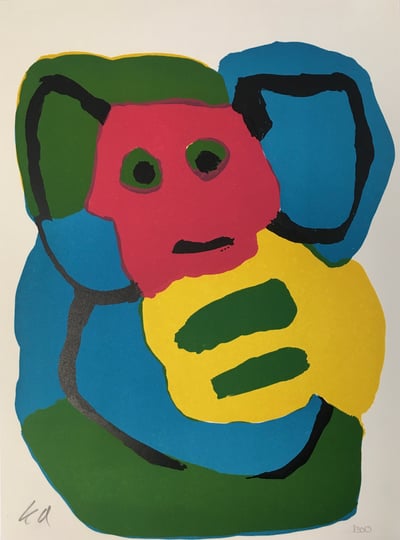
The Bear
Limited Edition Print
Lithograph
USD 775

Karel Appel
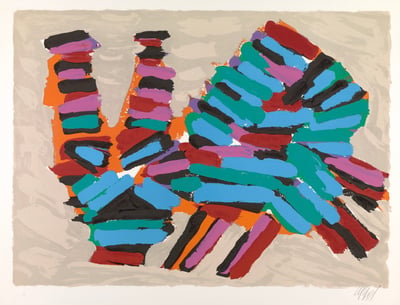
About a Cat, 1979
Limited Edition Print
Lithograph
USD 750
Karel Appel
Frightened Cat, 1979
Limited Edition Print
Lithograph
USD 750
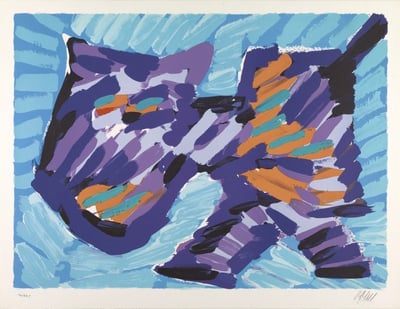
Karel Appel
Walking Cat, 1979
Limited Edition Print
Lithograph
USD 750
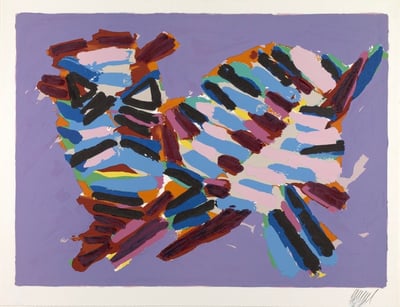
Karel Appel
Innocent Cat, 1979
Limited Edition Print
Lithograph
USD 750
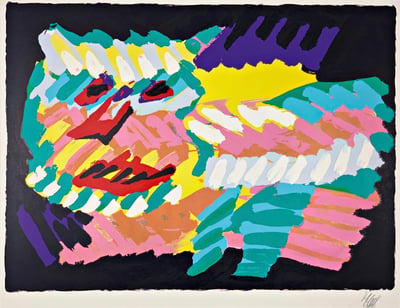
Karel Appel
Pink Cat, 1979
Limited Edition Print
Lithograph
USD 750

Karel Appel
Once I Was The Sun, 1978
Limited Edition Print
Lithograph
USD 1,100

Karel Appel
Obra gráfica, 1974
Limited Edition Print
Serigraph
EUR 1,550
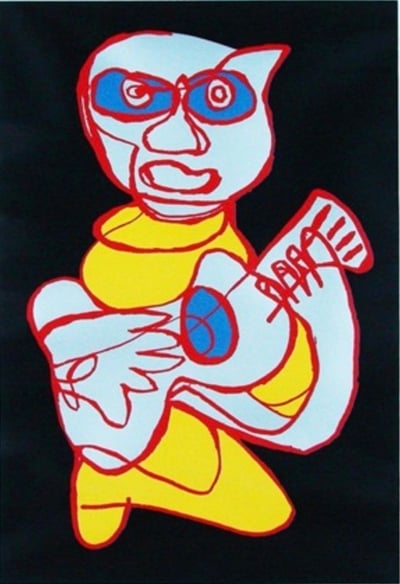
Karel Appel
Kool luke singing hands, 1978
Limited Edition Print
Silkscreen
USD 1,700

Karel Appel
Red cat singing hands, 1978
Limited Edition Print
Silkscreen
USD 1,700

Karel Appel
Floating flower passion, 1978
Limited Edition Print
Silkscreen
USD 1,700

Karel Appel
Green floating passion , 1975
Limited Edition Print
Silkscreen
USD 1,700
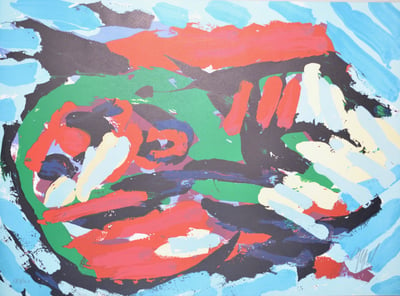
Karel Appel
Flying head over ocean, 1972
Limited Edition Print
Lithograph
USD 800

Karel Appel
Sunshine people, 1974
Limited Edition Print
Silkscreen
USD 1,700

Karel Appel
Putting green kiss , 1978
Limited Edition Print
Silkscreen
USD 1,750

Karel Appel
Como el Viento, 1988
Limited Edition Print
Etching and Aquatint
EUR 1,700
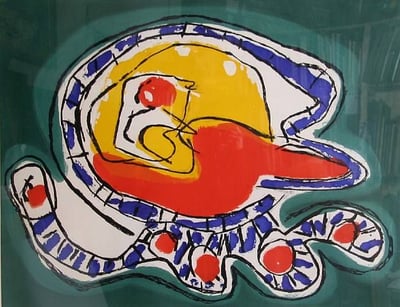
Karel Appel
Tete montagne I, 1976
Limited Edition Print
Aquatint
EUR 2,350

Karel Appel
Flower with Blue Eyes, 1977
Sculpture / Object
Wood
Currently Not Available
Available works by Karel Appel
See all →Karel Appel
Untitled (Colorful Figure), 1998
Drawing / Watercolor
Pastel
EUR 7,500
Karel Appel
A Group of 3 Screenprints, 1975 / 1978
Limited Edition Print
Screen-print
USD 2,810
Karel Appel
Two Figures, c. 1980
Limited Edition Print
Lithograph
USD 1,000
Karel Appel
Composition , 1969
Limited Edition Print
Lithograph
USD 950
Karel Appel
Serie Personages, 1969
Limited Edition Print
Lithograph
USD 780
Karel Appel
Cats, 1979
Limited Edition Print
Lithograph
Inquire For Price
Related Artists
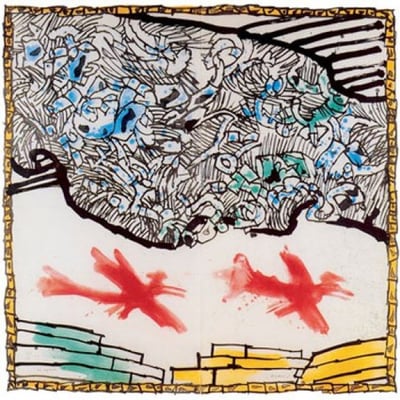

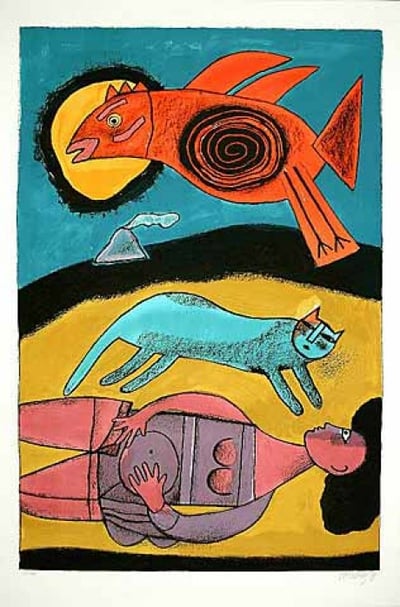

What is Figuration Libre?
Figuration Libre is an art movement that is equivalent to the French Bad Painting and Neo-Expressionism in Europe and America. The term was coined by Ben Vautier and the Fluxus movement. In 1981, Robert Combas, François Boisrond, Hervé Di Rosa, and Rémi Blanchard formed the Figuration Libre group. The term can be interpreted as free style art, emphasizing spontaneity, freedom, and a rejection of traditional artistic conventions.


