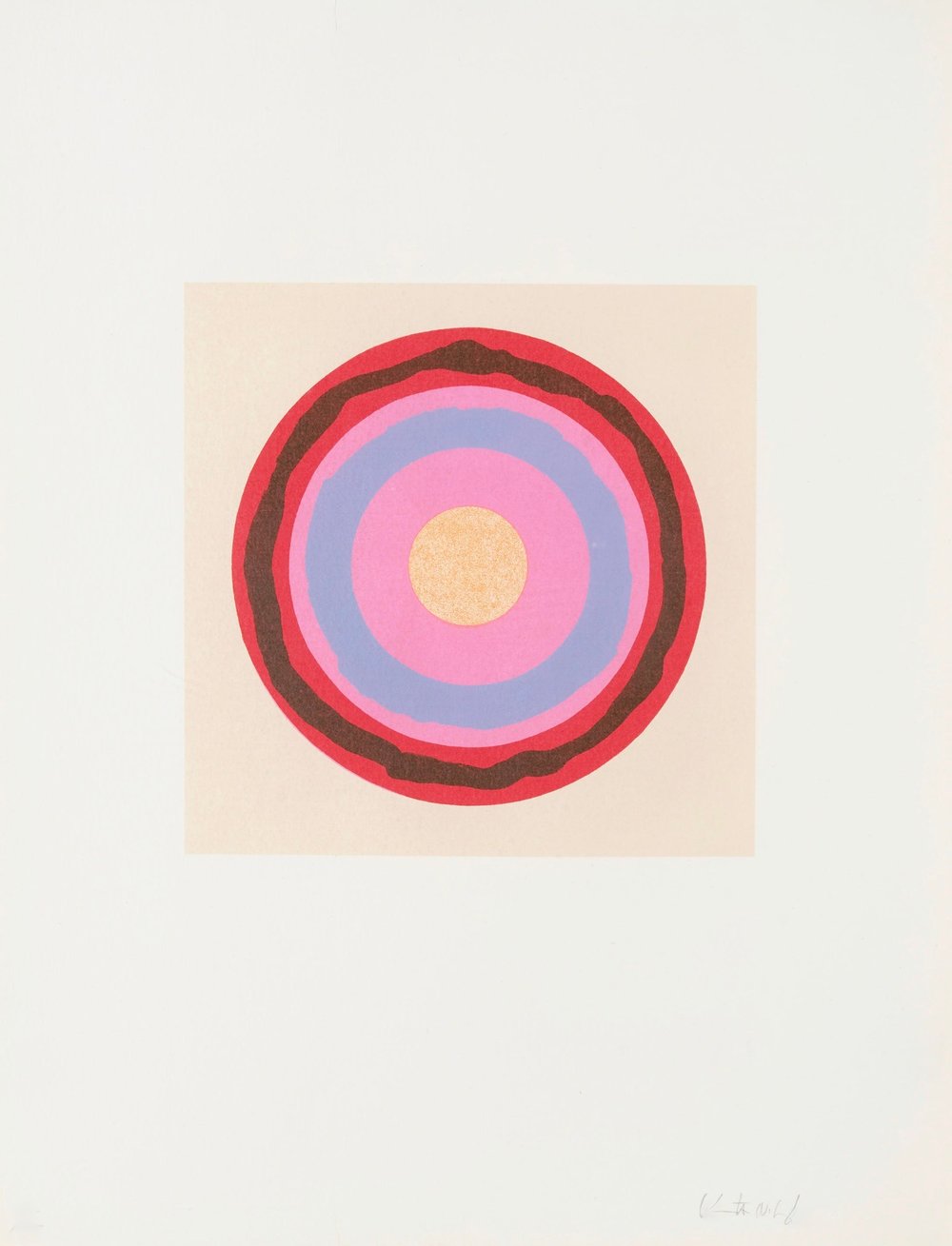
Lithograph in colors on wove paper, signed in pencil - With the blindstamp of the artist
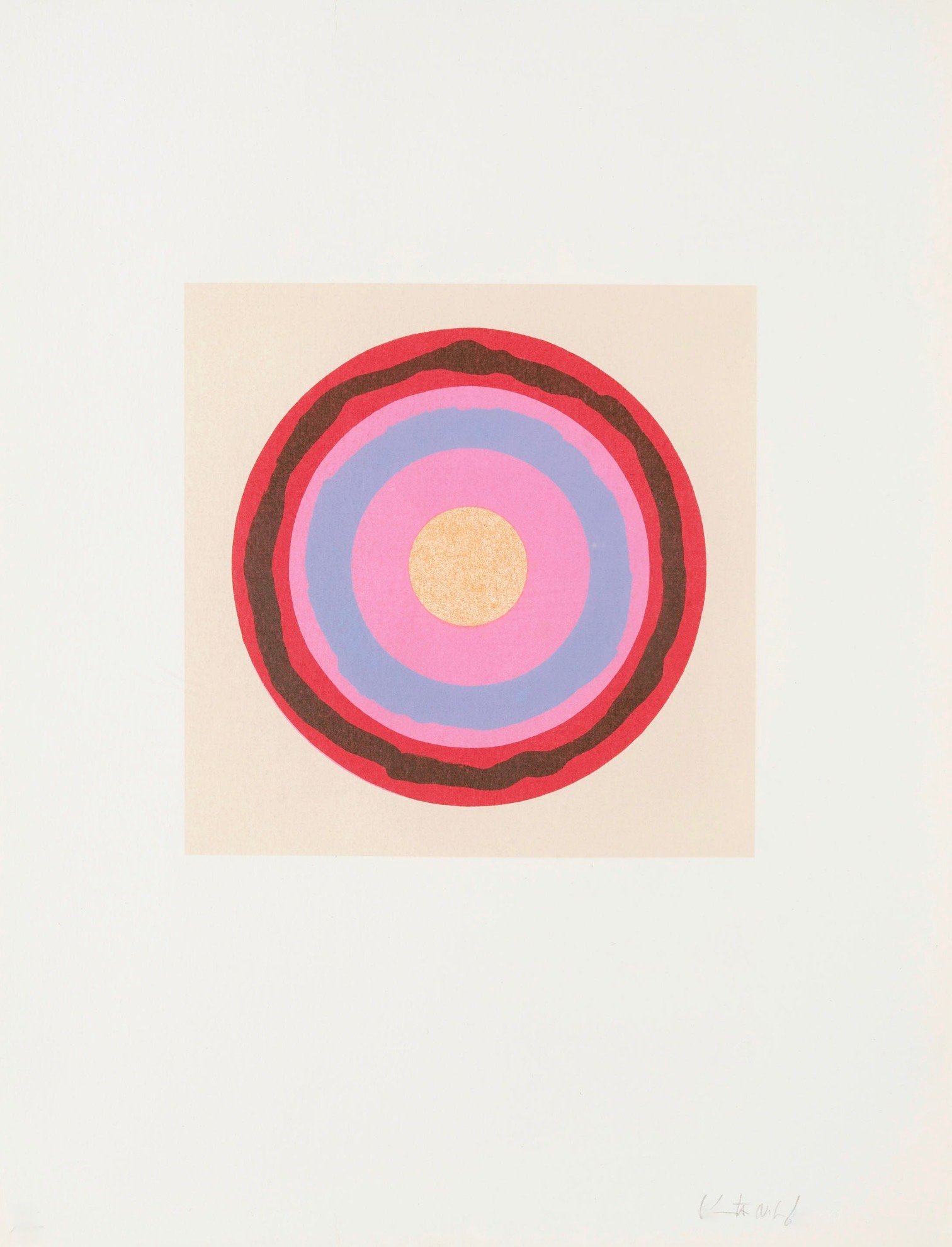
Kenneth Noland's Untitled (Target) (2004) is a limited edition lithograph that demonstrates his expertise in abstract expressionism and color field painting. Measuring 67.6 x 51.4 cm, the artwork showcases a target-like design formed by concentric circles in a harmonious array of colors including red, pink, lavender, and a central gold hue. The work exudes balance and rhythm, with Noland’s signature use of geometric forms and vibrant tones to create a captivating visual effect. His focus on color and shape, devoid of representational forms, draws the viewer’s attention to the dynamic interplay of color, encouraging a contemplative experience. This piece exemplifies Noland's contribution to modern art, emphasizing simplicity while achieving depth and complexity through color relationships.
Kenneth Noland (United States, 1924–2010) was a leading figure in Color Field painting, renowned for his exploration of geometric forms and vibrant hues. His signature motifs include concentric circles, chevrons, and stripes, often created using a staining technique on unprimed canvas. Noland's work significantly influenced abstract art in the mid-20th century.
Lithograph Lithography is a printing method based on the principle that water and oil do not mix. It can be used to print artwork or text onto paper or other suitable materials. Traditionally, an image was drawn with wax, fat, or oil onto a lithographic limestone surface or plate. Today, metal plates and other surfaces are also used in lithographic printing.
Lithograph in colors on wove paper, signed in pencil - With the blindstamp of the artist
Kenneth Noland's Untitled (Target) (2004) is a limited edition lithograph that demonstrates his expertise in abstract expressionism and color field painting. Measuring 67.6 x 51.4 cm, the artwork showcases a target-like design formed by concentric circles in a harmonious array of colors including red, pink, lavender, and a central gold hue. The work exudes balance and rhythm, with Noland’s signature use of geometric forms and vibrant tones to create a captivating visual effect. His focus on color and shape, devoid of representational forms, draws the viewer’s attention to the dynamic interplay of color, encouraging a contemplative experience. This piece exemplifies Noland's contribution to modern art, emphasizing simplicity while achieving depth and complexity through color relationships.
Kenneth Noland (United States, 1924–2010) was a leading figure in Color Field painting, renowned for his exploration of geometric forms and vibrant hues. His signature motifs include concentric circles, chevrons, and stripes, often created using a staining technique on unprimed canvas. Noland's work significantly influenced abstract art in the mid-20th century.
Untitled from The New York Collection for Stockholm, 1973
Limited Edition Print
Screen-print
GBP 1,800
Kenneth Noland
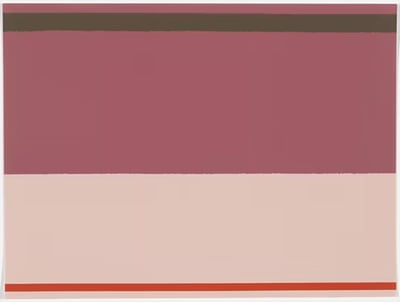
Marron, 1990
Limited Edition Print
Etching and Aquatint
USD 1,500
Kenneth Noland
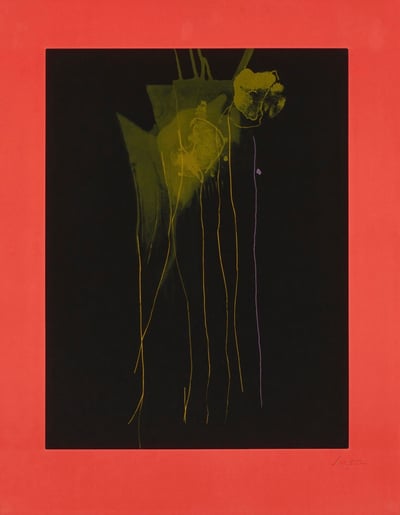
Rey, 1990
Limited Edition Print
Lithograph
USD 1,500
Kenneth Noland
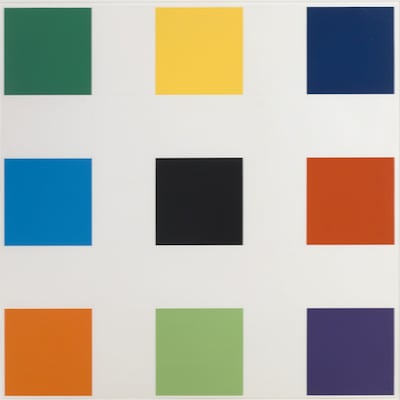
Roy, 1990
Limited Edition Print
Etching and Aquatint
USD 1,500
Kenneth Noland
Untitled (Target), 2004
Limited Edition Print
Lithograph
Currently Not Available
No sold works to show.
Context begins with other artists - seniors and mentors.
- Kenneth Noland
Renowned for his wide body of work that has encompassed the movements of Colour Field, Minimalism and Abstract Expressionism, Kenneth Noland is a painter whose art often combines vivid colour and simple geometric formations. His most iconic works can be split into four groups: chevrons, shaped canvases, stripes and circles – his pioneering use of shaped, often asymmetrical canvases, evidenced in works such as In the Curl, rendered the edges of the canvas as equally as important as the center. Noland’s technique as a painter was unique in the sense that he preferred to stain the canvas as opposed to using a brush with the idea being a means of removing the artist from the final output - he also frequently left bare, unstained canvas as a contrast against the vibrant colour stain in order to emphasise spatial relationships. (Artist website)
Hard Edge art is a style of abstract painting that became popular in the 1960s. It features areas of color separated by crisp, sharp edges that are painted with geometric precision. The term hard-edge painting was coined by art critic Jules Langsner to describe this approach, which contrasts with the softer, more fluid forms of other abstract styles.