

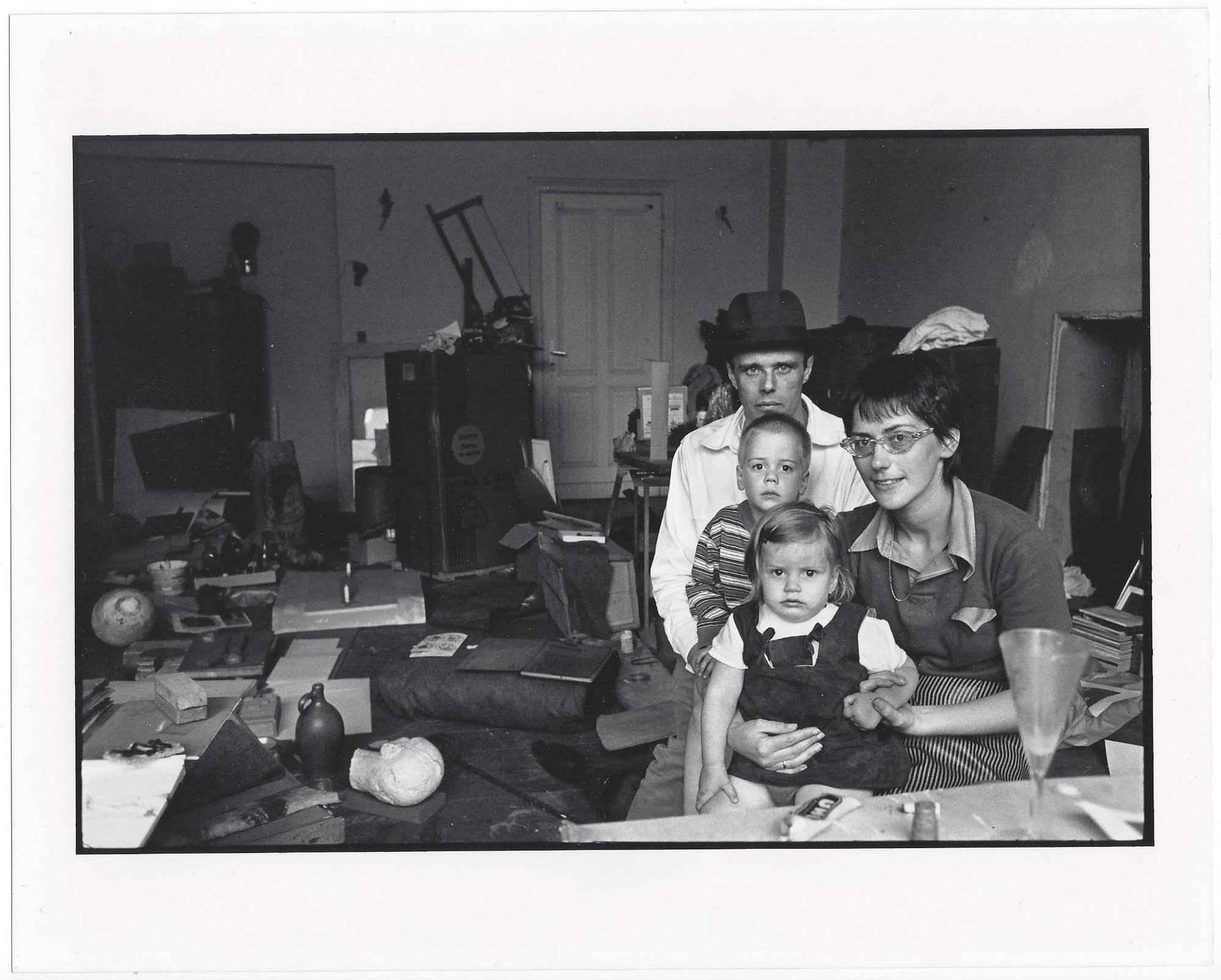
Signed Silver Print of German Artist Joseph Beuys and his Family in his Home in Oberkassel. Magnum’s Paris Stamp is on verso.
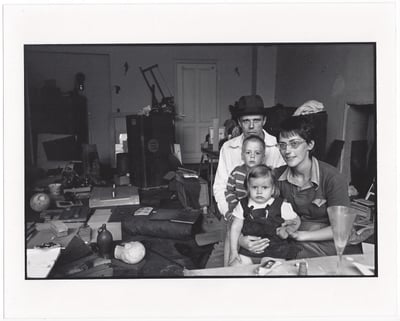
Leonard Freed’s photograph, Joseph Beuys and his Family in his Home in Oberkassel, captures an intimate moment in 1965, showing the renowned German artist Joseph Beuys with his family in their home. This gelatin silver print reveals a personal side of Beuys, known for his avant-garde approach and influence on modern art. The scene portrays a lived-in, somewhat chaotic space, filled with various objects that likely hold significance to the artist. Freed’s lens emphasizes the close bond of the family amid Beuys’s creative environment, juxtaposing the warmth of family life with the intensity of his artistic persona. As a unique signed print, this work is a rare glimpse into the private world of one of the 20th century’s most enigmatic figures.
Artwork Copyright © Leonard FreedLeonard Freed (USA, 1929–2006) was a documentary photographer and longtime Magnum Photos member. Best known for his poignant black-and-white images, he captured pivotal moments of the Civil Rights Movement, everyday life in post-war Europe, and themes of justice and humanity.
Artwork Copyright © Leonard FreedJoseph Beuys and his Family in his Home in Oberkassel, 1965
Form
Medium
Size
- Inches
- Centimeters
Edition
Price
- USD
- EUR
- GBP
- CHF
- Authenticity Guaranteed
- Insured Shipping
- Online Since 2005
●Inventory 2744
●Signed
●Comes with gallery invoice and certificate
●Sell Us a Similar Artwork. Learn more.
Signed Silver Print of German Artist Joseph Beuys and his Family in his Home in Oberkassel. Magnum’s Paris Stamp is on verso.
Leonard Freed’s photograph, Joseph Beuys and his Family in his Home in Oberkassel, captures an intimate moment in 1965, showing the renowned German artist Joseph Beuys with his family in their home. This gelatin silver print reveals a personal side of Beuys, known for his avant-garde approach and influence on modern art. The scene portrays a lived-in, somewhat chaotic space, filled with various objects that likely hold significance to the artist. Freed’s lens emphasizes the close bond of the family amid Beuys’s creative environment, juxtaposing the warmth of family life with the intensity of his artistic persona. As a unique signed print, this work is a rare glimpse into the private world of one of the 20th century’s most enigmatic figures.
Artwork Copyright © Leonard FreedLeonard Freed (USA, 1929–2006) was a documentary photographer and longtime Magnum Photos member. Best known for his poignant black-and-white images, he captured pivotal moments of the Civil Rights Movement, everyday life in post-war Europe, and themes of justice and humanity.
Artwork Copyright © Leonard Freed- Recently Added
- Price (Low-High)
- Price (High-Low)
- Year (Low-High)
- Year (High-Low)

Leonard Freed
Back Horse, 1974
Photography
Archival Print
USD 3,680

Leonard Freed
Mykonos Athletes, 1975
Photography
Archival Print
USD 3,090

Leonard Freed
Louisiana Prison, 1963
Photography
Archival Print
USD 11,900
Leonard Freed
Joseph Beuys and his Family in his Home in Oberkassel, 1965
Photography
Gelatin Silver Print
USD 3,500
Related Artists

Artwork by Miles Aldridge
What is contemporary art?
Contemporary art refers to avant-garde or innovative art created in the recent past or present day. The exact starting point of contemporary art varies depending on the institution, often tied to the founding year of museums or galleries that showcase the style. Contemporary art is characterized by its focus on current ideas, diverse media, and the exploration of new concepts and techniques.

Leonard Freed
Joseph Beuys and his Family in his Home in Oberkassel, 1965
20 x 25 cm


