

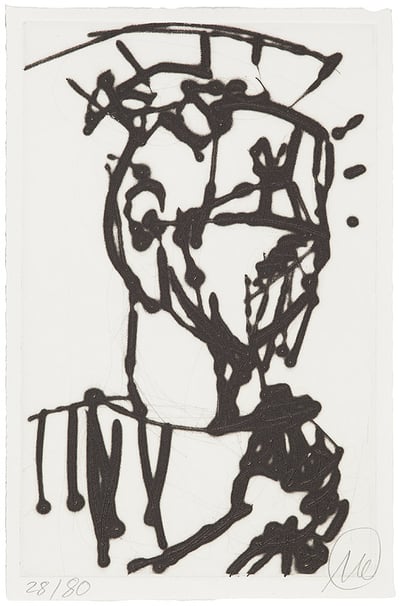
// Markus Lüpertz’s 'Ohne Titel' is a 2008 drypoint print that exemplifies his bold, expressionist style. The artwork features an abstract representation of a head, rendered in thick, gestural black lines that form a fragmented and distorted human figure. The linearity of the marks, which appear as dripping or streaking strokes, creates a sense of both movement and tension within the composition. Lüpertz’s use of abstraction challenges traditional portraiture, focusing instead on the emotional and psychological presence of the figure. The raw, unfinished quality of the lines enhances the feeling of spontaneity and intensity, central to Lüpertz's exploration of form and identity.
Artwork Copyright © Markus LupertzMarkus Lüpertz (Germany, 1941) is a painter, sculptor, and graphic artist known for his neo-expressionist style. His work often features suggestive power and archaic monumentality, exploring themes of German identity and mythology. Lüpertz has significantly influenced contemporary art and served as rector of the Kunstakademie Düsseldorf from 1988 to 2009.
Artwork Copyright © Markus LupertzOhne Titel (portrait), 2008
Form
Medium
Size
- Inches
- Centimeters
Edition
Price
- USD
- EUR
- GBP
- CHF
- Authenticity Guaranteed
- Insured Shipping
- Online Since 2005
●Inventory 15081
●Signed
●Comes with gallery invoice and certificate
●Sell Us a Similar Artwork. Learn more.
// Markus Lüpertz’s 'Ohne Titel' is a 2008 drypoint print that exemplifies his bold, expressionist style. The artwork features an abstract representation of a head, rendered in thick, gestural black lines that form a fragmented and distorted human figure. The linearity of the marks, which appear as dripping or streaking strokes, creates a sense of both movement and tension within the composition. Lüpertz’s use of abstraction challenges traditional portraiture, focusing instead on the emotional and psychological presence of the figure. The raw, unfinished quality of the lines enhances the feeling of spontaneity and intensity, central to Lüpertz's exploration of form and identity.
Artwork Copyright © Markus LupertzMarkus Lüpertz (Germany, 1941) is a painter, sculptor, and graphic artist known for his neo-expressionist style. His work often features suggestive power and archaic monumentality, exploring themes of German identity and mythology. Lüpertz has significantly influenced contemporary art and served as rector of the Kunstakademie Düsseldorf from 1988 to 2009.
Artwork Copyright © Markus LupertzAvailability
Size
Form
Medium
SORT BY

Markus Lupertz
Eagle o.T, 1999-2000
Drawing / Watercolor
Mixed Media
USD 15,450
Markus Lupertz
Ohne Titel (portrait), 2008
Limited Edition Print
Drypoint
EUR 890

Markus Lupertz
Mit Musse gegangen, 1990
Drawing / Watercolor
Mixed Media
Inquire For Price
Markus Lupertz
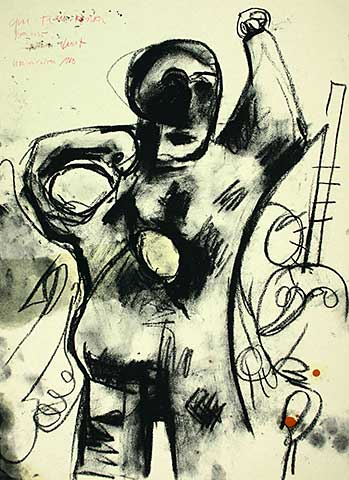
Untitled (Figur mit Arm), 1990–2000
Limited Edition Print
Lithograph
EUR 1,800
Markus Lupertz
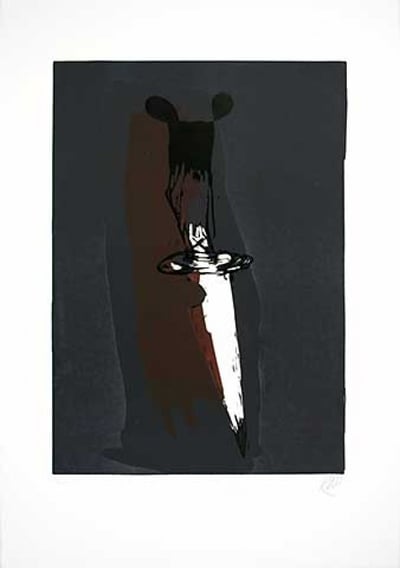
Versteinerte Tropfen II
Limited Edition Print
Woodcut
EUR 2,200
Related Artists
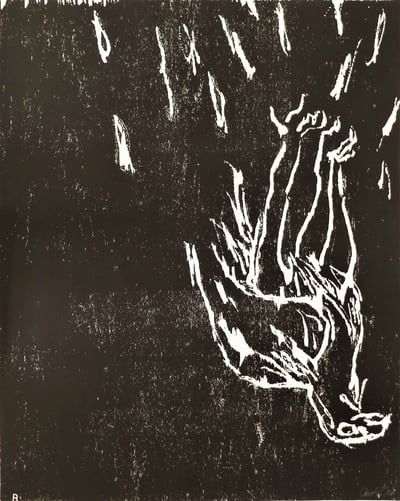


Artwork by Georg Baselitz
Who are the Neue Wilden?
Neue Wilden is the term German artists used for Neo-Expressionism. In the 1970s and 80s, expressive painting re-emerged in Germany, with artists embracing intense colors and broad brushstrokes. The movement grew in opposition to minimal and conceptual art, favoring a return to raw, emotional expression through bold and dynamic painting techniques.

Markus Lupertz
Ohne Titel (portrait), 2008
20.5 x 13.5 cm


