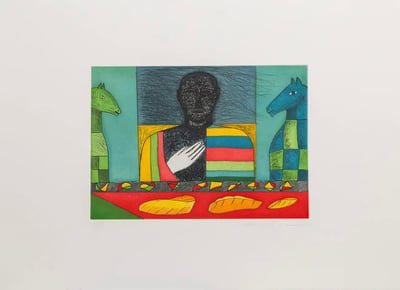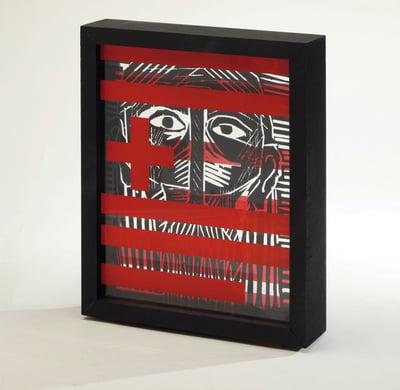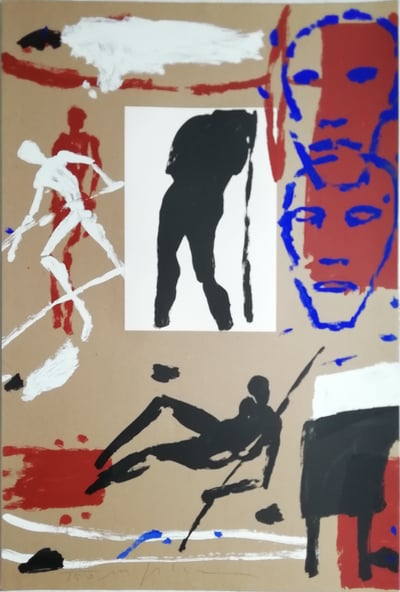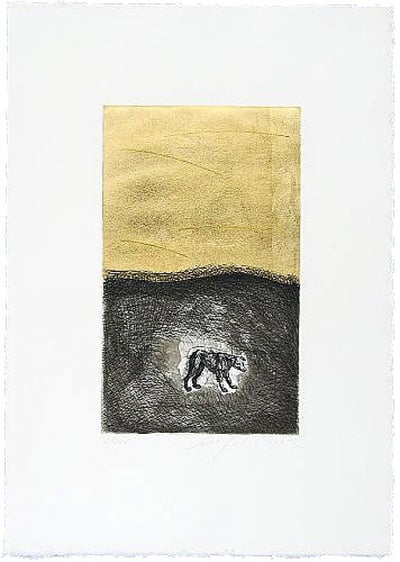
Printed and published by Edition Domberger, Stuttgart. with their blindstamp
- From the Suite: Columbus: In Search of a New Tomorrow.
- Hand Signed in Pencil
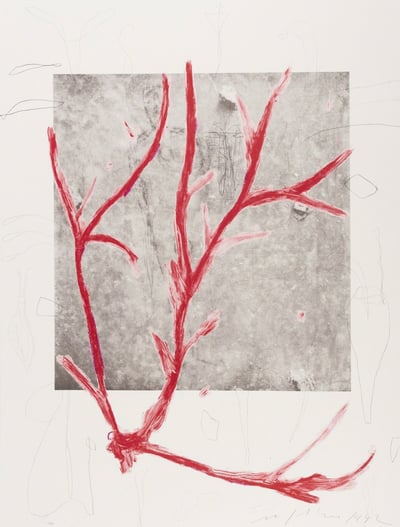
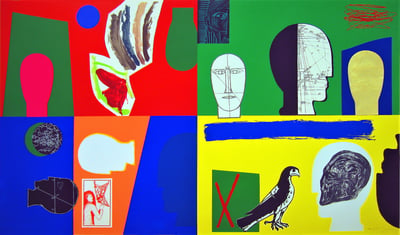
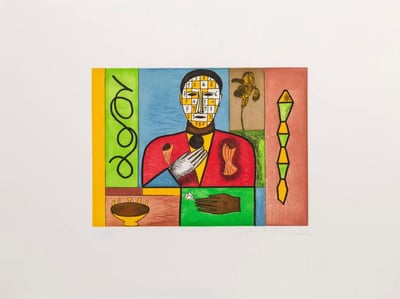
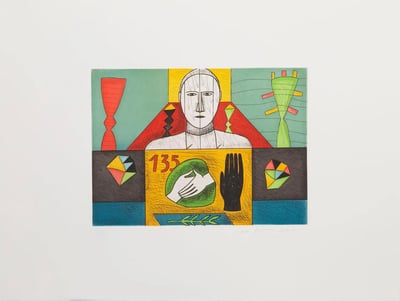
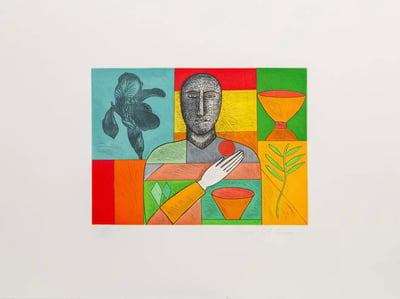
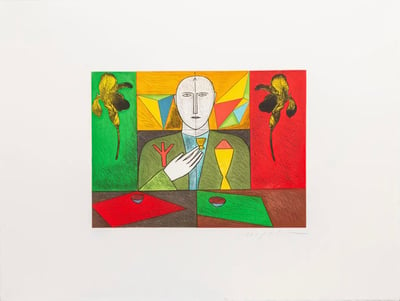
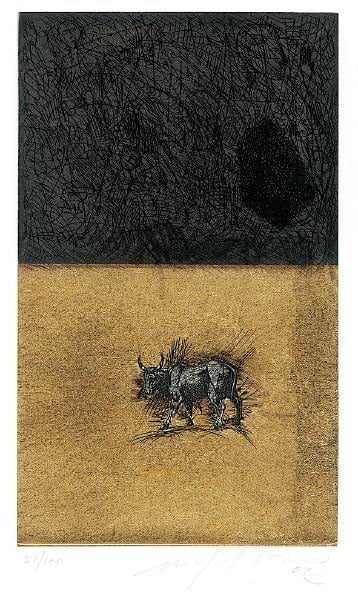
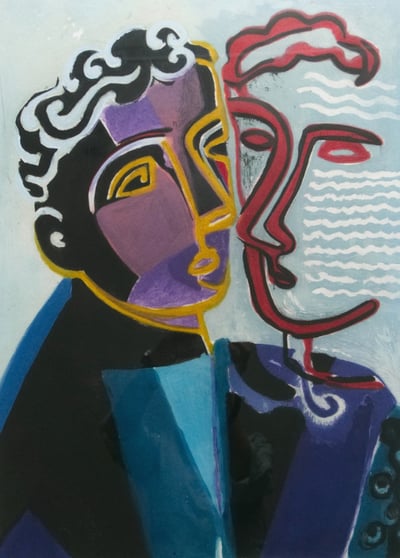
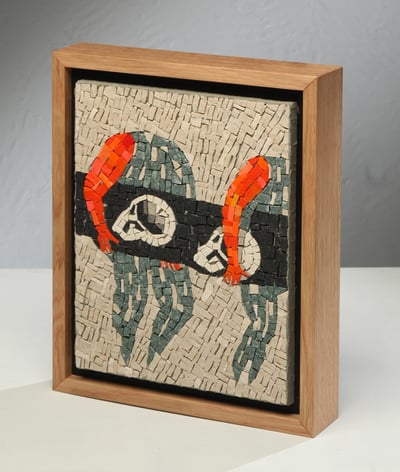
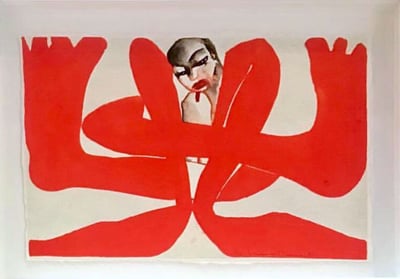
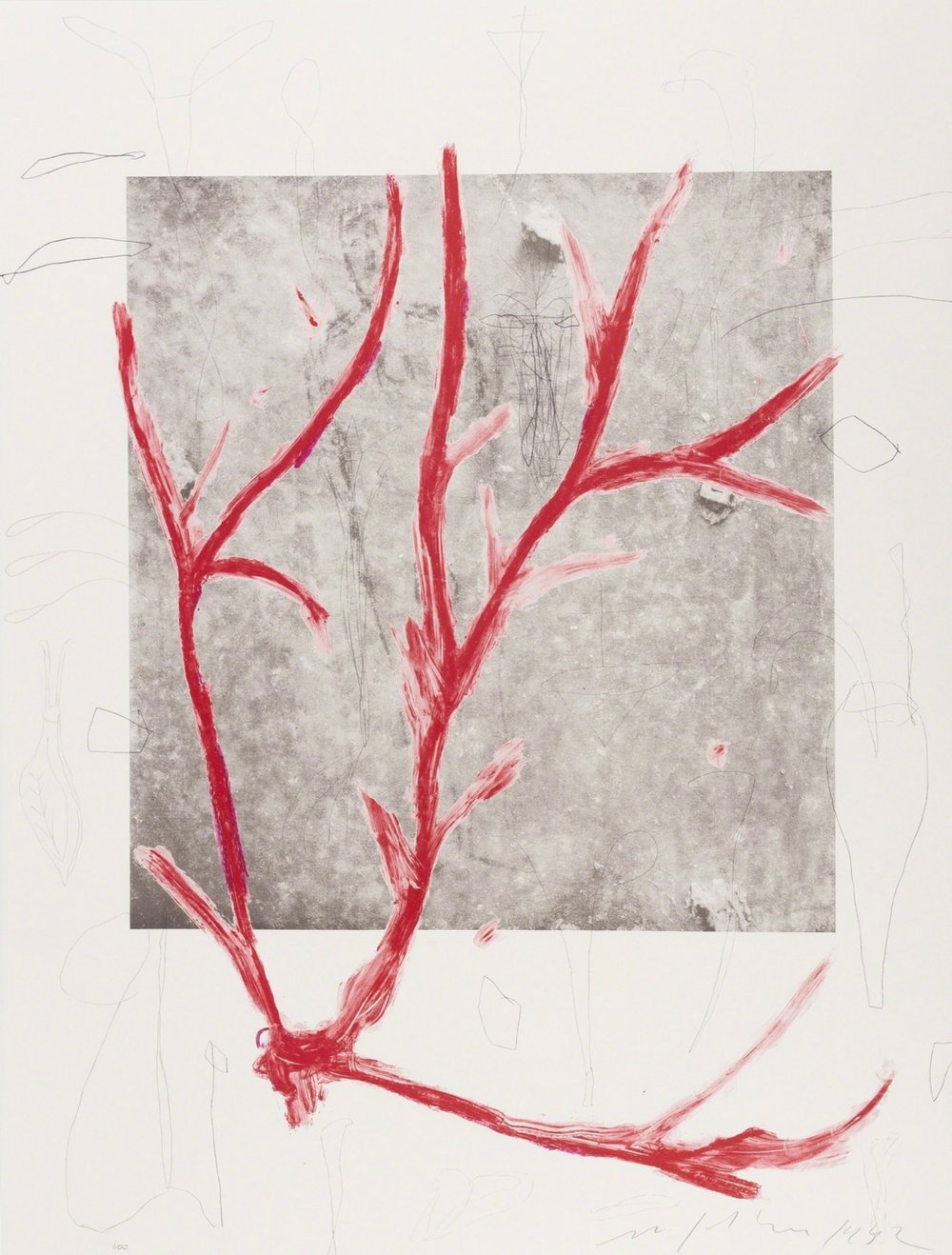
Mimmo Paladino’s Untitled (from Columbus: In Search of a New Tomorrow) (1992) is a color screenprint that juxtaposes abstraction with symbolic imagery. At the center, a vivid red branching form overlays a textured gray square, suggesting both organic growth and archaic signs. Around the edges, faint line drawings of figures and shapes hover like fragments of memory or ancient carvings. Published by Edition Domberger in Stuttgart as part of the portfolio Columbus: In Search of a New Tomorrow, the work reflects Paladino’s Transavanguardia style, where myth, history, and personal symbolism intersect. Signed and produced in an edition of 100, it emphasizes both material presence and poetic ambiguity.
Mimmo Paladino (Italy, 1948) is a contemporary artist and a leading figure in the Transavanguardia movement. Renowned for his paintings, sculptures, and installations, Paladino’s work blends classical references with modern abstraction. His distinctive style often incorporates mythological themes and symbolic imagery, bridging past and present in innovative ways.
Screen-print Screen printing is a technique where ink is transferred through a mesh onto a substrate, with areas blocked by a stencil to prevent ink from passing through. This method, also known as serigraphy or silkscreen printing, is commonly used to produce prints on posters, T-shirts, vinyl, stickers, wood, and other materials. The process is a type of stencil printing, allowing for vibrant, detailed designs on various surfaces.
Printed and published by Edition Domberger, Stuttgart. with their blindstamp
- From the Suite: Columbus: In Search of a New Tomorrow.
- Hand Signed in Pencil
Mimmo Paladino’s Untitled (from Columbus: In Search of a New Tomorrow) (1992) is a color screenprint that juxtaposes abstraction with symbolic imagery. At the center, a vivid red branching form overlays a textured gray square, suggesting both organic growth and archaic signs. Around the edges, faint line drawings of figures and shapes hover like fragments of memory or ancient carvings. Published by Edition Domberger in Stuttgart as part of the portfolio Columbus: In Search of a New Tomorrow, the work reflects Paladino’s Transavanguardia style, where myth, history, and personal symbolism intersect. Signed and produced in an edition of 100, it emphasizes both material presence and poetic ambiguity.
Mimmo Paladino (Italy, 1948) is a contemporary artist and a leading figure in the Transavanguardia movement. Renowned for his paintings, sculptures, and installations, Paladino’s work blends classical references with modern abstraction. His distinctive style often incorporates mythological themes and symbolic imagery, bridging past and present in innovative ways.
I believe that the superficial glance is very much in keeping with the fast-moving times we live in.
- Mimmo Paladino
Mimmo Paladino is a native of Southern Italy. He is a sculptor, printmaker and painter. Paladino has studied art for much of his life, and attended Benevento Art High School in the 1960s, when concepts such as conceptualism and minimalism were among the most popular trends in art. When there was a revival of painted art in the 1970s, Mimmo Paladino played a major part in this movement. By 1977, he had created two notable tempera murals. One was shown at Milan's Toselli Gallery, and the other was displayed at the Lucio Amelio gallery, located in Naples. Mimmo Paladino started working on sculptures in the 1980s. He was invited to showcase his work at several exhibits, and in 1981, Paladino participated in "A New Spirit In Painting" at London's Royal Academy of Art. During the 1990s, Paladino put on several personal exhibits at distinguished locations such as the Villa delle Rose in Bologna, Sao Paolo's Museu de Arte, The Belvedere in Prague and the Museum of Contemporary Art in Monterrey. Mimmo Paladino's most recent works include a large exhibit in 2005 at the Museo Capodimonte in Naples, which included a film, along with sculptures, drawings and paintings as a creative ode to Don Quixote.
Sometimes known as Figurativism, figurative art refers to sculptures and paintings that are clearly or specifically derived from real objects, making them representational. The term figurative art is often used in contrast to abstract art. However, since the emergence of abstract art, figurative art has come to describe any form of modern art that has strong references to the real world or actual situations.