Woodcut on Rives BFK
- Hand signed and numbered by the artist, recto.
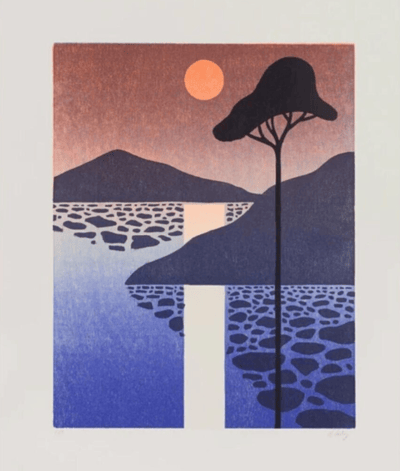
Nicolas Party's Trees (2020) is a limited edition woodcut print that showcases his affinity for nature and the stylization of natural forms. The composition features a group of tall, slender trees silhouetted against a dark background, with a full moon hovering above. The intricate patterns within the tree trunks and foliage give the piece a textured, almost surreal quality, emphasizing Party’s skill in blending naturalistic and fantastical elements. The black and white palette creates a striking contrast, enhancing the ethereal and dreamlike atmosphere of the scene. Printed on Rives BFK paper, the woodcut is hand-signed and numbered by the artist, making it part of an exclusive edition of 100. Trees reflects Party's exploration of landscapes and his unique approach to transforming familiar subjects into captivating, almost abstract forms.
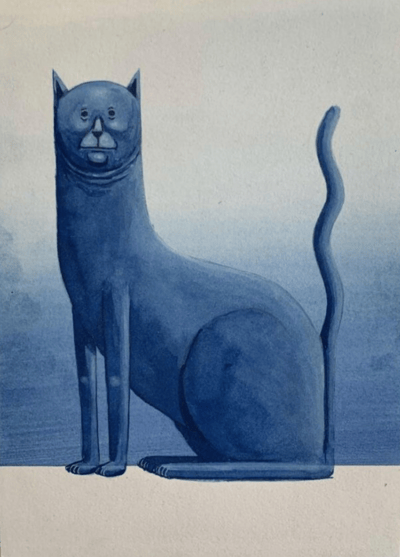
Nicolas Party (Switzerland, 1980) is a contemporary artist celebrated for his surreal, vividly colored landscapes and portraits. Working across painting, sculpture, and installation, he reimagines classical genres with a modern twist. Party’s art often features soft pastel as a primary medium, creating dreamlike atmospheres that captivate viewers.
WoodcutWoodcut is a printing technique where an image is carved into the surface of a woodblock using gouges, with the remaining flat surface holding the ink for printing. The areas cut away by the artist do not carry ink, while the uncut areas do, producing the desired print. The carving follows the wood's grain, unlike wood engraving, where the block is cut across the end-grain. Ink is applied to the surface with a roller, ensuring only the flat, uncarved areas receive ink, leaving the recessed, non-printing areas clean.
Woodcut on Rives BFK
- Hand signed and numbered by the artist, recto.
Nicolas Party's Trees (2020) is a limited edition woodcut print that showcases his affinity for nature and the stylization of natural forms. The composition features a group of tall, slender trees silhouetted against a dark background, with a full moon hovering above. The intricate patterns within the tree trunks and foliage give the piece a textured, almost surreal quality, emphasizing Party’s skill in blending naturalistic and fantastical elements. The black and white palette creates a striking contrast, enhancing the ethereal and dreamlike atmosphere of the scene. Printed on Rives BFK paper, the woodcut is hand-signed and numbered by the artist, making it part of an exclusive edition of 100. Trees reflects Party's exploration of landscapes and his unique approach to transforming familiar subjects into captivating, almost abstract forms.
Nicolas Party (Switzerland, 1980) is a contemporary artist celebrated for his surreal, vividly colored landscapes and portraits. Working across painting, sculpture, and installation, he reimagines classical genres with a modern twist. Party’s art often features soft pastel as a primary medium, creating dreamlike atmospheres that captivate viewers.
The contemporary painter, installation artist, and sculptor, Nicholas Party, is most well-known for the critically acclaimed way in which he unites a disquieting form of representation with otherwise soothing pastel colors and flowing, simplified organic shapes. Although his works characteristically feature sharp demarcations between the various subjects and elements of his compositions, they nevertheless reflect his early interest in graffiti art, exhibiting an air-brushed quality.
His landscapes feature highly stylized, abstracted depictions of trees, shrubs, and other flora, which are reminiscent of both Félix Vallotton's unemotional landscapes and Theodor Seuss Geisel's well-known illustrations.
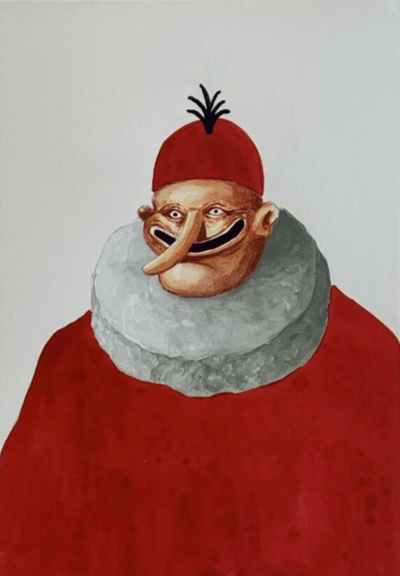
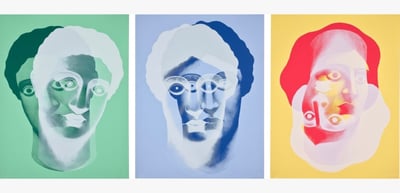
With respect to his portraits, Nicholas Party's figures appear both imposing and yet supple, owing to his skilled use of shading. Although irrealist in form, his subjects often stare out from the canvass with wide, penetrating eyes, much in the manner of Ferdinand Hodler's realist portraits. By denuding his own subjects of the detail associated with realist representations and depicting them as androgenous, Party's subjects appear uncanny and intense—features which are exacerbated by his use of solid backgrounds and the unusual perspective imposed upon them.
Naïve art describes a style of artwork that is simple and unsophisticated, often created by artists without formal training in an academy or art school. The style is characterized by a lack of advanced techniques, giving it a childlike appearance. Naïve art often features bright colors, simple shapes, and a straightforward approach to subject matter, reflecting the artist's untrained perspective.