


Inkjet print on canvas.
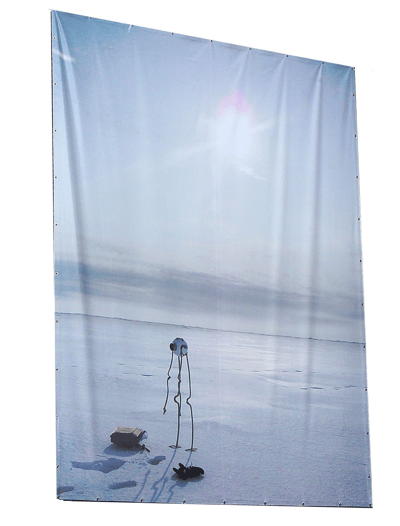
Noordpool-Arlikoop (2004) by Panamarenko is a monumental inkjet print on canvas measuring 520 x 390 cm, produced in an edition of two. Installed on the exterior of a brick building, the image presents a surreal arctic scene: a minimalist, tripod-like figure with binoculars for eyes stands on a vast, frozen expanse under a pale sky. Nearby, scattered objects—a book, a shoe, and a small device—lie half-buried in the snow, casting long shadows. Panamarenko, known for blending science, flight, and fantasy, evokes a sense of exploration and isolation. The title’s reference to the North Pole and the fictive-sounding “Arlikoop” adds a poetic ambiguity, suggesting both expedition and invention. The work channels themes of discovery, solitude, and the limits of human curiosity within vast, inhospitable environments.
Artwork Copyright © PanamarenkoPanamarenko (Belgium, 1940–2019) was a visionary artist and inventor celebrated for his fantastical flying machines, submarines, and vehicles. Blending art, science, and engineering, his works reflected a playful yet profound exploration of human ambition and technological possibilities. Iconic creations like Aeromodeller embody his imaginative approach to art and innovation.
Artwork Copyright © PanamarenkoNoordpool-Arlikoop, 2004
Form
Medium
Size
- Inches
- Centimeters
Edition
Price
- USD
- EUR
- GBP
- CHF
- Authenticity Guaranteed
- Insured Shipping
- Online Since 2005
●Inventory 15755
●Signed
●Comes with gallery invoice and certificate
●Sell Us a Similar Artwork. Learn more.
Inkjet print on canvas.
Noordpool-Arlikoop (2004) by Panamarenko is a monumental inkjet print on canvas measuring 520 x 390 cm, produced in an edition of two. Installed on the exterior of a brick building, the image presents a surreal arctic scene: a minimalist, tripod-like figure with binoculars for eyes stands on a vast, frozen expanse under a pale sky. Nearby, scattered objects—a book, a shoe, and a small device—lie half-buried in the snow, casting long shadows. Panamarenko, known for blending science, flight, and fantasy, evokes a sense of exploration and isolation. The title’s reference to the North Pole and the fictive-sounding “Arlikoop” adds a poetic ambiguity, suggesting both expedition and invention. The work channels themes of discovery, solitude, and the limits of human curiosity within vast, inhospitable environments.
Artwork Copyright © PanamarenkoPanamarenko (Belgium, 1940–2019) was a visionary artist and inventor celebrated for his fantastical flying machines, submarines, and vehicles. Blending art, science, and engineering, his works reflected a playful yet profound exploration of human ambition and technological possibilities. Iconic creations like Aeromodeller embody his imaginative approach to art and innovation.
Artwork Copyright © PanamarenkoAvailability
Size
Form
Medium
SORT BY

Panamarenko
Portable Air Transport, 1969
Limited Edition Print
Offset Print
EUR 3,300
Panamarenko
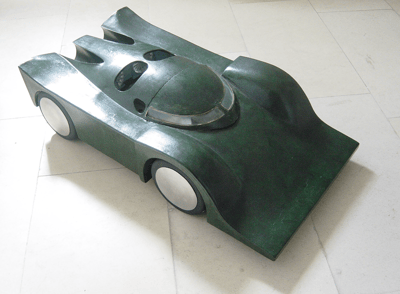
Polistes, 1990
Sculpture / Object
Mixed Media
Inquire For Price
Panamarenko
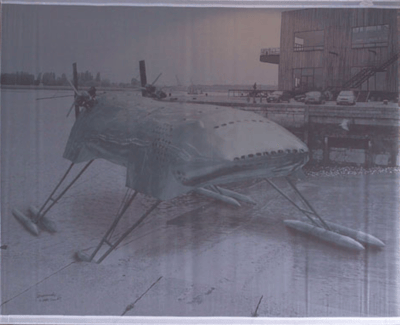
Scotch Gambit at Rijnkaai, Antwerpen, 2001
Limited Edition Print
Monoprint
Inquire For Price

Panamarenko
Noordpool-Arlikoop, 2004
Limited Edition Print
Inkjet print
EUR 9,500
Panamarenko
Noordpool-Arlikoop, 2004
Limited Edition Print
Inkjet print
EUR 12,500

Panamarenko
Milky Ways & Happenings - original plate
Limited Edition Print
Metal
Make Your Offer
Related Artists

Artwork by Miles Aldridge
What is contemporary art?
Contemporary art refers to avant-garde or innovative art created in the recent past or present day. The exact starting point of contemporary art varies depending on the institution, often tied to the founding year of museums or galleries that showcase the style. Contemporary art is characterized by its focus on current ideas, diverse media, and the exploration of new concepts and techniques.



