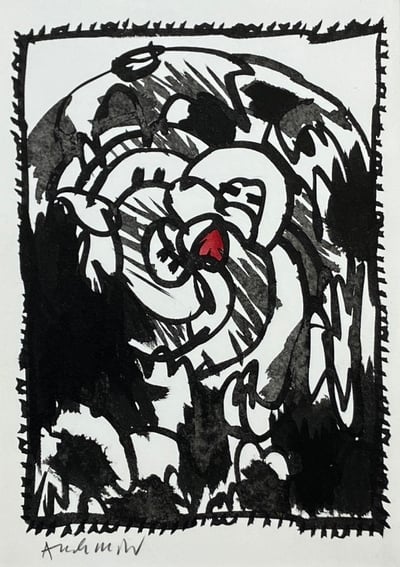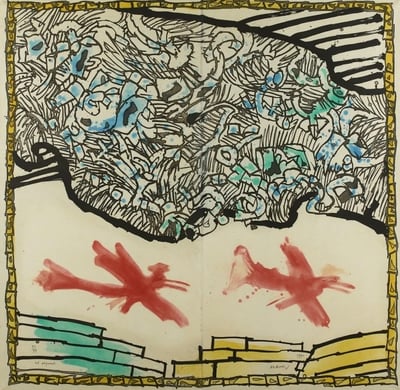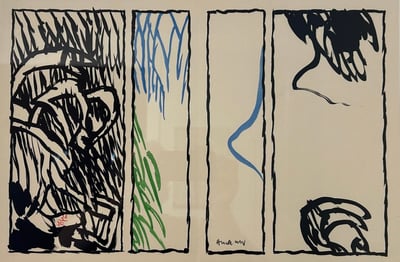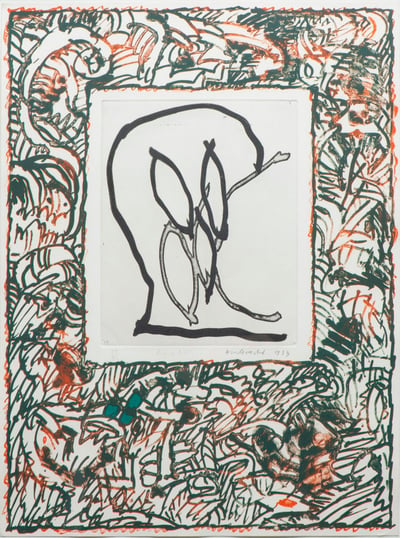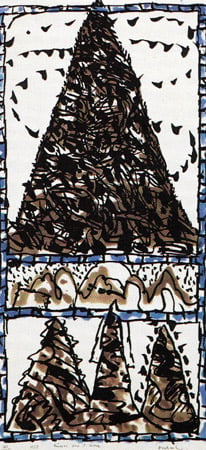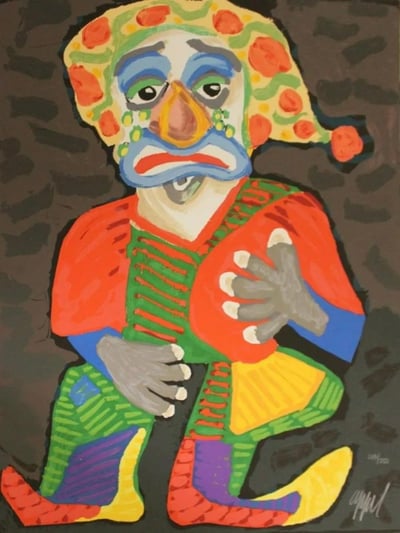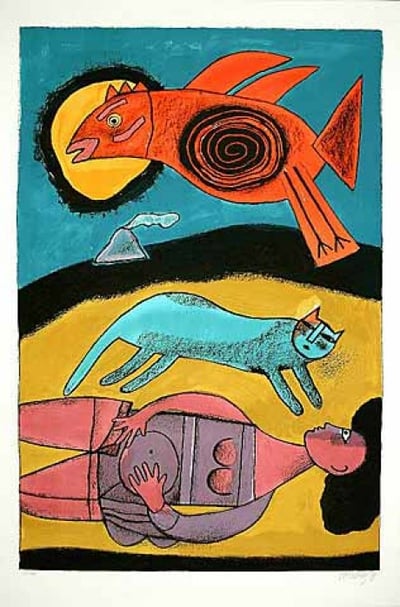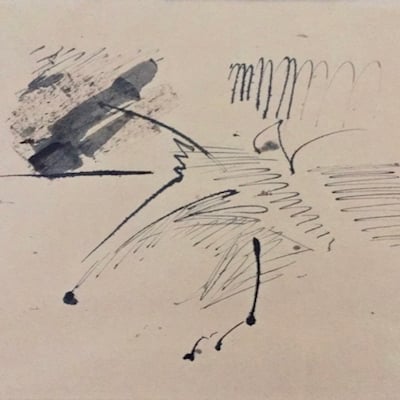
Pierre Alechinsky (Belgium, 1927) is a prominent painter and printmaker associated with the CoBrA movement, known for his vibrant, expressive works blending abstraction and figurative elements. Inspired by calligraphy and traditional printmaking techniques, Alechinsky's dynamic compositions often explore humor, spontaneity, and the subconscious. His work is celebrated worldwide in major museum collections.
bronzeBronze is a metal alloy made primarily of copper and tin, with a typical modern composition of 88% copper and 12% tin. Over time, bronze develops a patina, a surface color that often turns deep green due to oxidation. Large bronze objects, such as sculptures, are typically made in foundries. Bronze is valued for its durability and has been widely used throughout history for art, tools, and weapons.
Pierre Alechinsky (Belgium, 1927) is a prominent painter and printmaker associated with the CoBrA movement, known for his vibrant, expressive works blending abstraction and figurative elements. Inspired by calligraphy and traditional printmaking techniques, Alechinsky's dynamic compositions often explore humor, spontaneity, and the subconscious. His work is celebrated worldwide in major museum collections.
Everything that you paint may be used as evidence against you.
- Pierre Alechinsky
Pierre Alechinsky is associated with Abstract Expressionist, Lyrical Abstraction and the abstract style of art known as Tachisme. Using a range of media in his art, he is an engraver, graphic artist, painter and film maker. He learned engraving and gained other skills in Brussels and Paris. First he studied printmaking, illustration and photography at the National School of Decorative Arts in La Cambre. He became specialized in Etchings, Aquatint and watercolor on rice paper. He then continued his art education at Atelier 17 in Paris, where he was a student of the printmaker Stanley William Hayter. In 1949 the art group Cobra was formed. Its purpose was to break away accepted standards of western art and to make art more about the human condition. Pierre Alechinsky became a member after getting to know the other Cobra artists, and he showed his work in several Cobra exhibitions. In Paris Alechinsky worked as a correspondent for Bokubi, a Japanese journal on the use of ink in art. He went to Japan in 1955, where his work Night was exhibited, and while there he also made a film on Japanese calligraphy. By the end of the 1950s, some of Pierre Alechinsky’s works had been shown at the Venice Biennial and exhibited in London and Bern. In the 1960s his reputation grew internationally when his art went on show in New York, Pittsburgh and Amsterdam. In 1983 Alechinsky was appointed Professor of Painting at the National School of Fine Arts in Paris and was awarded an honorary doctorate from the Free University of Brussels in 1994.
Art Informel is a French term referring to the gestural and improvisational techniques common in abstract painting during the 1940s and 50s. It encompasses various styles that dominated these decades, characterized by informal, spontaneous methods. Artists used this term to describe approaches that moved away from traditional structures and embraced more expressive, unstructured techniques.