
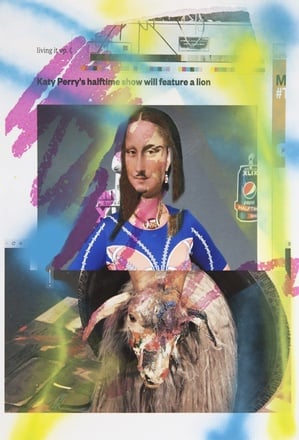
Digital print on Hahnemühle paper, torn catalogue proofs and nitro-acrylic paint
- Edition of 25 + 10 A.P.- Signed and numbered
Rachel Harrison's Living it Up (2015) is a dynamic and layered digital print that blends elements of pop culture, classical art, and contemporary commentary. Created with digital printing on Hahnemühle paper, torn catalog proofs, and nitro-acrylic paint, the composition features a juxtaposition of disparate images, including a stylized portrait reminiscent of Renaissance art, references to pop events, and surreal elements like an animal head. Bright, brush-stroked splashes of color overlay the imagery, adding a chaotic energy that disrupts conventional narratives. Harrison’s work invites viewers to explore themes of cultural iconography and media saturation, challenging the boundary between high art and mass culture in a playful yet thought-provoking manner.
Artwork Copyright © Rachel HarrisonRachel Harrison (United States, 1966) is an American visual artist known for her innovative sculptures that blend handmade forms with found objects and photographs. Her work often brings art history, politics, and pop culture into dialogue, challenging traditional boundaries and encouraging viewers to reconsider the role of art in contemporary society.
Artwork Copyright © Rachel HarrisonLiving it up, 2015
Form
Medium
Size
- Inches
- Centimeters
Edition
Price
Available works →
- Authenticity Guaranteed
- Insured Shipping
- Online Since 2005
●
●Inventory 3127
●Signed
●Comes with gallery invoice and certificate
●Sell Us a Similar Artwork. Learn more.
Digital print on Hahnemühle paper, torn catalogue proofs and nitro-acrylic paint
- Edition of 25 + 10 A.P.- Signed and numbered
Rachel Harrison's Living it Up (2015) is a dynamic and layered digital print that blends elements of pop culture, classical art, and contemporary commentary. Created with digital printing on Hahnemühle paper, torn catalog proofs, and nitro-acrylic paint, the composition features a juxtaposition of disparate images, including a stylized portrait reminiscent of Renaissance art, references to pop events, and surreal elements like an animal head. Bright, brush-stroked splashes of color overlay the imagery, adding a chaotic energy that disrupts conventional narratives. Harrison’s work invites viewers to explore themes of cultural iconography and media saturation, challenging the boundary between high art and mass culture in a playful yet thought-provoking manner.
Artwork Copyright © Rachel HarrisonRachel Harrison (United States, 1966) is an American visual artist known for her innovative sculptures that blend handmade forms with found objects and photographs. Her work often brings art history, politics, and pop culture into dialogue, challenging traditional boundaries and encouraging viewers to reconsider the role of art in contemporary society.
Artwork Copyright © Rachel Harrison- Recently Added
- Price (Low-High)
- Price (High-Low)
- Year (Low-High)
- Year (High-Low)

Rachel Harrison
Living it up, 2015
Limited Edition Print
Digital Print on paper
Currently Not Available
Related Artists

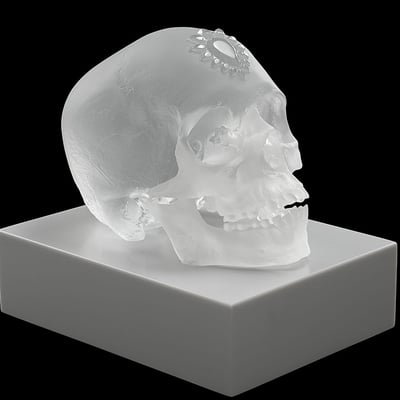



Artwork by Shepard Fairey
What is appropriation?
Appropriation in art involves using pre-existing images or objects with little or no modification. This technique has played a significant role across various art forms, including visual arts, music, performance, and literature. In visual arts, appropriation refers to the practice of adopting, sampling, recycling, or borrowing elements—or even entire forms—of existing visual culture, integrating them into new works to create meaning or critique.
Rachel Harrison
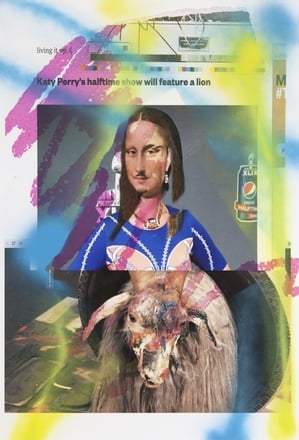
Living it up, 2015
48.3 x 33 cm


