

Color silkscreen on light cardboard (folded) - Hand signed and numbered at the back
Zwei verschiedene Rot by Rupprecht Geiger, created in 1967, is a limited edition silkscreen print measuring 44.5 x 62.8 cm. The piece showcases Geiger's minimalist approach, exploring the visual and emotional impact of color. Divided into two equal halves, the composition contrasts two distinct shades of red—one leaning towards pink and the other with a deeper, more intense hue. The silkscreen on light cardboard emphasizes the vibrancy and depth of the colors, creating a bold and immersive experience for the viewer. Geiger’s work often engages with the subtleties of color perception, and this print is a clear expression of his fascination with tonal variation and intensity.
Artwork Copyright © Rupprecht GeigerRupprecht Geiger (Germany, 1908–2009) was a German abstract painter and sculptor renowned for his vibrant color field paintings. A founding member of the ZEN 49 group, he focused on the expressive power of color, particularly red, using simple geometric forms to evoke emotional responses. Geiger's work significantly influenced post-war European abstraction.
Artwork Copyright © Rupprecht GeigerZwei verschiedene Rot, 1967
Form
Medium
Size
- Inches
- Centimeters
Edition
Price
Available works →
- Authenticity Guaranteed
- Insured Shipping
- Online Since 2005
●
●Inventory 11383
●Signed
●Comes with gallery invoice and certificate
●Sell Us a Similar Artwork. Learn more.
Color silkscreen on light cardboard (folded) - Hand signed and numbered at the back
Zwei verschiedene Rot by Rupprecht Geiger, created in 1967, is a limited edition silkscreen print measuring 44.5 x 62.8 cm. The piece showcases Geiger's minimalist approach, exploring the visual and emotional impact of color. Divided into two equal halves, the composition contrasts two distinct shades of red—one leaning towards pink and the other with a deeper, more intense hue. The silkscreen on light cardboard emphasizes the vibrancy and depth of the colors, creating a bold and immersive experience for the viewer. Geiger’s work often engages with the subtleties of color perception, and this print is a clear expression of his fascination with tonal variation and intensity.
Artwork Copyright © Rupprecht GeigerRupprecht Geiger (Germany, 1908–2009) was a German abstract painter and sculptor renowned for his vibrant color field paintings. A founding member of the ZEN 49 group, he focused on the expressive power of color, particularly red, using simple geometric forms to evoke emotional responses. Geiger's work significantly influenced post-war European abstraction.
Artwork Copyright © Rupprecht Geiger- Recently Added
- Price (Low-High)
- Price (High-Low)
- Year (Low-High)
- Year (High-Low)

Rupprecht Geiger
Zwei verschiedene Rot, 1967
Limited Edition Print
Silkscreen
Currently Not Available

Rupprecht Geiger
Gegen die Folter
Limited Edition Print
Lithograph
Currently Not Available
Related Artists

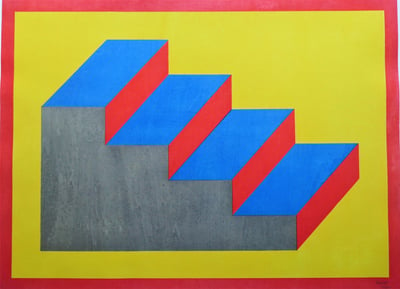
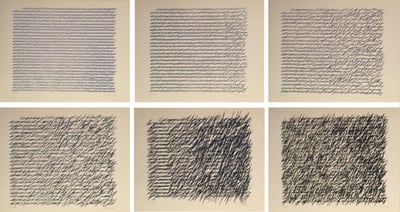
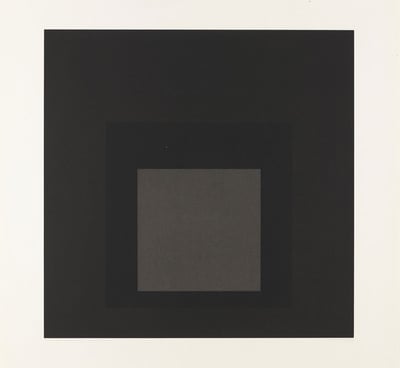
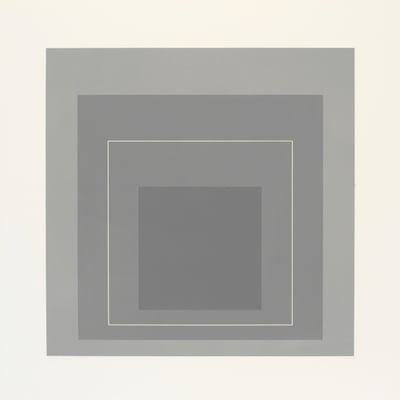
Artwork by Joseph Albers
What is concrete art?
Concrete Art is an art movement founded by the Dutch artist Theo van Doesburg in the 1930s. The movement emphasizes pure abstraction, focusing on geometric shapes and colors without any reference to the natural world or symbolic meaning. Unlike other forms of abstract art, Concrete Art is entirely non-representational and is based on mathematical principles and precise execution. It aims to create universal, timeless works by using simple, clear forms that emphasize objectivity and clarity.


Rupprecht Geiger
Zwei verschiedene Rot, 1967
44.5 x 62.8 cm


