

Vera Molnar
Vera Molnar (Hungary/France, 1924–2023) was a trailblazer in generative and digital art, celebrated for her algorithmic approach to abstraction. Combining art and technology, she created geometric compositions exploring order, randomness, and aesthetic balance. As one of the first artists to use computers in art, Molnar profoundly shaped modern computational creativity.
© Vera Molnar. All rights reserved.
- Recently Added
- Price (Low-High)
- Price (High-Low)
- Year (Low-High)
- Year (High-Low)

Vera Molnar
Lettres de ma mère (6), 1990
Limited Edition Print
Serigraph
EUR 4,950

Vera Molnar
Hyper transformation, 1974
Limited Edition Print
Screen-print
Currently Not Available
No sold works to show.
Art is an obsession; that's all I think about.
- Vera Molnar
- Vera Molnar
A pioneering figure in computer and algorithmic art, Hungarian-born French artist Vera Molnar worked for more than six decades at the intersection of art and technology. As a co-founder of the GRAV group, she explored geometric abstraction through mechanical and kinetic art and became closely associated with the Art et Informatique movement. In defending her use of geometric forms, Molnar explained that her aim was to create surprise through monotony and symmetry.
An advocate of unconventional media, she often left the perforated edges of computer printouts intact, referring to these works as "jobs." Her 1974 work Hypertransformation of 20 Concentric Squares, produced on plotter paper, exemplifies this distinctive approach.
Before embracing computer-generated art, Molnar created non-representational works influenced by Russian Constructivism and the abstract art of Piet Mondrian and Paul Klee, working across collage, painting, and photography. She began using computers in the late 1960s, developing a unique artistic language that combined mathematical precision with creative experimentation.
Molnar regarded computer art as a means of expressing ideas that exceeded human limitations, such as constraints of time and visual precision. For her, the computer served as a tool for transforming these ideas into tangible works of art. (Artist website)
An advocate of unconventional media, she often left the perforated edges of computer printouts intact, referring to these works as "jobs." Her 1974 work Hypertransformation of 20 Concentric Squares, produced on plotter paper, exemplifies this distinctive approach.
Before embracing computer-generated art, Molnar created non-representational works influenced by Russian Constructivism and the abstract art of Piet Mondrian and Paul Klee, working across collage, painting, and photography. She began using computers in the late 1960s, developing a unique artistic language that combined mathematical precision with creative experimentation.
Molnar regarded computer art as a means of expressing ideas that exceeded human limitations, such as constraints of time and visual precision. For her, the computer served as a tool for transforming these ideas into tangible works of art. (Artist website)
Related Artists


Related Articles

News, Art Movements - July 28, 2023
The Conundrum of Technology's Experiment with Contemporary Art: A Mercurial Maiden Voyage
Discover how technology transforms contemporary art, blending innovation with creativity. Explore challenges of authenticity, access, and digital expression.Read More
News, Popular, Collecting, Artists - August 12, 2026
In Minor Keys: Finding Intimacy and Identity at the 61st Venice Biennale — and in Your Collection
Explore how Koyo Kouoh’s 61st Venice Biennale vision, In Minor Keys, is shifting contemporary collecting toward quiet introspection, memory, and personal identi…Read More
 Artwork by Sol LeWitt
What is Generative Art?
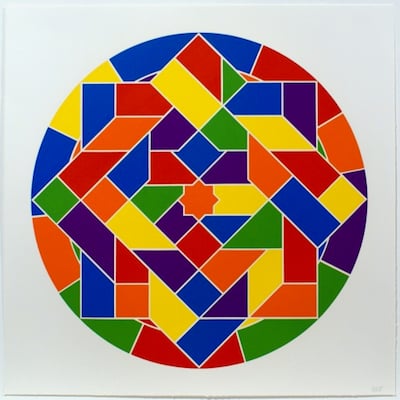
Generative art refers to art that is wholly or partly created through an autonomous system. This system can be independent or non-human, capable of determining features that would otherwise be decided by the artist. The generative system can act as the creator or as a collaborator with the artist. Generative art often refers to works generated algorithmicall…
Explore »

