

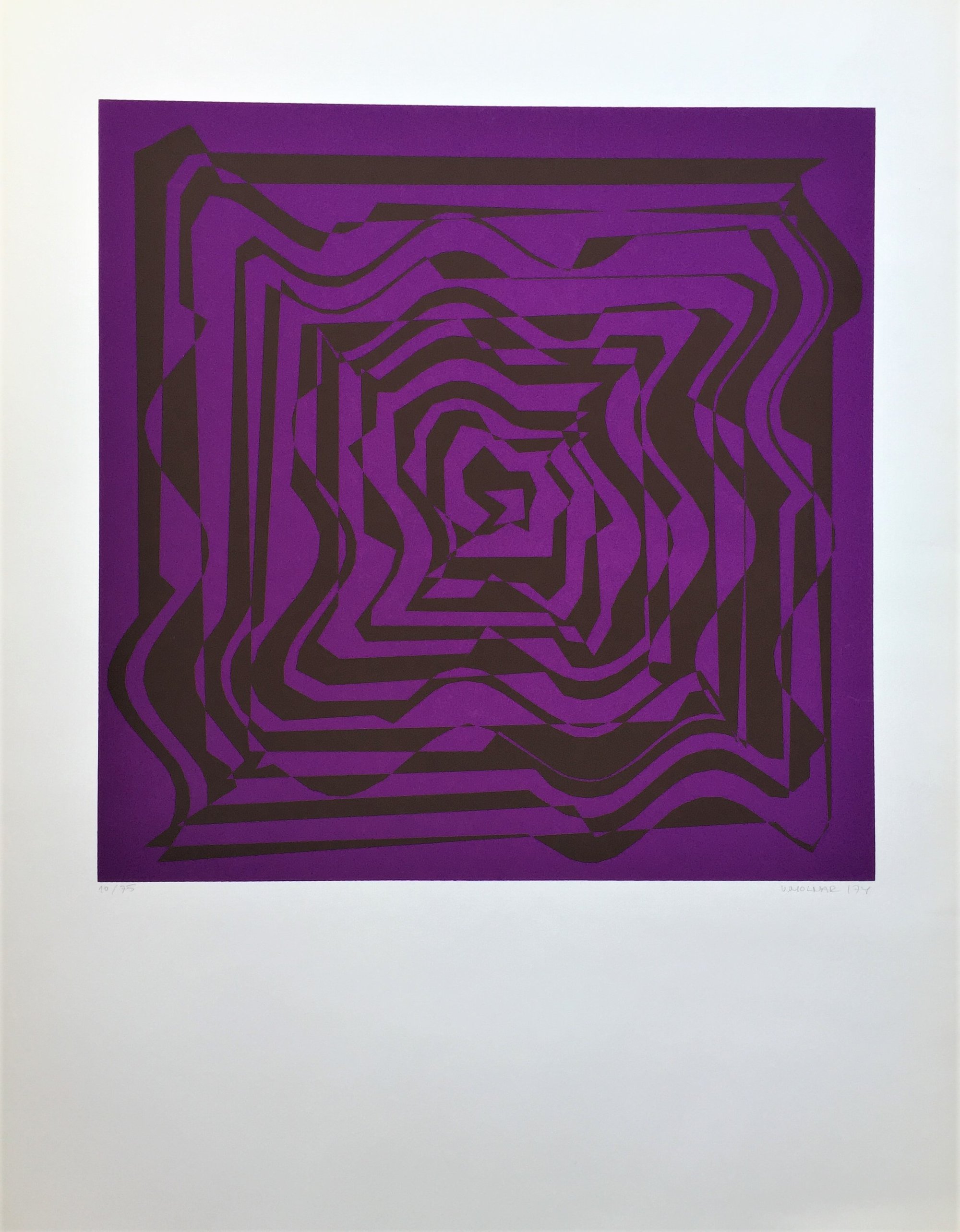
// Vera Molnar’s Hyper Transformation (1974) is a limited edition screen print that showcases her pioneering approach to computer-generated and algorithmic art. Measuring 65 x 50 cm, this work features a mesmerizing pattern of concentric, angular lines in deep purple and black that appear to twist and warp towards the center, creating a hypnotic, almost three-dimensional effect. Molnar’s use of systematic repetition and precise geometry reflects her background in mathematics and her exploration of visual aesthetics through algorithmic processes. This print is an excellent example of how she merges art and technology, producing an abstract composition that invites viewers into a dynamic visual experience of movement and transformation.
Artwork Copyright © Vera MolnarVera Molnar (Hungary/France, 1924–2023) was a trailblazer in generative and digital art, celebrated for her algorithmic approach to abstraction. Combining art and technology, she created geometric compositions exploring order, randomness, and aesthetic balance. As one of the first artists to use computers in art, Molnar profoundly shaped modern computational creativity.
Artwork Copyright © Vera MolnarHyper transformation, 1974
Form
Medium
Size
- Inches
- Centimeters
Edition
Price
Available works →
- Authenticity Guaranteed
- Insured Shipping
- Online Since 2005
●
●Inventory 10233
●Signed
●Comes with gallery invoice and certificate
●Sell Us a Similar Artwork. Learn more.
// Vera Molnar’s Hyper Transformation (1974) is a limited edition screen print that showcases her pioneering approach to computer-generated and algorithmic art. Measuring 65 x 50 cm, this work features a mesmerizing pattern of concentric, angular lines in deep purple and black that appear to twist and warp towards the center, creating a hypnotic, almost three-dimensional effect. Molnar’s use of systematic repetition and precise geometry reflects her background in mathematics and her exploration of visual aesthetics through algorithmic processes. This print is an excellent example of how she merges art and technology, producing an abstract composition that invites viewers into a dynamic visual experience of movement and transformation.
Artwork Copyright © Vera MolnarVera Molnar (Hungary/France, 1924–2023) was a trailblazer in generative and digital art, celebrated for her algorithmic approach to abstraction. Combining art and technology, she created geometric compositions exploring order, randomness, and aesthetic balance. As one of the first artists to use computers in art, Molnar profoundly shaped modern computational creativity.
Artwork Copyright © Vera Molnar- Recently Added
- Price (Low-High)
- Price (High-Low)
- Year (Low-High)
- Year (High-Low)

Vera Molnar
Lettres de ma mère (6), 1990
Limited Edition Print
Serigraph
EUR 4,950

Vera Molnar
Hyper transformation, 1974
Limited Edition Print
Screen-print
Currently Not Available
Available works by Vera Molnar
See all →Vera Molnar
Lettres de ma mère (6), 1990
Limited Edition Print
Serigraph
EUR 4,950
Related Artists


Artwork by Aaron Marcus for sale on composition
What is Computer Art?
Computer art refers to any type of digital imagery or graphic artwork created using a computer. Art curators often classify art made with computers as either digital art or new media art. Artists creating computer art leverage technological advancements to produce complex compositions.

Vera Molnar
Hyper transformation, 1974
65 x 50 cm


