

Screen print accompanied by a Book by Rudolf Carnap: "Scheinprobleme in der Philosophie. Das Fremdpsychische und der Realismusstreit" (Pseudo-Problems in Philosophy. The External World and the Debate on Realism); Release date: March 2006
Languages: German.
Format: 24.3 × 16.3 cm.
Edition of 200, signed and numbered.
Ex Libris #9 (2006) by Thomas Demand is a screenprint accompanied by a reprint of Rudolf Carnap’s philosophical text Scheinprobleme in der Philosophie. The image depicts a desiccated, brown-leafed potted plant in stark lighting, evoking a sense of quiet decay and formal stillness. Characteristically, Demand photographs hyperreal paper constructions, and here, the artificiality of the object contrasts with the philosophical depth of Carnap’s treatise on pseudo-problems and realism. Part of the celebrated Ex Libris series, this edition highlights the personal intellectual influences on contemporary artists. The book and print are presented together in a signed, numbered edition of 200, giving new context and visibility to historical texts through an artist’s conceptual lens.
Artwork Copyright © Thomas DemandThomas Demand (Germany, 1964) is a conceptual artist known for his meticulously crafted, life-sized paper and cardboard models, which he photographs to create hyper-realistic images. His works often reconstruct significant or mundane scenes, exploring memory, truth, and artifice. Demand’s art has been exhibited globally, including at the Venice Biennale.
Artwork Copyright © Thomas DemandEx Libris #9, 2006
Form
Medium
Size
- Inches
- Centimeters
Edition
Price
- USD
- EUR
- GBP
- CHF
- Authenticity Guaranteed
- Insured Shipping
- Online Since 2005
●Inventory 16242
●Signed
●Comes with gallery invoice and certificate
●Any questions?
Screen print accompanied by a Book by Rudolf Carnap: "Scheinprobleme in der Philosophie. Das Fremdpsychische und der Realismusstreit" (Pseudo-Problems in Philosophy. The External World and the Debate on Realism); Release date: March 2006
Languages: German.
Format: 24.3 × 16.3 cm.
Edition of 200, signed and numbered.
Ex Libris #9 (2006) by Thomas Demand is a screenprint accompanied by a reprint of Rudolf Carnap’s philosophical text Scheinprobleme in der Philosophie. The image depicts a desiccated, brown-leafed potted plant in stark lighting, evoking a sense of quiet decay and formal stillness. Characteristically, Demand photographs hyperreal paper constructions, and here, the artificiality of the object contrasts with the philosophical depth of Carnap’s treatise on pseudo-problems and realism. Part of the celebrated Ex Libris series, this edition highlights the personal intellectual influences on contemporary artists. The book and print are presented together in a signed, numbered edition of 200, giving new context and visibility to historical texts through an artist’s conceptual lens.
Artwork Copyright © Thomas DemandThomas Demand (Germany, 1964) is a conceptual artist known for his meticulously crafted, life-sized paper and cardboard models, which he photographs to create hyper-realistic images. His works often reconstruct significant or mundane scenes, exploring memory, truth, and artifice. Demand’s art has been exhibited globally, including at the Venice Biennale.
Artwork Copyright © Thomas Demand- Recently Added
- Price (Low-High)
- Price (High-Low)
- Year (Low-High)
- Year (High-Low)
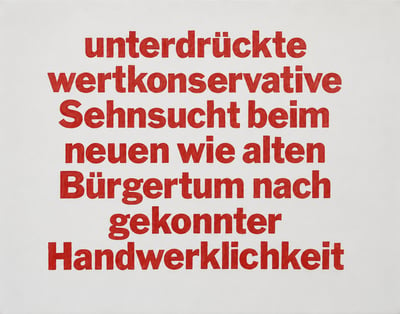
Thomas Demand
Texte zur Kunst, 2010
Limited Edition Print
Offset Print
EUR 780

Thomas Demand
Ex Libris #9, 2006
Limited Edition Print
Screen-print
EUR 2,400

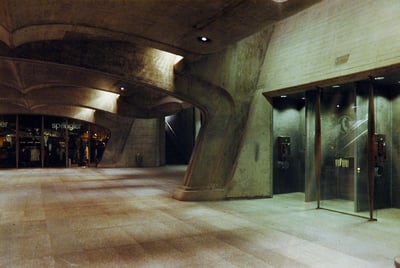
Thomas Demand
Bullion, 2003
Limited Edition Print
Lambda print
EUR 4,250
Related Artists


Artwork by John Baldessari
What is conceptual art?
Sometimes referred to as Conceptualism, this is an art form where the idea(s) or concept(s) behind the work take precedence over material concerns and traditional aesthetics. Many conceptual artworks can be created by anyone simply by following written instructions. The concept or idea is the most essential aspect of the artwork.


Thomas Demand
Ex Libris #9, 2006
24.3 x 16.3 cm


