

Lambda print in colours, on glossy paper, with full margins - Signed in black ink and numbered (printed) on a label affixed to the reverse - Published by EN/OF Editions, Kleve, Germany,
Bullion by Thomas Demand is a limited edition Lambda print that portrays meticulously crafted models of gold bullion bars, rendered in striking detail. Demand, known for his process of constructing lifelike models and then photographing them, plays with themes of value, wealth, and illusion in this piece. The glossy finish and warm golden hues evoke opulence, while the careful arrangement and uniformity of the bars suggest an almost surreal sense of abundance. By using an artificial medium to replicate a symbol of wealth, Demand subtly critiques our perceptions of value and authenticity in a world increasingly dominated by simulation.
Artwork Copyright © Thomas DemandThomas Demand (Germany, 1964) is a conceptual artist known for his meticulously crafted, life-sized paper and cardboard models, which he photographs to create hyper-realistic images. His works often reconstruct significant or mundane scenes, exploring memory, truth, and artifice. Demand’s art has been exhibited globally, including at the Venice Biennale.
Artwork Copyright © Thomas DemandBullion, 2003
Form
Medium
Size
- Inches
- Centimeters
Edition
Price
- USD
- EUR
- GBP
- CHF
- Authenticity Guaranteed
- Insured Shipping
- Online Since 2005
●Inventory 9449
●Signed
●Comes with gallery invoice and certificate
●Sell Us a Similar Artwork. Learn more.
Lambda print in colours, on glossy paper, with full margins - Signed in black ink and numbered (printed) on a label affixed to the reverse - Published by EN/OF Editions, Kleve, Germany,
Bullion by Thomas Demand is a limited edition Lambda print that portrays meticulously crafted models of gold bullion bars, rendered in striking detail. Demand, known for his process of constructing lifelike models and then photographing them, plays with themes of value, wealth, and illusion in this piece. The glossy finish and warm golden hues evoke opulence, while the careful arrangement and uniformity of the bars suggest an almost surreal sense of abundance. By using an artificial medium to replicate a symbol of wealth, Demand subtly critiques our perceptions of value and authenticity in a world increasingly dominated by simulation.
Artwork Copyright © Thomas DemandThomas Demand (Germany, 1964) is a conceptual artist known for his meticulously crafted, life-sized paper and cardboard models, which he photographs to create hyper-realistic images. His works often reconstruct significant or mundane scenes, exploring memory, truth, and artifice. Demand’s art has been exhibited globally, including at the Venice Biennale.
Artwork Copyright © Thomas Demand- Recently Added
- Price (Low-High)
- Price (High-Low)
- Year (Low-High)
- Year (High-Low)
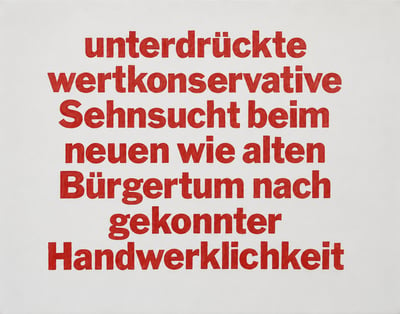
Thomas Demand
Texte zur Kunst, 2010
Limited Edition Print
Offset Print
EUR 780

Thomas Demand
Ex Libris #9, 2006
Limited Edition Print
Screen-print
EUR 2,400

Thomas Demand
Bullion, 2003
Limited Edition Print
Lambda print
EUR 4,250
Related Artists

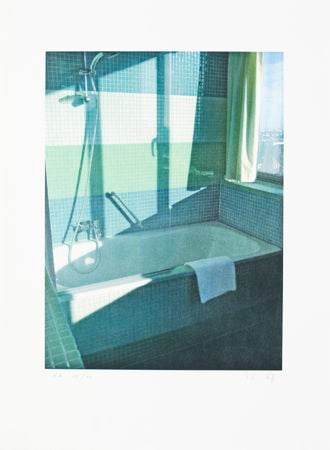
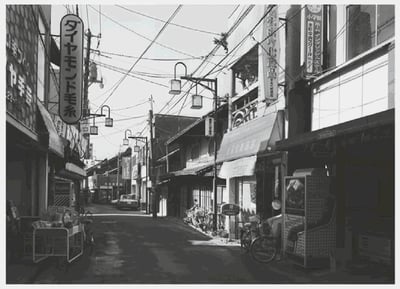
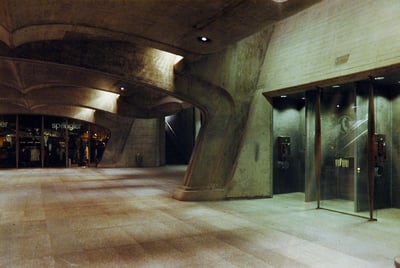
Artwork by Bernd & Hilla Becher
What is the Dusseldorf school of photography?
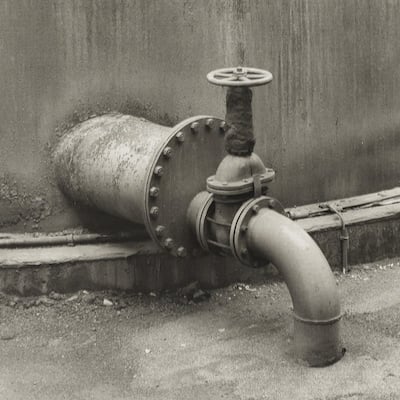
The Düsseldorf School of Photography refers to a group of photographers who studied under Bernd and Hilla Becher at the Kunstakademie Düsseldorf during the 1970s. This group was known for its devotion to the black-and-white industrial images characteristic of the German tradition known as New Objectivity. The photographers focused on precise, methodical documentation of industrial structures, often using a detached and objective approach.

Thomas Demand
Bullion, 2003
30 x 30 cm


