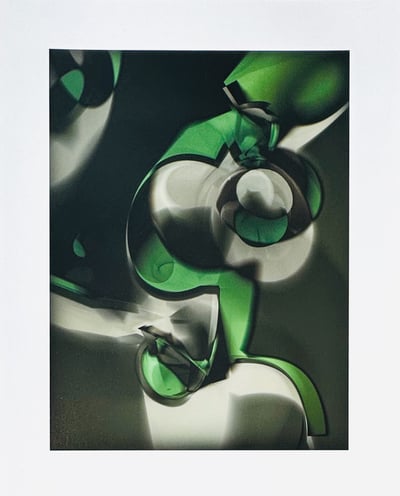
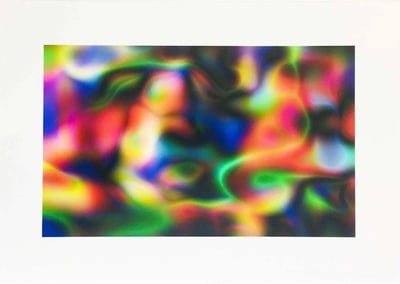
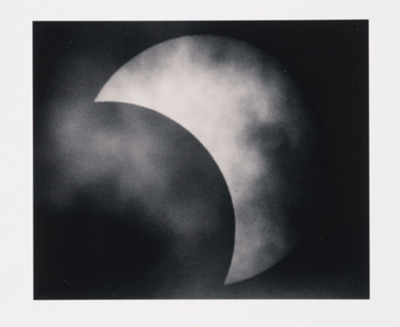
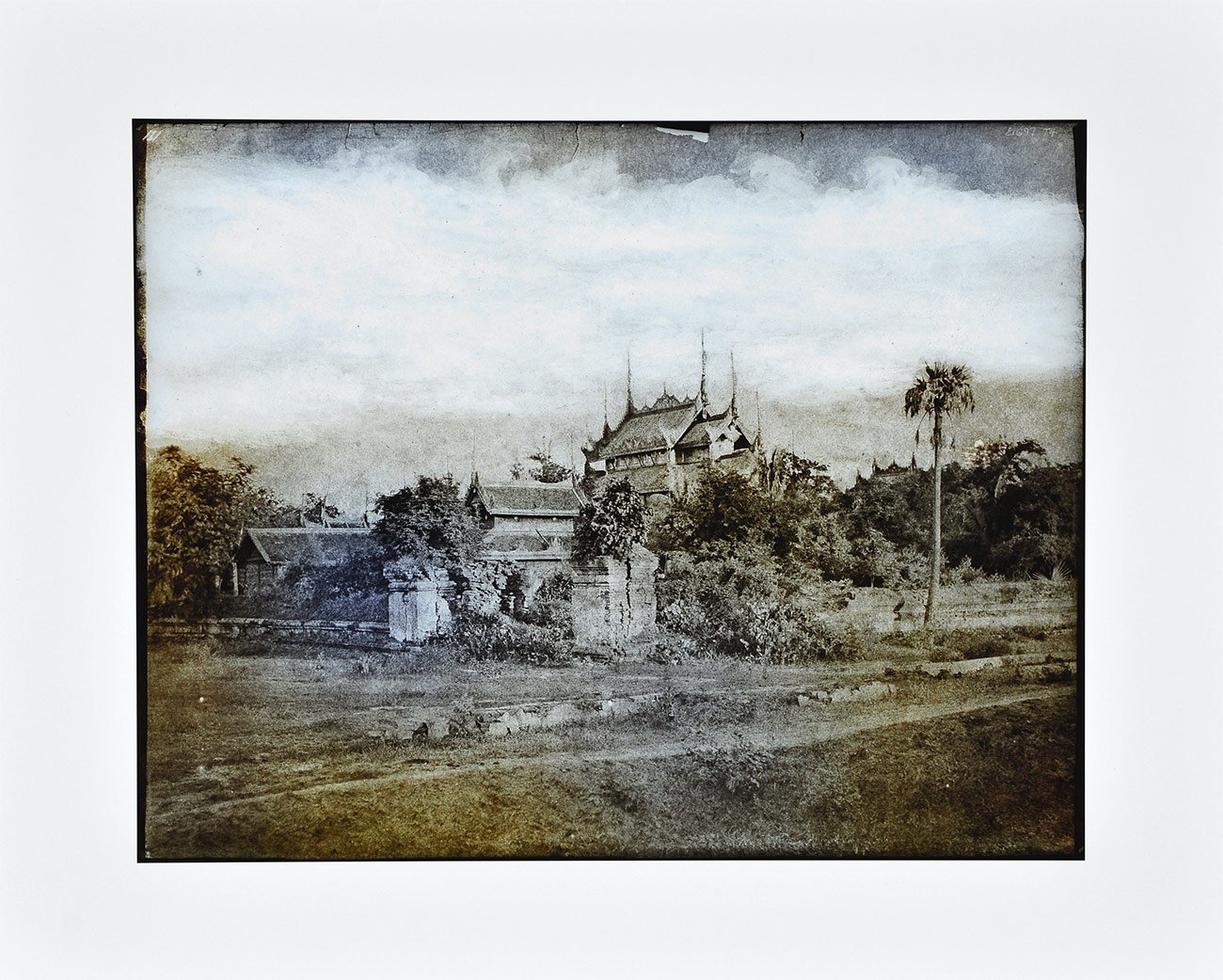
Inkjet on Rag Photographique Paper. Photograph printed by Grieger, Dusseldorf, on high quality Rag Photographique Paper. Hand signed and numbered by the artist on the back. Presented inside a black portfolio folder that includes texts by Thomas Ruff and Martin Barnes, Senior Curator of the photography department of the V&A Museum.
- Image size: 38.3 x 30 cm.
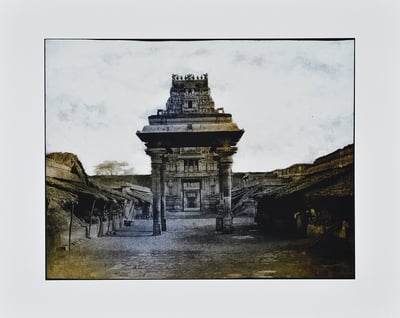
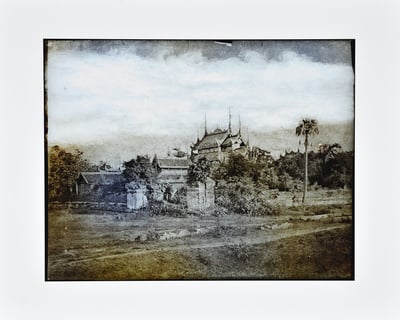
Tripe 09 by Thomas Ruff, a 2018 inkjet print on Rag Photographique Paper, captures the essence of a historical landscape with an ethereal quality. The image presents an architectural structure nestled within lush greenery, with intricate details softened by Ruff's signature post-processing technique. The faded tones and subtle textures give the print a nostalgic, almost dreamlike atmosphere, as if viewing a distant memory. Ruff's choice of high-quality paper enhances the depth and delicacy of the composition, inviting viewers to reflect on the passage of time and the transient nature of place and memory.
Thomas Ruff (Germany, 1958) is a contemporary photographer known for his conceptual approach and exploration of the photographic medium. A member of the Düsseldorf School, he has produced diverse series, including large-scale portraits, architectural studies, and digitally manipulated images. Ruff's work challenges perceptions of reality and representation in photography.
Inkjet printAn inkjet printer creates prints by spraying millions of tiny ink droplets onto paper. This type of printing is generally inexpensive because the ink is relatively affordable. Artists can use computers to create digital art, which can then be printed in color using inkjet technology.
Inkjet on Rag Photographique Paper. Photograph printed by Grieger, Dusseldorf, on high quality Rag Photographique Paper. Hand signed and numbered by the artist on the back. Presented inside a black portfolio folder that includes texts by Thomas Ruff and Martin Barnes, Senior Curator of the photography department of the V&A Museum.
- Image size: 38.3 x 30 cm.
Tripe 09 by Thomas Ruff, a 2018 inkjet print on Rag Photographique Paper, captures the essence of a historical landscape with an ethereal quality. The image presents an architectural structure nestled within lush greenery, with intricate details softened by Ruff's signature post-processing technique. The faded tones and subtle textures give the print a nostalgic, almost dreamlike atmosphere, as if viewing a distant memory. Ruff's choice of high-quality paper enhances the depth and delicacy of the composition, inviting viewers to reflect on the passage of time and the transient nature of place and memory.
Thomas Ruff (Germany, 1958) is a contemporary photographer known for his conceptual approach and exploration of the photographic medium. A member of the Düsseldorf School, he has produced diverse series, including large-scale portraits, architectural studies, and digitally manipulated images. Ruff's work challenges perceptions of reality and representation in photography.
My images are not images of reality, but show a kind of second reality, the image of the image.
- Thomas Ruff
Deemed the ‘master of edited and reimagined images’, Thomas Ruff is a photographer renowned for his use of technological advancements as a means of bringing new meaning and visual possibilities to his field. Press++ is among the photographer’s most notable works and is comprised of numerous images that had been published in American newspapers and magazines between the 1920’s and 1970’s, later sourced by Ruff on eBay - in producing the works, he scanned the front and back of the images and digitally combined them, with consideration taken of touch-ups, scribbles and date stamps. Among Ruff’s wider oeuvre are expressionless portraits, blurred pornography, domestic interiors and internet-sourced JPEGs. Heavily inspired by his teachers Bernd and Hilla Becher, Ruff learned from their expertise in straight photography; Joel Meyerowitz and Stephen Shore are among his other early influences.
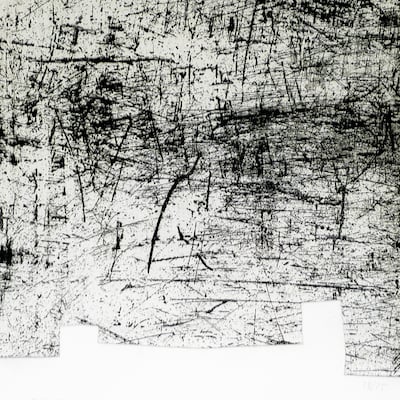
Abstract art uses form, shape, line, and color to create a visual experience without attempting to represent external reality. The composition exists independently of the world's visual references, focusing on expressing ideas and emotions through non-representational means.