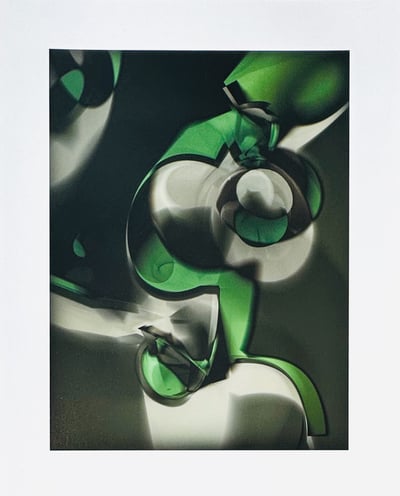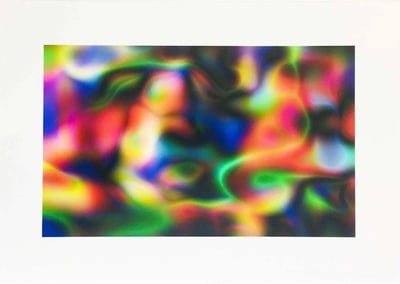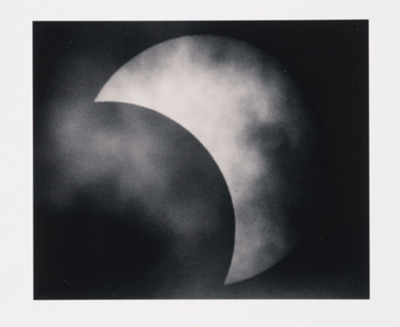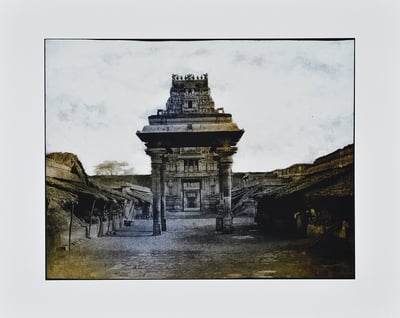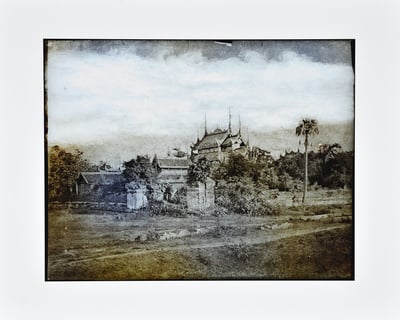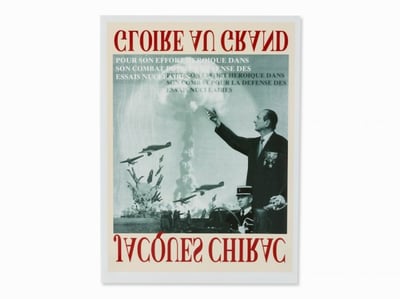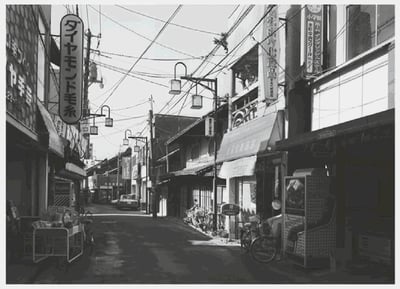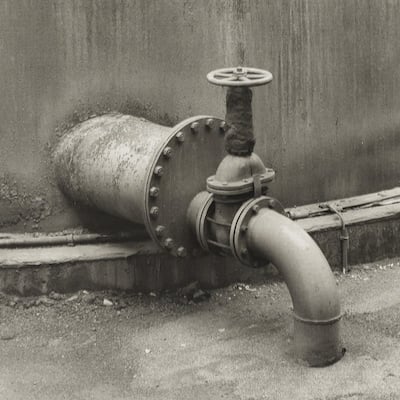
8-part Leporello, digital pigment print (Ditone) on baryta-paper - signed Thomas Ruff on the reverse, from an edition of 75, published by Schellmann Art Production, Munich, New York
Substrat by Thomas Ruff is a limited edition digital pigment print on baryta paper, created between 2002 and 2003. This artwork consists of an eight-part Leporello, each panel a vibrant composition of swirling colors and abstract forms. Ruff, known for his exploration of digital media, manipulates the visual language of digital images to evoke a sense of depth and movement. The intense hues blend and contrast, creating a mesmerizing and almost psychedelic visual experience that challenges traditional perceptions of photography. The entire composition invites viewers to explore each segment as a unique yet interconnected visual statement. This edition, limited to 75, is published by Schellmann Art Production in Munich and New York, underscoring its collectible nature.
Thomas Ruff (Germany, 1958) is a contemporary photographer known for his conceptual approach and exploration of the photographic medium. A member of the Düsseldorf School, he has produced diverse series, including large-scale portraits, architectural studies, and digitally manipulated images. Ruff's work challenges perceptions of reality and representation in photography.
Digital PrintDigital print on paper refers to a digital image printed with archival-grade inks on high-quality, acid-free paper. This process ensures the print can last over twenty years if properly stored. The digital file allows for future prints to be made as needed.
8-part Leporello, digital pigment print (Ditone) on baryta-paper - signed Thomas Ruff on the reverse, from an edition of 75, published by Schellmann Art Production, Munich, New York
Substrat by Thomas Ruff is a limited edition digital pigment print on baryta paper, created between 2002 and 2003. This artwork consists of an eight-part Leporello, each panel a vibrant composition of swirling colors and abstract forms. Ruff, known for his exploration of digital media, manipulates the visual language of digital images to evoke a sense of depth and movement. The intense hues blend and contrast, creating a mesmerizing and almost psychedelic visual experience that challenges traditional perceptions of photography. The entire composition invites viewers to explore each segment as a unique yet interconnected visual statement. This edition, limited to 75, is published by Schellmann Art Production in Munich and New York, underscoring its collectible nature.
Thomas Ruff (Germany, 1958) is a contemporary photographer known for his conceptual approach and exploration of the photographic medium. A member of the Düsseldorf School, he has produced diverse series, including large-scale portraits, architectural studies, and digitally manipulated images. Ruff's work challenges perceptions of reality and representation in photography.
My images are not images of reality, but show a kind of second reality, the image of the image.
- Thomas Ruff
Deemed the ‘master of edited and reimagined images’, Thomas Ruff is a photographer renowned for his use of technological advancements as a means of bringing new meaning and visual possibilities to his field. Press++ is among the photographer’s most notable works and is comprised of numerous images that had been published in American newspapers and magazines between the 1920’s and 1970’s, later sourced by Ruff on eBay - in producing the works, he scanned the front and back of the images and digitally combined them, with consideration taken of touch-ups, scribbles and date stamps. Among Ruff’s wider oeuvre are expressionless portraits, blurred pornography, domestic interiors and internet-sourced JPEGs. Heavily inspired by his teachers Bernd and Hilla Becher, Ruff learned from their expertise in straight photography; Joel Meyerowitz and Stephen Shore are among his other early influences.
The Düsseldorf School of Photography refers to a group of photographers who studied under Bernd and Hilla Becher at the Kunstakademie Düsseldorf during the 1970s. This group was known for its devotion to the black-and-white industrial images characteristic of the German tradition known as New Objectivity. The photographers focused on precise, methodical documentation of industrial structures, often using a detached and objective approach.