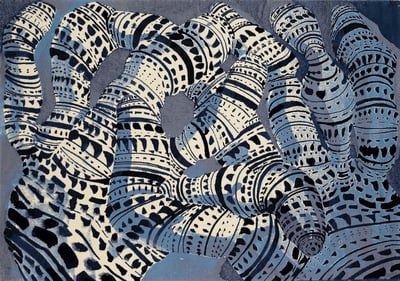
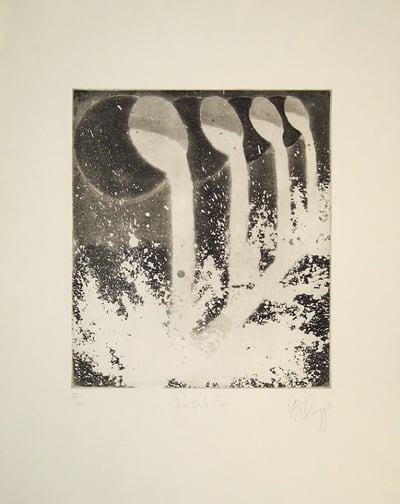
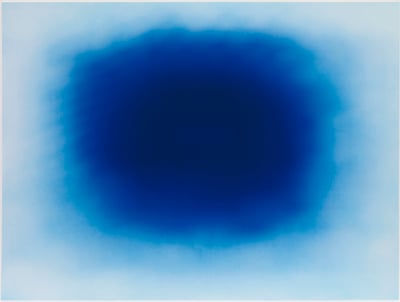
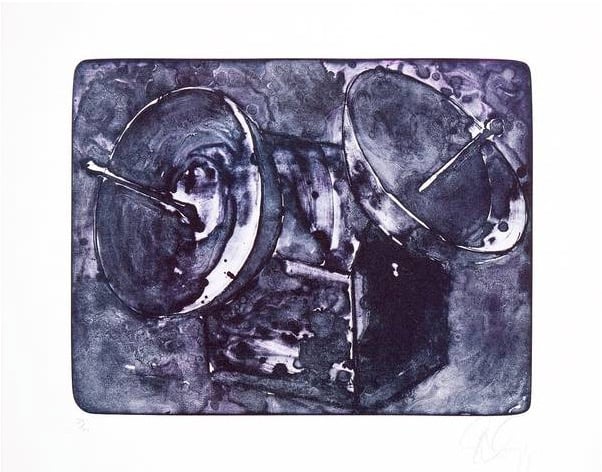
// Receiver II by Tony Cragg, created in 2002, is a limited edition lithograph that showcases the artist’s exploration of industrial forms and scientific imagery. Rendered in deep, monochromatic tones, the print depicts a complex arrangement resembling satellite dishes or receivers, evoking themes of communication and connectivity. Cragg’s use of texture and shadow adds a sense of weight and dimensionality, transforming the object into a sculptural form on paper. This lithograph, with an edition size of 40, reflects Cragg’s interest in the intersection of nature, technology, and the structures that bridge them. Measuring 50 cm by 63 cm, Receiver II invites viewers to reflect on the role of technology in shaping our perception and interaction with the world.
Tony Cragg (UK, 1949) is an influential sculptor known for his innovative use of materials, including wood, metal, plastic, and glass. His abstract, dynamic forms explore the relationship between nature, man-made objects, and space. A Turner Prize winner, Cragg’s work has been exhibited globally, cementing his legacy in contemporary sculpture.
Lithograph Lithography is a printing method based on the principle that water and oil do not mix. It can be used to print artwork or text onto paper or other suitable materials. Traditionally, an image was drawn with wax, fat, or oil onto a lithographic limestone surface or plate. Today, metal plates and other surfaces are also used in lithographic printing.
// Receiver II by Tony Cragg, created in 2002, is a limited edition lithograph that showcases the artist’s exploration of industrial forms and scientific imagery. Rendered in deep, monochromatic tones, the print depicts a complex arrangement resembling satellite dishes or receivers, evoking themes of communication and connectivity. Cragg’s use of texture and shadow adds a sense of weight and dimensionality, transforming the object into a sculptural form on paper. This lithograph, with an edition size of 40, reflects Cragg’s interest in the intersection of nature, technology, and the structures that bridge them. Measuring 50 cm by 63 cm, Receiver II invites viewers to reflect on the role of technology in shaping our perception and interaction with the world.
Tony Cragg (UK, 1949) is an influential sculptor known for his innovative use of materials, including wood, metal, plastic, and glass. His abstract, dynamic forms explore the relationship between nature, man-made objects, and space. A Turner Prize winner, Cragg’s work has been exhibited globally, cementing his legacy in contemporary sculpture.
I am most interested in the emotional qualities of things.
- Tony Cragg
One of the most prominent sculptors in the world, Tony Cragg is renowned for his liberal use of a wide range of materials throughout his art. Cragg's works can vary from swirling abstractions - as seen in his Point of View piece - to political statements; Britain Seen From the North is one of his earliest outputs and is comprised of various scrap materials - the piece outlines the island of Britain and depicts a figure observing it – this figure is said to represent Cragg viewing his nation as an outsider, a theme that relates to Britain under Thatcher’s reign as Prime Minister. Materials used in Cragg’s sculptures range from wood to Kevlar to plastic – his work is designed with the idea of challenging pre-existing notions regarding certain materials; Early Forms makes use of various different containers, all of which are manipulated and assembled to take on a new form and present the viewer with a different perspective. (Artist website)
Contemporary art refers to avant-garde or innovative art created in the recent past or present day. The exact starting point of contemporary art varies depending on the institution, often tied to the founding year of museums or galleries that showcase the style. Contemporary art is characterized by its focus on current ideas, diverse media, and the exploration of new concepts and techniques.