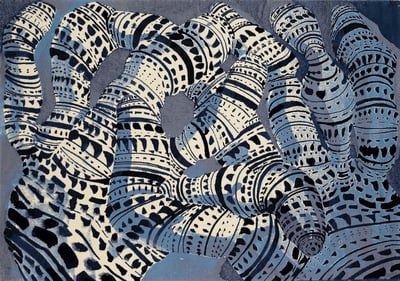
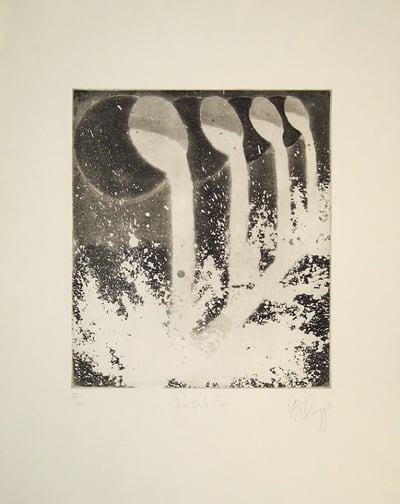
Form Code (III) by Tony Cragg, created in 2006, is a tapestry that explores the artist's fascination with organic forms and abstract patterns. This intricate composition depicts swirling, almost tree-like structures in earthy brown tones with textured details against a blue background. The shapes twist and curl, creating a dynamic visual that feels simultaneously natural and surreal. The layered patterns within each form evoke the repetition seen in nature, such as tree bark or geological formations. Cragg’s work often delves into the relationships between structure and material, and this piece embodies that interest by merging organic shapes with an abstract aesthetic, inviting viewers to interpret the flowing, interconnected forms as symbols of growth and transformation.
Tony Cragg (UK, 1949) is an influential sculptor known for his innovative use of materials, including wood, metal, plastic, and glass. His abstract, dynamic forms explore the relationship between nature, man-made objects, and space. A Turner Prize winner, Cragg’s work has been exhibited globally, cementing his legacy in contemporary sculpture.
TapestryTapestry is a heavy, handwoven textile featuring intricate designs or images woven directly into the fabric. Created by skilled weavers using materials like wool, linen, cotton, silk, and sometimes silver and gold threads, tapestries have historically served as art pieces, decorations, insulation, and symbols of authority.
Form Code (III) by Tony Cragg, created in 2006, is a tapestry that explores the artist's fascination with organic forms and abstract patterns. This intricate composition depicts swirling, almost tree-like structures in earthy brown tones with textured details against a blue background. The shapes twist and curl, creating a dynamic visual that feels simultaneously natural and surreal. The layered patterns within each form evoke the repetition seen in nature, such as tree bark or geological formations. Cragg’s work often delves into the relationships between structure and material, and this piece embodies that interest by merging organic shapes with an abstract aesthetic, inviting viewers to interpret the flowing, interconnected forms as symbols of growth and transformation.
Tony Cragg (UK, 1949) is an influential sculptor known for his innovative use of materials, including wood, metal, plastic, and glass. His abstract, dynamic forms explore the relationship between nature, man-made objects, and space. A Turner Prize winner, Cragg’s work has been exhibited globally, cementing his legacy in contemporary sculpture.
I am most interested in the emotional qualities of things.
- Tony Cragg
One of the most prominent sculptors in the world, Tony Cragg is renowned for his liberal use of a wide range of materials throughout his art. Cragg's works can vary from swirling abstractions - as seen in his Point of View piece - to political statements; Britain Seen From the North is one of his earliest outputs and is comprised of various scrap materials - the piece outlines the island of Britain and depicts a figure observing it – this figure is said to represent Cragg viewing his nation as an outsider, a theme that relates to Britain under Thatcher’s reign as Prime Minister. Materials used in Cragg’s sculptures range from wood to Kevlar to plastic – his work is designed with the idea of challenging pre-existing notions regarding certain materials; Early Forms makes use of various different containers, all of which are manipulated and assembled to take on a new form and present the viewer with a different perspective. (Artist website)
Contemporary art refers to avant-garde or innovative art created in the recent past or present day. The exact starting point of contemporary art varies depending on the institution, often tied to the founding year of museums or galleries that showcase the style. Contemporary art is characterized by its focus on current ideas, diverse media, and the exploration of new concepts and techniques.