

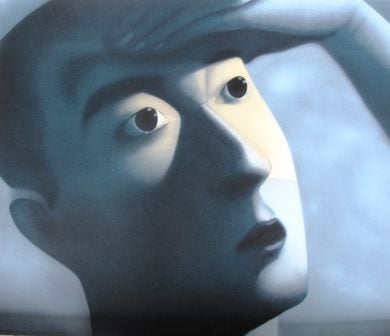
// Chinese Baby 11-05 by Yin Kun, created in 2011, is an oil on canvas that offers a surreal, thought-provoking portrayal of conformity and identity. The composition features a group of uniformly dressed, childlike figures with rounded faces and blank, distant expressions, rendered in soft, pale tones. Some figures are in military or official attire, with muted greens and grays dominating the palette. The expressions and body language of the figures suggest a blend of innocence and unsettling detachment, evoking themes of collectivism and social identity within modern Chinese society. Yin Kun’s work often explores the juxtaposition between individuality and conformity, reflecting broader cultural and societal themes through his stylized, almost doll-like figures. Measuring 150 cm by 120 cm, this piece invites the viewer to consider questions of societal influence, identity, and individuality in an ever-uniform world.
Artwork Copyright © Yin KunYin Kun (China, 1969) is a contemporary artist renowned for his provocative paintings that critique political power, consumerism, and societal norms. His surreal imagery often features exaggerated figures and distorted realities, challenging perceptions and sparking dialogue. Exhibited internationally, Yin’s work offers a sharp lens on modern social issues.
Artwork Copyright © Yin KunChinese Baby 11-05, 2011
Form
Medium
Size
- Inches
- Centimeters
Edition
Price
- USD
- EUR
- GBP
- CHF
- Authenticity Guaranteed
- Insured Shipping
- Online Since 2005
●Inventory 6546
●Hand Signed
●Comes with gallery invoice and certificate
●Sell Us a Similar Artwork. Learn more.
// Chinese Baby 11-05 by Yin Kun, created in 2011, is an oil on canvas that offers a surreal, thought-provoking portrayal of conformity and identity. The composition features a group of uniformly dressed, childlike figures with rounded faces and blank, distant expressions, rendered in soft, pale tones. Some figures are in military or official attire, with muted greens and grays dominating the palette. The expressions and body language of the figures suggest a blend of innocence and unsettling detachment, evoking themes of collectivism and social identity within modern Chinese society. Yin Kun’s work often explores the juxtaposition between individuality and conformity, reflecting broader cultural and societal themes through his stylized, almost doll-like figures. Measuring 150 cm by 120 cm, this piece invites the viewer to consider questions of societal influence, identity, and individuality in an ever-uniform world.
Artwork Copyright © Yin KunYin Kun (China, 1969) is a contemporary artist renowned for his provocative paintings that critique political power, consumerism, and societal norms. His surreal imagery often features exaggerated figures and distorted realities, challenging perceptions and sparking dialogue. Exhibited internationally, Yin’s work offers a sharp lens on modern social issues.
Artwork Copyright © Yin KunAvailability
Size
SORT BY
Yin Kun
Private Listing
Painting
request info
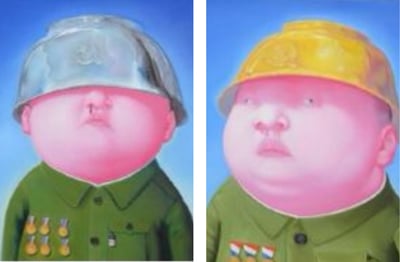
Yin Kun
Commentator Golden & Iron Bowl, 2014
Painting
Oil on canvas
USD 43,750

Yin Kun
Chinese Fairytales - Walk, 2013
Painting
Oil on canvas
USD 6,500
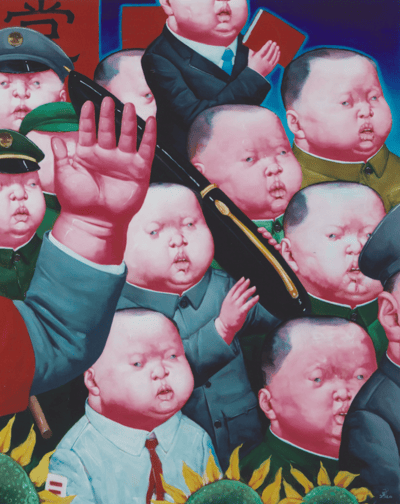
Yin Kun
Chinese Fairytale - Ceremony 3, 2013
Painting
Oil on canvas
Make Your Offer

Yin Kun
Chinese Baby 11-05, 2011
Painting
Oil on canvas
USD 17,200

Yin Kun
Chinese honey, 2005
Painting
Oil on canvas
EUR 4,620
Related Artists

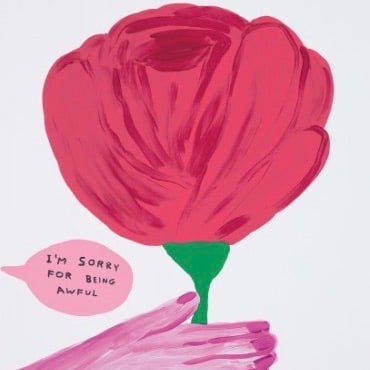
Artwork by David Shrigley
What is Naive Art?
Naïve art describes a style of artwork that is simple and unsophisticated, often created by artists without formal training in an academy or art school. The style is characterized by a lack of advanced techniques, giving it a childlike appearance. Naïve art often features bright colors, simple shapes, and a straightforward approach to subject matter, reflecting the artist's untrained perspective.


Yin Kun
Chinese Baby 11-05, 2011
150 x 120 cm


