

Signed, dated and numbered in pencil - Published by Fang Graphic Factory (with their blindstamps)
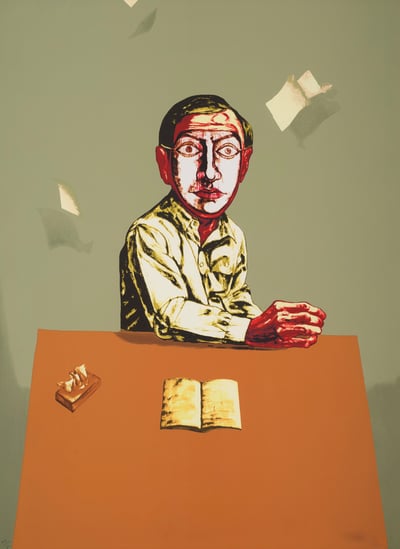
Sitting Man, from Mask Series by Zeng Fanzhi is a 2006 limited edition lithograph measuring 110 x 80 cm. This work, part of Fanzhi’s renowned Mask Series, delves into themes of identity and emotional depth. The lithograph depicts a solitary figure seated at a table with an exaggerated, mask-like face that contrasts with the more naturalistic rendering of his surroundings. The neutral tones and expressive brushstrokes create a surreal, introspective atmosphere. The Mask Series is known for exploring the dichotomy between one’s public facade and inner reality, capturing the tension and alienation of modern existence. Signed, dated, and numbered in pencil, this piece was published by Fang Graphic Factory, marked with their blindstamps.
Artwork Copyright © Zeng FanzhiZeng Fanzhi (China, 1964) is a prominent contemporary artist known for his emotionally charged, large-scale paintings. Blending Expressionism with traditional Chinese elements, his works, such as the Mask Series, explore themes of identity, isolation, and modernity.
Artwork Copyright © Zeng FanzhiSitting Man, from Mask Series, 2006
Form
Medium
Size
- Inches
- Centimeters
Edition
Price
- USD
- EUR
- GBP
- CHF
- Authenticity Guaranteed
- Insured Shipping
- Online Since 2005
●Inventory 9813
●Hand Signed
●Comes with gallery invoice and certificate
●Sell Us a Similar Artwork. Learn more.
Signed, dated and numbered in pencil - Published by Fang Graphic Factory (with their blindstamps)
Sitting Man, from Mask Series by Zeng Fanzhi is a 2006 limited edition lithograph measuring 110 x 80 cm. This work, part of Fanzhi’s renowned Mask Series, delves into themes of identity and emotional depth. The lithograph depicts a solitary figure seated at a table with an exaggerated, mask-like face that contrasts with the more naturalistic rendering of his surroundings. The neutral tones and expressive brushstrokes create a surreal, introspective atmosphere. The Mask Series is known for exploring the dichotomy between one’s public facade and inner reality, capturing the tension and alienation of modern existence. Signed, dated, and numbered in pencil, this piece was published by Fang Graphic Factory, marked with their blindstamps.
Artwork Copyright © Zeng FanzhiZeng Fanzhi (China, 1964) is a prominent contemporary artist known for his emotionally charged, large-scale paintings. Blending Expressionism with traditional Chinese elements, his works, such as the Mask Series, explore themes of identity, isolation, and modernity.
Artwork Copyright © Zeng Fanzhi- Recently Added
- Price (Low-High)
- Price (High-Low)
- Year (Low-High)
- Year (High-Low)
Zeng Fanzhi
Sitting Man, from Mask Series, 2006
Limited Edition Print
Lithograph
USD 5,990

Zeng Fanzhi
Last Supper (Mask series), 2002
Limited Edition Print
Silkscreen
Currently Not Available
Related Artists


Artwork by Willem de Kooning
What is Gestural?
Gestural art is a term that describes painting with freely sweeping brushstrokes. The primary goal of gestural art is to allow the artist to physically express emotional impulses. The varied, yet expressive paint marks are intended to convey the artist's inner thoughts and emotions, which viewers are believed to understand through the dynamic and spontaneous application of paint.

Zeng Fanzhi
Sitting Man, from Mask Series, 2006
110 x 80 cm


