
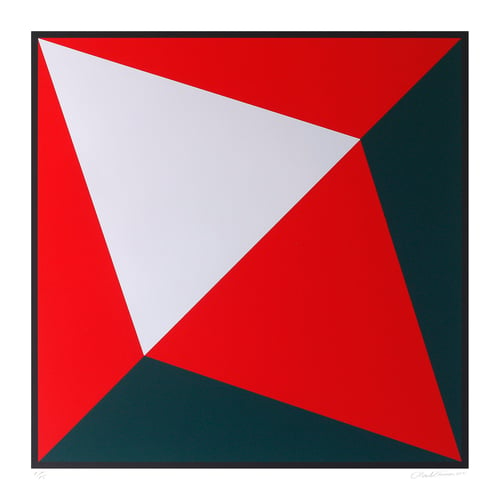
Charles Hinman
© Charles Hinman. All rights reserved.

Charles Hinman
Malchite, 2014
Limited Edition Print
Silkscreen
USD 3,090

Charles Hinman
Aragonite, 2014
Limited Edition Print
Silkscreen
USD 3,090

Charles Hinman
Citrine, 2014
Limited Edition Print
Silkscreen
USD 3,090

Charles Hinman
Carnelian, 2014
Limited Edition Print
Silkscreen
USD 3,090

Charles Hinman
Agate, 2014
Limited Edition Print
Silkscreen
USD 3,090

Charles Hinman
Chrysoprase, 2014
Limited Edition Print
Silkscreen
USD 3,090

Charles Hinman
Jasper, 2014
Limited Edition Print
Silkscreen
USD 3,090

Charles Hinman
Lapis, 2014
Limited Edition Print
Silkscreen
USD 3,090

Charles Hinman
Amazonite, 2014
Limited Edition Print
Silkscreen
USD 3,090

Charles Hinman
Oblique Fault, 2012
Limited Edition Print
Silkscreen
USD 3,670

Charles Hinman
Echelon Fault, 2012
Limited Edition Print
Silkscreen
USD 3,670

Charles Hinman
Acclivity, 2012
Limited Edition Print
Silkscreen
USD 3,670

Charles Hinman
Declivity, 2012
Limited Edition Print
Silkscreen
USD 3,670

Charles Hinman
Lavender Triangle, 2012
Limited Edition Print
Silkscreen
USD 3,670

Charles Hinman
Orange Triangle, 2012
Limited Edition Print
Silkscreen
USD 3,670

Charles Hinman
Aventurine, 2014
Limited Edition Print
Silkscreen
Currently Not Available
No sold works to show.
- Charles Hinman
Hinman’s series developed from the more organic forms of his earliest work into a more geometric style, and later into complex, leaf-like pieces in the 1980s. The influence of Russian Suprematism is notable, while his more recent works focused on light and color in a more minimalist style.
In the early 1960s, Charles Hinman lived and worked in Lower Manhattan, where he formed a small artists’ community with several other promising young artists. This group was not part of a cohesive movement, but sought to distinguish its work from the Abstract Expressionism of the era.
His Eclipse series (2010) of shaped paintings featured color concealed behind black and white canvases. Many critics considered the Gem series (2010–2011), with its complex triangular forms, to be among his most interesting works.
Hinman described his work as “dynamic... occupying a six-dimensional space.” His practice focused on the viewer’s perception, altering the appearance of volume depending on perspective.
Related Artists


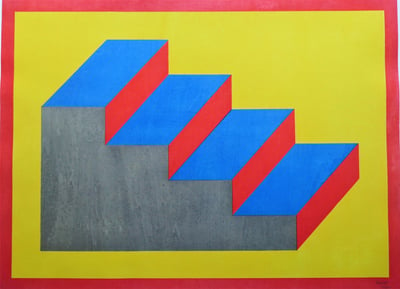
Related Articles

Art Movements, Popular - May 5, 2022
Minimalism in the XX Century: Simple Gestures and Essential Ideas.
Explore Minimalism in the 20th century, from art to architecture. Discover its evolution, pioneers like Donald Judd, and its impact on modern creativity.Read More
News, Popular, Collecting, Artists - August 12, 2026
In Minor Keys: Finding Intimacy and Identity at the 61st Venice Biennale — and in Your Collection
Explore how Koyo Kouoh’s 61st Venice Biennale vision, In Minor Keys, is shifting contemporary collecting toward quiet introspection, memory, and personal identi…Read More
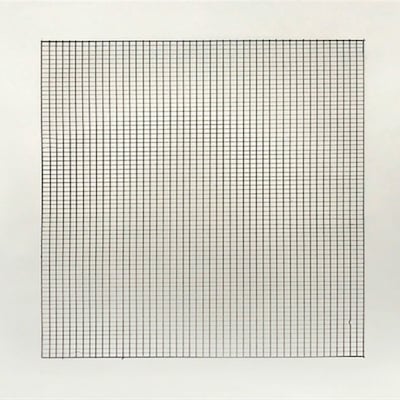 Artwork by Agnes Martin
What is minimalism?
Minimalism is a style in music and visual arts characterized by pared-down designs and simplicity. It began in Western art after World War II, gaining prominence particularly in American visual arts. Minimalism draws heavily on aspects of modernism and is often viewed as a reaction against Abstract Expressionism, as well as a precursor to post-minimal art pr…
Explore »

