

China
China's dynamic contemporary art landscape, steeped in profound cultural heritage, showcases the nation's vibrant artistic evolution. Noteworthy spaces like the Ullens Center for Contemporary Art and the Power Station of Art in Shanghai are key cultural hubs. Renowned artists like Ai Weiwei, with his politically-charged works, and Cai Guo-Qiang, known for his gunpowder art, epitomize China's artistic vitality. Visit Composition Gallery's website to delve into the pulsating world of Chinese contemporary art.
- Show All
- Established
- Discoveries
- Show All
Artworks Related to China

Weiwei Ai
History of Bombs, 2020
Limited Edition Print
Offset Print
GBP 2,450
Weiwei Ai
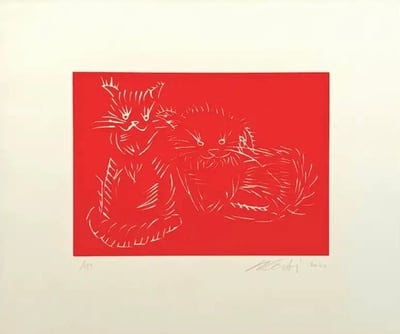
Cats, red, 2022
Limited Edition Print
Screen-print
GBP 3,350
Weiwei Ai
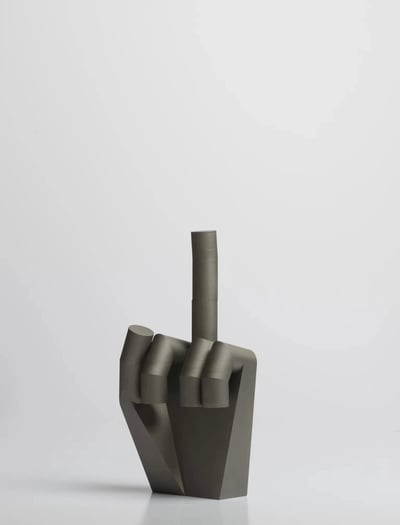
3D Printing of My Left Hand, 2022
Sculpture / Object
Mixed Media
GBP 21,000

Zhang Xiaogang
Big Family No.1 (from Bloodline portfolio), 2006
Limited Edition Print
Lithograph
GBP 4,000 - 6,000

Zhang Xiaogang
Comrade Woman (from Bloodline portfolio), 2006
Limited Edition Print
Lithograph
GBP 2,350

Zhang Xiaogang
Big Family No.3 (from Bloodline portfolio), 2006
Limited Edition Print
Lithograph
GBP 5,000 - 7,000
Zhang Xiaogang
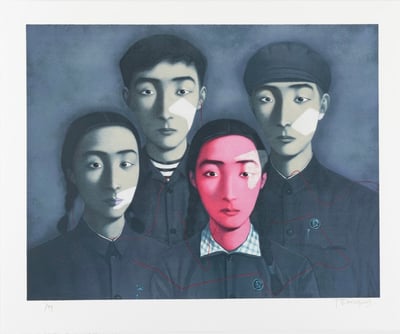
The Big Family (from Bloodline portfolio), 2006
Limited Edition Print
Lithograph
GBP 4,000 - 6,000
Zhang Xiaogang
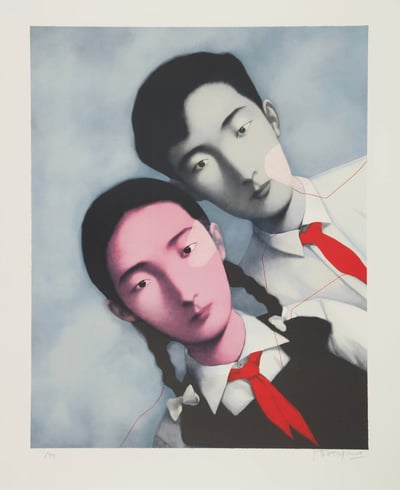
Brother and Sister (from Bloodline portfolio), 2006
Limited Edition Print
Lithograph
GBP 3,300

Yin Jun
Crying Series - Brothers, 2013
Painting
Oil on canvas
USD 28,000
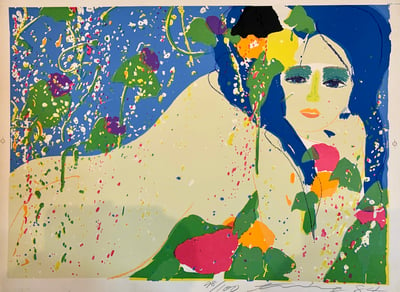
Walasse Ting
Lovely Nude, 1984
Limited Edition Print
Lithograph
EUR 1,100
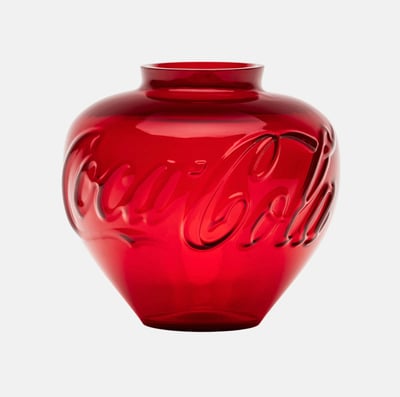
Weiwei Ai
Glass Vase, 2023
Sculpture / Object
Glass
GBP 4,000 - 7,000
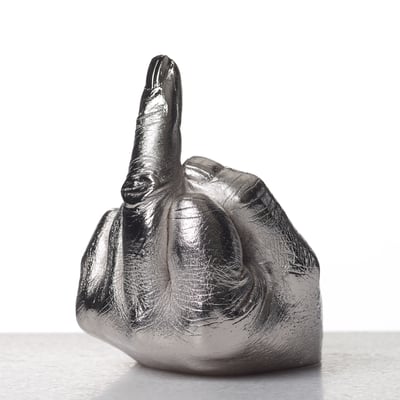
Weiwei Ai
Artist's Hand, 2017
Sculpture / Object
Resin
GBP 6,900

Yue Minjun
The Three Musketeers, 2019-2022
Limited Edition Print
Screen-print
USD 2,300

Zao Wou-Ki
Paysage au Soleil, 1950
Limited Edition Print
Etching
Currently Not Available

Zhang Xiaogang
Identity Portrait, 2003
Limited Edition Print
Lithograph
EUR 1,650
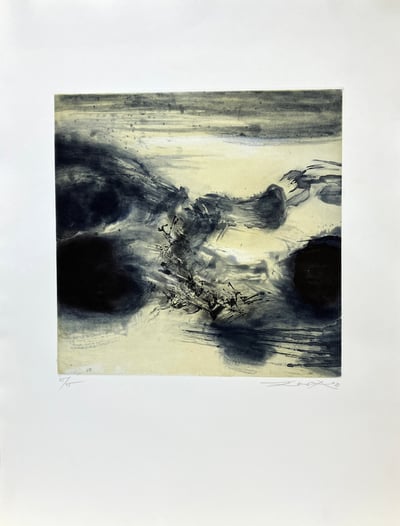
Zao Wou-Ki
Untitled (Agerup 243), 1973
Limited Edition Print
Aquatint
EUR 5,400
Related Articles

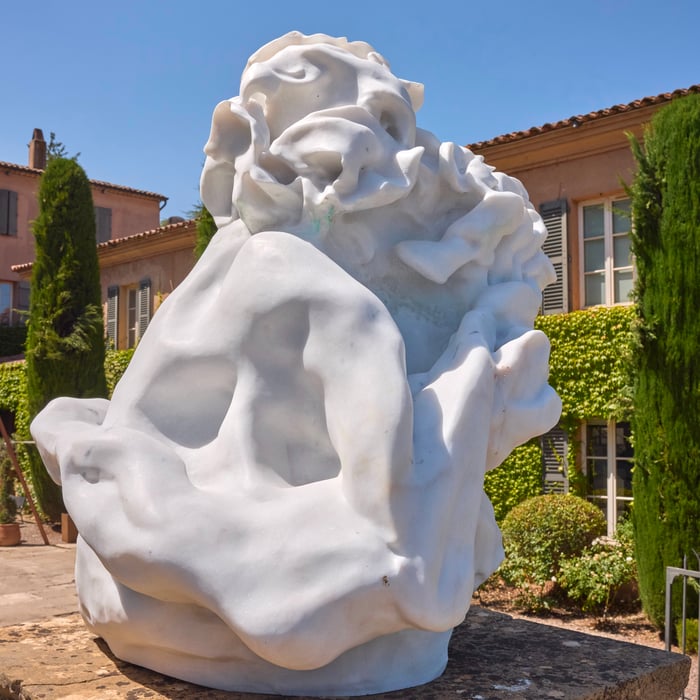

Interactive art is a form of art where the spectator is actively involved by the artist to achieve the artwork's purpose. This involvement can include allowing the visitor to walk around, in, or on the art installation, or even becoming a part of the artwork itself. Works in this category often feature computers, sensors, and interfaces that respond to various inputs such as meteorological changes, heat, motion, or other types of data programmed by the artist.

Contemporary art from India dates from 1985 to the present, marking the post-liberalization era. During this period, artists have felt free to create independently of traditional Hindu or social conventions. They often incorporate distinctly Indian materials and objects in their work, reflecting a blend of modern ideas and cultural heritage.
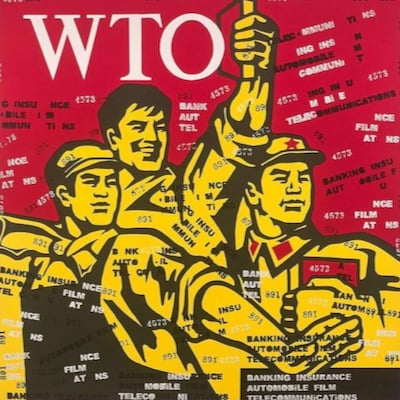
Political Pop was an art movement that emerged in China during the 1980s, blending the Pop Art style of Western countries with the socialist realism of China. This movement arose during a time of rapid social and political change in China, as artists sought to create works that questioned and critiqued these cultural shifts. Political Pop often juxtaposed iconic images from Chinese propaganda with Western consumer culture, highlighting the tensions between tradition and modernization.
Can't find your Answer?
Thank you! Your question has been sent — we'll get back to you shortly.
